In the Shadow of Saladin
The author recounts his journey of discovering Saladin's Kurdish identity and the profound impact it had on his understanding of history and his own heritage, leading to a lifelong pursuit of knowledge about the great leader.
Dear Readers: Throughout the 20th century, the Kurdish Nation, like an acrobat walking on a tightrope, has continued its existence with immense difficulty, always on the brink of annihilation, struggling to make its faint voice heard to the world amidst deprivation and impossibility. As if the denial of their language, culture, history, and ethnic identity were not enough, their ancient homeland, thousands of years old, known as "Kurdistan," was tragically torn apart among four neighboring Middle Eastern countries and the South Caucasus, serving as the most blatant and disgusting evidence of international political "immorality" and greed for division. Through ruthlessly applied policies of exile and assimilation, children grew up unable to read and write their mother tongue, unable to recognize their own historical figures, spending a lifetime shackled by the chains of denial in their minds. In the schools I attended, there was not a single sentence, not a single word, stating that Saladin was "Kurdish." A few Yeşilçam films also introduced Saladin as a great "Turkish" hero, so in my youth, Saladin was just one of the Turkish commanders who had made history. Before long, during my university years, with the second shackle of Socialist ideology imposed on my mind, I drifted even further from my values and Kurdish identity, transforming into an indescribably empty "idealist" youth, advancing on the "glorious" path laid out before us to "save" humanity. In short, when I set foot in Paris at the age of 26, I was nothing more than a robot created by a century of assimilation and socialist ideology. AWAKENING In 1985, I started a new job in Paris. The General Manager, Jean Degremont, wanted to meet me. Monsieur Degremont was no ordinary General Manager. He was a distinguished personality, awarded the Légion d'honneur, France's highest civilian honor, for his outstanding services. He had framed his medal and hung it on the wall. It bore the inscription:
As I stepped into his spacious office, lavishly furnished with reddish-brown mahogany furniture, Monsieur Degremont was leaning over his desk, sifting through piles of papers. Seeing me, he politely stood up, took a few steps, the tense lines on his face, caused by his busy work schedule, softened, and he spoke in a booming voice that still echoes in my ears and that I can never forget: "Ooo! Bienvenue en France Monsieur Hun. Asseyez-vous s'il vous plaît." (Welcome to France, Monsieur Hun. Please sit down!) In French, the letter "H" is not pronounced. If you drop the "H" from "Hun," you are left with "Un." French numbers continue from one as "un (uhn), deux (duh), trois (trwah), quatre (katr)..." Thus, when my glorious surname was pronounced in French, it became "Monsieur Un," or in Turkish translation, "Mr. One." For the 7 years I stayed in France, my colleagues and friends would know and call me "Monsieur Un." Of course, since the word "Un" here is a nasal sound, it is impossible to represent its equivalent in writing. I shyly perched on the edge of the armchair. The thought of conversing in my three-month-old French filled me with apprehension. Monsieur Degremont made a request: "Give me a few minutes. Let me sign these papers and get them out of the way." He quickly scanned the papers and began signing them. Just then, the door opened, and a middle-aged woman poked her head in: "Would you like something to drink?" Monsieur Degremont, without lifting his head, said, "The usual for me!" The woman turned to me: "What would you like to drink?" "A glass of water, please!" I felt my mouth had gone dry from excitement. Monsieur Degremont stood up and sat in the armchair opposite me: "According to the information I've been given, you are from Turkey, aren't you?" "Yes!" "From which city?" "I was born in Iğdır. It's a small city on the slopes of Mount Ararat, on the Armenian border. Have you ever been to Turkey?" He smiled: "Of course! Many times, in fact. What ethnic groups are there in Iğdır?" "Mostly Kurds and Azeris. I am Kurdish." "During my years serving in Tehran, I traveled to Iranian Kurdistan. I had the chance to meet Monsieur Kassımlo (Abdurrahman Kassımlo, Secretary-General of the Kurdistan Democratic Party of Iran). An extraordinary man! He speaks 6-7 languages. He can speak French as fluently as a Frenchman. When he comes to Paris occasionally, we call each other to catch up. Perhaps I might even have the chance to introduce you. From what I understand, Kurds are quite talented with languages."
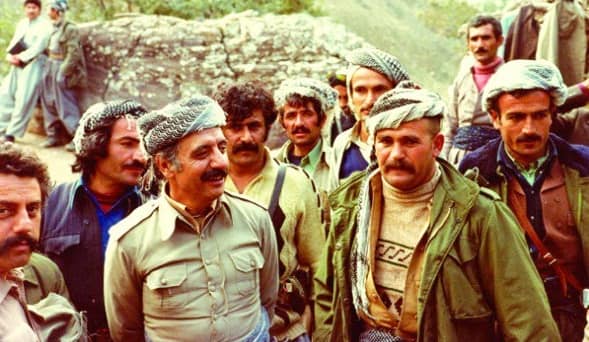
Abdurrahman Kassımlo (left), with his Peshmerga... I was expecting questions about the job I would be doing. No! Monsieur Degremont had delved into the depths of history: "We French have always known and respected the Kurds because of Saladin. If there hadn't been a Kurdish leader like Saladin, the fate of Islam would probably have taken a different path." "Who was this Saladin?" I asked myself. The French write Saladin as "Saladin" and pronounce it "Saledin." But at that moment, I couldn't make a connection between "Saladin" and "Selahaddin Eyyubi." Monsieur Degremont continued: "The generosity of the Kurdish Saladin, his forgiving and merciful attitude towards the Christian and Jewish inhabitants during the conquest of Jerusalem, was greatly admired by his contemporaries. For this reason, the name of the Kurdish Saladin has never been forgotten!" My knowledge of history is strong. When "Conquest of Jerusalem" was mentioned, I understood it referred to Saladin. What surprised me was Monsieur Degremont's reference to Saladin as a "Kurd." With curiosity and hesitation, I asked: "Was Saladin a Kurd?" "Of course! Didn't you know that?"
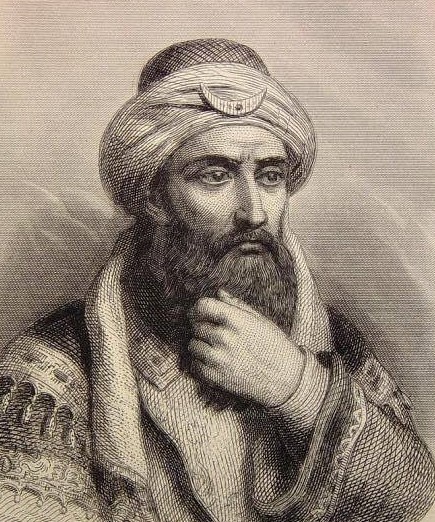
Saladin At that moment, my mind and heart trembled with an indescribable feeling of rebellion and hatred. I replied: "No, I didn't!" Monsieur Degremont, who knew Kurds well, continued his speech in an understanding tone: "I know, Kurds live under oppression." Immediately afterwards, he added in an angry tone: "Je sais! Tout est interdit! Tout est interdit!" (I know, everything is forbidden! Everything is forbidden!) At that moment, the door opened. A gentleman in his mid-70s entered. "Excuse me! I didn't know you were busy." Monsieur Degremont stood up: "Monsieur Gouze, I would like to introduce you to Monsieur Hun, who will be in charge of the Computer Department." Monsieur Gouze shook my hand. He had a brief chat with Monsieur Degremont and then left. Monsieur Degremont, smiling, asked me: "Do you know who this is?" "No!" "Roger Gouze. President Mitterrand's brother-in-law. Danielle Mitterrand's brother. He serves as the General Inspector in our company."
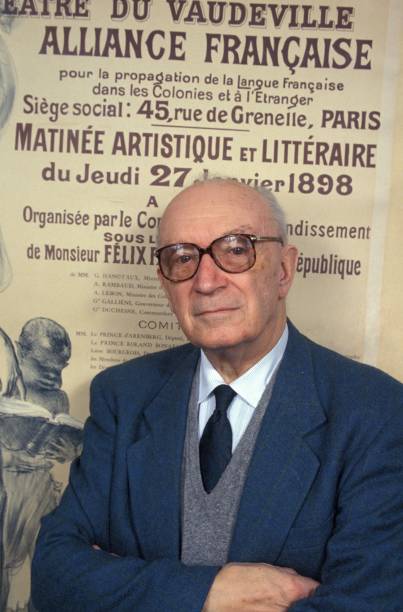
Roger Gouze
In the following years, my friendship with Monsieur Gouze would deepen. At his insistence, saying, "I want to see you as a French citizen," he would have me write a petition and send me to the citizenship office, and my citizenship would be approved within two weeks.
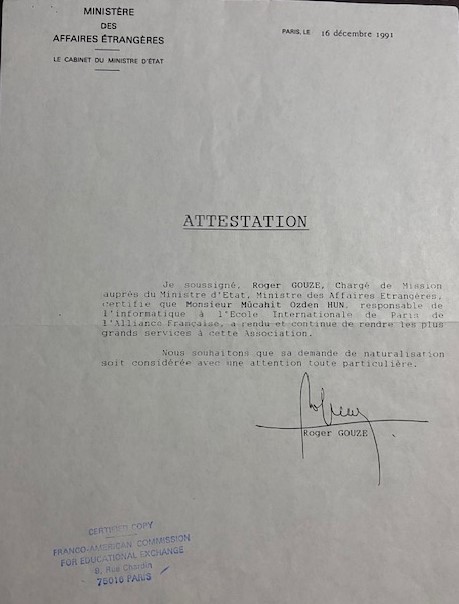
English: (I, the undersigned, Roger Gouze, Head of Mission to the Minister of State and Minister of Foreign Affairs, confirm that Mr. Mücahit Özden Hun, Head of the Information Technology Department at the Paris Alliance Française International School, has rendered and continues to render the greatest service to this company. Therefore, we hope that his application for French citizenship will be considered with special attention.) Two weeks after this letter, I received a letter stating that I had been accepted for French citizenship, but I had already decided to move to the USA permanently. Since France did not accept dual citizenship, I would decline French citizenship, and in later years, I would be able to obtain US citizenship while also retaining my Turkish citizenship. *** Monsieur Degremont did not ask any technical questions. In those years, computer networking was a new concept. Nobody had proper knowledge of it. I returned to my office. I started working. Towards evening, I went to FNAC, France's famous bookstore chain. I searched for books under the name "Saladin." I couldn't find any. To continue my research, I decided to go to the Georges Pompidou Art and Culture Center, the largest public library in Paris, on the weekend. *** It was the next day. I was working at a fast pace. At one point, my door was knocked. A woman entered. "How are you, Monsieur Hun? Monsieur Degremont sent this package." I opened the package. There was a book and photocopies. First, I picked up the book. It was Dante's La Divine Comédie (The Divine Comedy), by the famous Italian writer.

I had tried to read this book, which was in my father's library during my childhood, but had left it unfinished because I didn't enjoy it. The only thing I remembered was that in this book, Dante embarked on an imaginary journey, first visiting Hell, then Purgatory, and then Paradise, and wrote down what he saw and the historical figures he encountered in poetic language. I put the book aside and started reading the photocopies. They were photocopies of pages about Saladin (Selahaddin Eyyubi) from the encyclopedia called Le Grand Larousse. There were expressions similar to this: "En 1169 un émir kurde de l’armée de Syrie, Saladin, succéda à son oncle à la tête du vizirat d’Egypte qu’il venait juste de conquérir." (In 1169, a Kurdish Emir/Sultan Saladin from the Syrian army succeeded his uncle at the head of the vizierate of Egypt, which he had just conquered.) Monsieur Degremont was trying to connect me with my roots and history. In those years, since there were no books written about Saladin, encyclopedias seemed to be the only reliable source. But what about Dante's book? Monsieur Degremont had left a note inside the book, asking me to look at certain pages. When I returned home in the evening, I picked up a dictionary and tried to read and understand the pages in question. I would like to make a note here: In the Middle Ages, nine Crusades were organized to the Holy Land. The last one, the ninth Crusade, took place in 1271-1272. If we consider that Dante was born in 1265, we can understand that he grew up with a hatred of Islam. Despite this, it is remarkable that he attributed special importance and value to Saladin. In his imaginary journey, Dante first goes to the lowest level of Hell. He sees Prophet Muhammad and Imam Ali there, because according to Dante, God punished them for being "religious dividers." After ascending Hell stage by stage, he arrives at Purgatory. He expresses what he saw in Purgatory in poetic language as follows: I saw Brutus, who drove out Tarquinius, Lucretia, Julia, Marcia, Cornelia, and SALADIN standing alone in a corner. When I lifted my eyes a little higher, I saw the wisest of scholars (Aristotle) sitting among philosophers. Everyone looked at him, everyone paid him respect. I saw Socrates and Plato there, before the others, sitting closer to Him. I saw Democritus, who attributed the world to chance, Diogenes, Anaxagoras, Thales, Empedocles, Heraclitus, and Zeno. I also saw the one who studied the properties of plants, I mean Dioscorides; Orpheus, Tullius, Linus, and the moralist Seneca; The geometers Euclid and Ptolemy, Hippocrates, Avicenna, Galen, I saw the great commentator Averroes. I cannot name them all one by one, there is much more to tell, often words are not enough for events. I fell asleep reading and trying to understand these lines. *** The staff at the company I worked for ate lunch in the workplace cafeteria. For a token fee, it was possible to get a substantial and quality set meal with salad and dessert. As I was eating my meal, Monsieur Degremont appeared in front of my table with his tray. Smiling, he asked: "May I sit?" "Of course!" Monsieur Degremont opened his small bottle of wine and asked: "Did you get the package?" "Yes! Thank you very much. I've been trying to understand Dante's poem with a dictionary since last night." Monsieur Degremont let out a sweet laugh: "You see, don't you, Europe's most famous writer includes Saladin in the most important book in history; moreover, he attributes special importance to him by saying, 'I saw SALADIN standing alone in a corner.'" Honestly, I had never thought of it that way. At that moment, a short, stocky gentleman with a tic on his face casually sat at our table. He was the cafeteria operator. He had some requests for the General Manager. A quick, difficult-to-understand conversation took place between them. Monsieur Degremont introduced me. He mentioned that I was Kurdish and that we were talking about Saladin. The stocky man, without taking his eyes off the cafeteria staff, introduced himself: "My name is Isaac Attar. I am a Jew born in Algeria. I graduated from the History Department of the University of Algiers. After Algeria's independence (1962), my family continued to stay in Algiers for a while, but as the pressure increased, we settled in France in 1965. Since then, I have been earning my living through gastronomy. Yes, Saladin was a Kurd. His family was from the Kurds of the Caucasus. There are doctoral theses written about him. In my opinion, he is one of the most important figures in history." This time, Monsieur Degremont continued: "Monsieur Hun, do not forget that the most important and respected profession in medieval Europe was knighthood. After Saladin, the knight's oath was changed, and Saladin's moral values were taken as a basis. For example, when knights took their oath, they swore to stand against evil, to protect women and the weak, to avenge wrong and injustice, and to uphold virtues. They learned these values from Saladin." The stocky, charming Jewish Monsieur Attar advised before leaving: "If you want to do serious research on Saladin, you must read the book by the Kurdish historian Ibn al-Athir. This book is in Arabic. Some parts have been translated into English and French. To read the entire book, you must learn Arabic. There are also other important sources. I am busy right now. I will write them down and give them to you. But in return, I need a favor." "What can I do?" "Do you speak English?" "Not bad!" "My daughter is preparing her thesis at university, and she has English texts that need to be translated into French. Can you help?" "Of course!" As the customer queue in the cafeteria grew longer, Monsieur Attar returned to his work. The General Manager was joking: "He has a very beautiful daughter. I think he has his eye on you." We both laughed. *** On the weekend, I went to the Georges Pompidou Library. Apart from encyclopedias, it was impossible to find a book about Saladin. I started reading a few books about the Crusades.
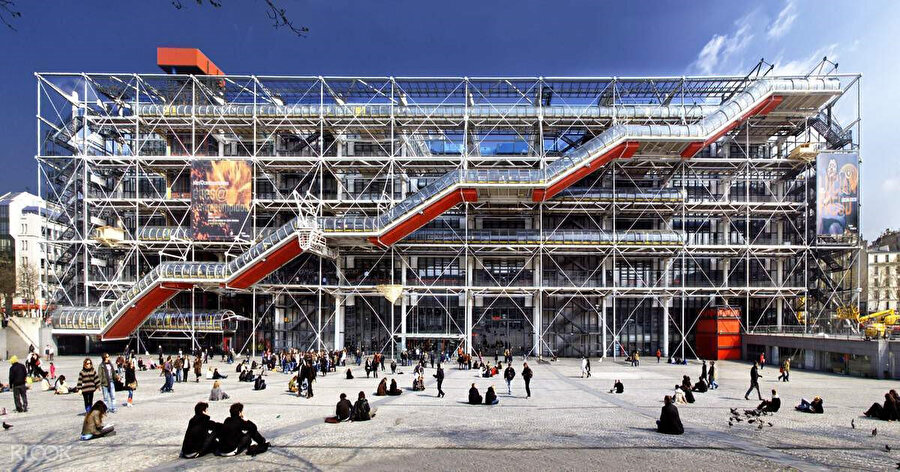
Georges Pompidou Cultural Center and Library in Paris *** It was Monday. A pleasant and cheerful girl came to my office. "I am Monsieur Attar's daughter. My name is Rebecca. My father said you could help." She handed me a file. It was a 30-40 page English text. Understanding the text was not a problem, but how was I going to translate an English psychology text into French with my three or four months of French? In later years, I would learn that the French stubbornly refused to learn English for some reason, and the number of people who could speak English fluently was very small. While I was thinking about these things, Rebecca handed me a second paper: "My father sent this. He wanted me to give it to you." I saw Rebecca off, telling her I would help. I started reading the note Monsieur Attar had sent: "If you want to do serious work on Saladin, you must read the following books. These books are in Arabic:
- Ibn al-Athir: “Al-Kamil fi al-Tarikh”
- Baha ad-Din ibn Shaddad: “Sirat Salah al-Din”
- Imad ad-Din al-Isfahani: “Al-Fath al-Qussi”
- Les Chroniques des Croisés (The Crusades and History)
Regards. Isaac Attar" I sat in my armchair. I didn't know Arabic beyond a few sentences. Moreover, how was I going to acquire these books? *** While still struggling with French, I enrolled in an Arabic course. My task was not easy. On one hand, I was intensely trying to organize my work, and on the other hand, I was continuing my research. The interesting thing was that a few years later, at a symposium in Spain, thanks to a Spanish journalist, I would encounter the name "Kurdish Ziryab," and this time I would start collecting documents about Ziryab as well. GIOVANNI BOCCACCIO (1313-1375)
While continuing my research, I strangely came across a book called "Decameron." This word, pronounced "Dekameron," means "Ten Days." The Decameron was written by the Italian writer and poet Boccaccio. Boccaccio is considered the first storyteller in world literature. The Decameron is considered the author's masterpiece. In this work, the author includes one hundred stories told over ten days. In this work, Saladin appears as the main character in two stories (the third story of the first day and the ninth story of the tenth day).
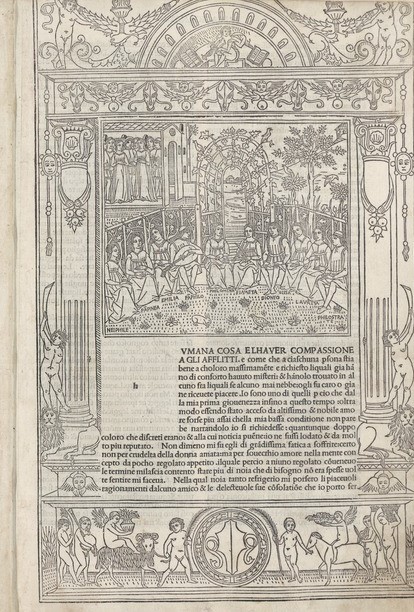
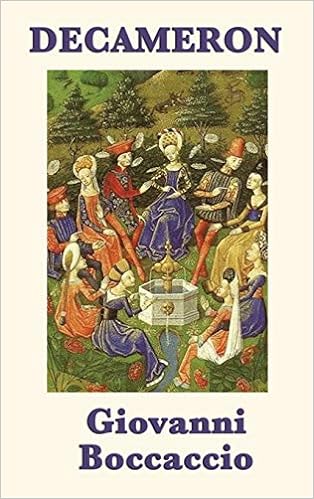
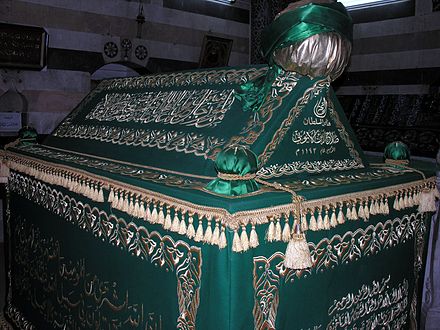
The cover of the Decameron from 1492 (left) and its current cover In these stories, Boccaccio portrays Saladin as a brave knight and humble sultan who could speak Latin and Italian fluently, was well-versed in European culture, and possessed great tolerance. His generosity, humility, benevolence, and mercy towards his enemies and captives have been admired by everyone, Muslim and non-Muslim alike, since his own era. FIRST STORY The first story revolves around Saladin and Melchisedeh, a rich but miserly Jew. According to the story, Saladin, having exhausted everything he possessed due to his generosity, tries to borrow money from the Jew. But the Jew is not very open-handed. Thereupon, Saladin tries to get money from him by trickery. He asks the Jew which of the three religions is superior. This is a trap because in Saladin's country, considering one religion superior to another is a crime. Thereupon, the clever Jew realizes the trap and tells the parable of the "three rings." The Jew says that just as it is impossible to tell which of the rings a father gave to his three sons is real, the same applies to Judaism, Christianity, and Islam, and adherents of each religion consider themselves the legitimate heirs of God. However, when he adds that, like the rings, their claims have not yet been proven, Saladin realizes the Jew has set a trap for him and decides to borrow from him. The Jew gladly gives him the amount he requested. Saladin later repays the entire debt, and the two remain friends for life. SECOND STORY The second story takes place during the Third Crusade. The brave Sultan Saladin, preparing for the campaign, disguises himself as a merchant and sets off for Europe to scout the lands of the Crusaders who are coming to destroy him. In Italy, he meets a knight named Torello. Torello is a noble and wealthy knight. Torello hosts Saladin well, and when the time comes to say goodbye, he sends him off with valuable gifts and horses. Torello is impressed by Saladin and praises him. Saladin returns to his homeland and prepares for the Crusade. Torello also participates in the Crusade but is defeated and captured by Saladin. Due to his skill in falconry, he is taken into Sultan Saladin's palace as a falconer. One day, Saladin recognizes his old friend and offers him to rule the Sultanate together, but Torello's mind is on his wife whom he left behind. Thereupon, Saladin gives Torello valuable gifts and sends him back to his homeland. THE SILENCE OF THE ISLAMIC WORLD I regret to state that Saladin's memory, which always remained vibrant in Europe, unfortunately did not last long in the Islamic world and began to be forgotten after his death. The reason for this is clear: Saladin was a Kurd. Interestingly, Muslims rediscovered Saladin towards the end of the 19th century, when Christian Arabs translated writings related to the Crusades in Europe and told Muslim Arabs about Saladin's heroism. Just as my General Manager told me that Saladin was Kurdish and that his name was highly respected in Europe... German Emperor Wilhelm II also had a great influence on the awakening of interest in Saladin. In 1898, during his visit to Damascus and Jerusalem, Wilhelm II visited Saladin's tomb in the Umayyad Mosque and laid a wreath inscribed with "From One Great Emperor to Another." He also had Saladin's tomb repaired at his own expense and built a marble mausoleum. When the event was reported in the press of the time, interest in Saladin began to increase in Islamic countries.
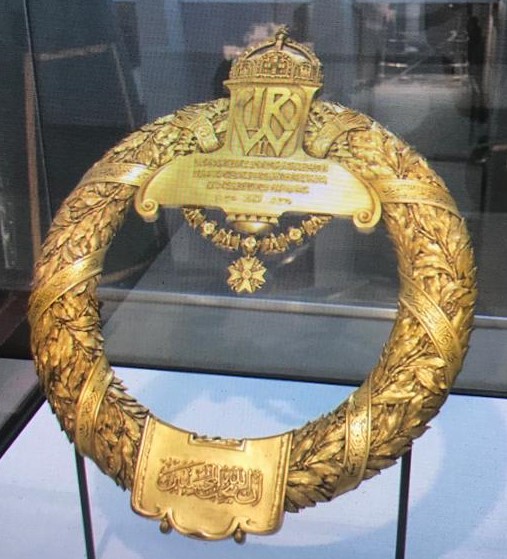
The bronze wreath placed by Wilhelm II on Saladin's tomb *** Year 1991. I was working intensely, planning to go to the USA, and collecting documents about Saladin and Ziryab. On one such day, a French female writer released a book: SALADIN Rassembleur de l’Islam (Saladin: Unifier of Islam)
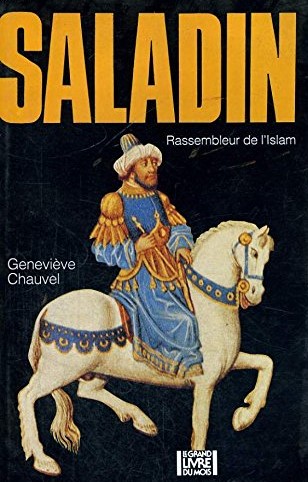
I read the book immediately. Like the French author, I was planning to write a documentary novel about Saladin's life, narrated in his own words. I was angry with myself for being late. This was my first disappointment. WHO IS GENEVIÈVE CHAUVEL?
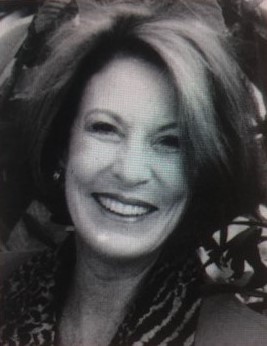
Geneviève Chauvel is a French journalist and writer. Her childhood was spent first in Syria and then in Algeria. She completed her higher education in Law and Economics in Paris. Geneviève Chauvel worked as a war correspondent from 1967 onwards. She gained fame by interviewing and making TV programs with Egyptian President Anwar Sadat, Jordanian King Hussein, Libyan President Gaddafi, Arafat, Moshe Dayan, Shimon Peres, and Emirs of Gulf countries. She made programs about the wars in Vietnam, Angola, and many other countries. Geneviève Chauvel has been interested in the Arab World and Middle Eastern history since childhood. She crowned this interest and love with her book "SALADIN" in 1991. Geneviève Chauvel conducted research on Saladin for three years, especially in Egypt. She visited the places where historical events took place. As a result, she wrote a book in the style of a novel, adhering to historical facts. She tells us Saladin's life through his own words. I would like to include the beginning of the book here: SALADIN "First, let me introduce myself. I am Saladin. I am Kurdish. I am from the Ramadi tribe. It is one of the oldest and noblest Kurdish tribes. The settled place of the tribe is Western Azerbaijan. My father's name is Ayyub, and my grandfather's name is Shadi. I have no information about our lineage before Marwan, Shadi's father. My family is originally from Dvin. Dvin was the capital of Lesser Armenia in the 10th century. They also called this Inner Armenia. My uncle Shirkuh and my father Ayyub were born in Dvin. When the city of Dvin was attacked by the Turkmen in 1128, my grandfather Shadi left the city of Dvin with his two sons and wife. The Turkmen carried out a brutal massacre against the inhabitants, plundered the city, and razed Dvin to the ground. My family barely escaped with their lives, leaving all their possessions behind. My grandfather Shadi, who survived the massacre, traveled south with his family. His aim was to reach Baghdad. Baghdad was the center of the Caliphate. It was ruled by Sultan Muhammad, the son of Malik Shah of the Seljuk dynasty. My grandfather's old friend Behruz was also a Vizier in Baghdad. Behruz had previously been a captive in Dvin. My grandfather rescued Behruz from captivity and arranged for him to be a teacher to princes in the Seljuk palace in Isfahan. When Sultan Muhammad became the ruler of Baghdad, he took his teacher Behruz as his Vizier. For this reason, my grandfather Shadi planned to go to Baghdad to see his old friend Behruz and ask for his help. When my grandfather arrived in Baghdad, he went to the palace. Vizier Behruz welcomed my grandfather very well. Shadi told Behruz what had happened. Behruz said, "Shadi, Allah sent you to me. We recently captured Tikrit. We have no ruler there! I am appointing you as the ruler of Tikrit. From now on, your title will be 'Dizdar' (Castle Commander). Go to Tikrit as soon as possible and start your duty!" My grandfather Shadi passed away shortly after going to Tikrit. His grave is in Tikrit. His eldest son, my father Ayyub, succeeded him. My father was given the title 'Najm ad-Din,' meaning 'Star of Religion.' My father married a woman named El Harimi. From this marriage, my elder brothers Shahin Shah and Turan Shah were born, and then, as the third son, I was born in 1137. Due to an incident, there was animosity between my uncle Shirkuh and a young man much loved by the Vizier. My uncle, in anger, cut off the young man's head with a sword blow. Upon hearing the news, the Vizier stripped my father of his authority, warning him, "Leave Tikrit before dawn, or more heads will roll." Thereupon, my family began preparations for the journey. It was at this very moment that my mother, who was pregnant with me, went into labor. I was born towards dawn. They wrapped me in a swaddling cloth and handed me to a servant. The caravan set off for Mosul without delay. Everything happened so quickly and suddenly that my family could only celebrate my birth on the evening of the second day, at a place where the caravan had stopped. According to my father, I was a very frail and weak child. He thought I would die but still felt the need to give me a name. He named me Yusuf. He also gave me the second name Saladin (devoted to his religion). Later, Saladin would become my first name, and everyone would know me by that name. The caravan made its way towards Mosul. Zengi, the ruler of Mosul, was a good friend of my father's. Before I was born, in 1132, Zengi was defeated by the Seljuk army, went to Tikrit, and took refuge with my father. My father, with his army, defeated the Seljuk army and helped Zengi return to Mosul. When the caravan arrived in Mosul, Zengi more than repaid his debt of gratitude to his friend Ayyub. He allocated our family a two-story house made of stone and mud, within a large garden by the Tigris River. The surroundings of Mosul were covered with endless eucalyptus forests. Our garden had orange, lemon, and various fruit trees. My mother was a skilled and tasteful woman. She had adorned our garden with a thousand flowers, turning it into a paradise. Zengi had many enemies: the Iranian Seljuks, the Nusayris in Damascus, the Diyarbakır/Erbil Kurds, and the Franks from the west. Upon arriving in Mosul, my father and uncle joined Zengi's army. Together, they began to fight against the Franks. My mother was left alone with her three sons. My mother, saddened by my frailty and weakness, devoted all her time to me, raising me wrapped in silk swaddling clothes. Zengi captured many strategically important castles in and around Damascus. The most important of these was Baalbek. He appointed my father as the commander of this castle. When my father settled in Baalbek, he sent his men to bring us from Mosul. I had grown up, but I had neither seen my father nor heard his voice. I was only familiar with the voice of my mother, who wrapped me in silky and fragrant swaddling clothes and sang lullabies with her beautiful voice. When we arrived in Baalbek, seeing my father, adorned with gold jewelry and wearing his official uniform with a silk kalpak, coming to meet us, I cried out of fear and hid behind my mother. What surprised me was seeing this imposing man crying as he looked at my mother. My mother was also trying to console this imposing man. I learned after growing up that my father had married another woman during the three years he was separated from us, and my mother had not known about it. I grew up in Baalbek (Heliopolis), a very beautiful city. My father built a mosque and a monastery for Sufis. I had to wait until the afternoon to see my father in traditional Kurdish clothes, outside of his official uniform. When my uncle Shirkuh started teaching my elder brothers war games, I would watch them enviously in my frail state. I started school. My teachers were Sufis. When I learned to read, I was most influenced by Ghazali. Zengi, who provided this beautiful life for my family, was killed on September 14, 1146. Soon after, a large army from Damascus arrived at our gates. My uncle Shirkuh gathered the Kurdish tribes around him. The two sides engaged in a fierce battle. They suffered heavy losses. Finally, my father was forced to negotiate with the enemy. Thus, Baalbek was returned to its former owners. In return, my father received a house and land in Damascus. My family moved to Damascus. My uncle Shirkuh secretly met with Zengi's men and joined Nureddin, the ruler of Aleppo. Together, they fought against the Franks. This situation worried the commander of Damascus. I had new teachers in Damascus. They were not Sufis. I loved mathematics, history, and geography. My teacher Abu Taman taught me the Kurdish language, history, and traditions. Because of this knowledge, I could never escape the influence of my teacher throughout my life. On the morning of July 24, 1148, the combined Frankish and German Crusader army besieged Damascus. They had taken Jerusalem, and it was Damascus's turn. Bloody clashes occurred. When the Franks heard that the Arabs were also coming to support us, they began to flee. We won the war, but we suffered many casualties. In this war, my brother Shahinshah also lost his life. His two young sons were orphaned; his wife was widowed. My father was sad. He approached me, stroked my head, and said, 'Now you will take the place of your late brother.' Shortly after the war, the Vizier died. The Sultan appointed my father as commander. He wanted to take precautions against Arab attacks. My father had allowed me to ride horses and learn war games. He made me promise not to forget this sentence: 'I am a Kurd! I am the son of the Commander-in-Chief.' My slender, weak body was suitable for riding. This made me happy, and I learned the art of war with pleasure. The Commander of Aleppo, Nureddin, sent my uncle Shirkuh to my father, saying he wanted to unite their forces. My father accepted the offer. Thus, my father was appointed Governor of Damascus. I was 16 years old. Sultan Nureddin never let me leave his side during his meetings. He loved philosophers, thinkers, poets, and religious scholars, and always kept them close. He often invited them and engaged in deep conversations. I also participated in these invitations. Sometimes we would go hunting, watching panthers, cheetahs chasing deer, and lions from a distance. In March 1164, Sultan Nureddin ordered his General Shirkuh to campaign in Cairo. My uncle Shirkuh called me to him: 'Yusuf, you are coming with me!' I was 27 years old. On April 1, 1164, we ceremoniously departed from the Sudan Gate of Damascus. My uncle Shirkuh was proud of his army of tens of thousands of Kurdish cavalry. In May 1164, we returned to Damascus victorious. Due to my success in this war and my skill in command and administration, Sultan Nureddin declared me 'Rayis Shurta'. At 27, I had become the Chief of Police of great Damascus. In the evenings, I would meet with my Sufi friends, chat, and perform dhikr. In January 1167, we set off for Cairo again. This time I was a commander under General Shirkuh. In August 1167, we returned to Damascus. We went to Aleppo, to Sultan Nureddin. I spent my free time hunting birds, cheetahs, panthers, and lions. The plains and mountains of Aleppo were full of these animals. Meanwhile, my mother had mobilized acquaintances, looking for a girl to marry me off. There were so many options for me: blue-eyed Kurdish girls, green-eyed Nusayri girls, and black-eyed Arab girls. In the end, I chose a noble and blue-eyed Kurdish girl; because she was the most suitable for our home. We got engaged to Shamsah. In December 1168, the Franks had broken the agreement we made in Cairo and reoccupied Cairo. The Sultan called me to him and ordered: 'Find Shirkuh immediately!' When I found my uncle Shirkuh and explained the situation, he proudly told me, 'I have already prepared 6000 Kurdish cavalry.' 2000 cavalry were also ready in Aleppo. Although my uncle very much wanted me to, I did not want to participate in this campaign. But I still did. When we reached the gates of Cairo on January 4, 1169, the Franks did not dare to fight us and withdrew. Thus, General Shirkuh took Cairo without bloodshed. The Fatimid Caliph showed us great interest. But Vizier Shawar was a hypocrite. When we left Cairo, I received news that Shawar would call the Franks again. Despite my uncle's opposition, I killed Vizier Shawar. On January 18, 1169, Shirkuh declared himself Vizier. My uncle Shirkuh died of a heart attack after dinner on March 23, 1169. I was very sad. I had lost everything. I immediately wanted to return to Aleppo. On March 26, 1169, the Fatimid Caliph appointed me Vizier in place of Shirkuh. I was reluctant in this job, but I had no difficulty. Because the administration of the city was already in my hands, and I had appointed its officials. At 32, I had become Saladin, the Vizier of Egypt. In August 1169, my brother Turan Shah, along with my other brothers and Shamsah, came to Cairo. I married Shamsah. Shamsah was a very beautiful Kurdish girl. She had a face as bright as the moon, eyebrows like a bow, and sparkling blue eyes. She was tall and slender. Her long blonde hair reached her waist. It was as if honey was dripping from her head. Shamsah made me very happy. In June 1170, my son Al-Afdal Ali was born. I became a father. Later, I had many children. In April 1170, my father Ayyub also came to Cairo. I appointed my father as the Commander of Alexandria and my brother Turan Shah as the Commander of Upper Nile. I divided the administration of Egypt among my other brothers. In September 1171, Caliph Al-Mustarut died in Baghdad, and his son Al-Mustazi succeeded him. He opposed Sultan Nureddin. Because the black flag of the Abbasids was still flying in Cairo. For 200 years, there had been a Shiite Fatimid Caliphate in Egypt. We, as a family, were Shafi'i. I did not want to touch the Shiite Fatimid Caliph here. Moreover, it was the Fatimid Caliph who had made me Vizier. One day, the 14th Fatimid Caliph suddenly fell ill and died. An important issue was resolved on its own. The Caliph was 21 years old when he died. He left behind 4 widowed women, 11 sons and 4 daughters, 152 servants, a magnificent palace, and a fortune. There were more than 200,000 books in the palace library. It was said that 2 million dinars in the treasury were plundered. I took some of this fortune. I sent a significant portion to Sultan Nureddin. On May 15, 1174, Sultan Nureddin died of a heart attack. He left behind his 11-year-old son Malik Salih Ismail. Thus, new and important duties fell upon me. Because the Arabs were trying to seize Damascus, taking advantage of this opportunity. I immediately set off for Damascus. I took control of the administration of Damascus. I captured all the castles in Syria. I even took control of Konya, which Nureddin had recently taken from Kilij Arslan, and Malatya, which he had taken from the Armenians. Finally, Caliph Mustazi declared me Sultan of Syria and Egypt. In February 1177, I returned to Alexandria. My sons Al-Afdal Ali and Al-Aziz Utman were with me. The children were very happy to see the sea. My goal was to create a strong naval force. I set about renovating the ships we had and building new ones. We could obtain as many logs as we wanted from the forests in the Jordan Mountains." *** Saladin died in Damascus on March 4, 1193, from a feverish illness. He left behind one gold and forty silver coins. He had distributed all his wealth to the poor and needy. Saladin was buried in the garden of the Umayyad Mosque. MY YEARS IN THE USA After seven years of working in Paris, I went to the USA to pursue an MBA. I took the documents I had collected about Saladin and Ziryab with me as microfiches, which were fashionable in those years, for easy transport. I could duplicate them if I needed to. I had become intimately familiar with the lives of Saladin and Ziryab. Everywhere I went, I gathered information about these two historical Kurdish figures, hoping to write a book about them before I passed away from this mortal world. Three books I acquired from the University of Pennsylvania library were a good start:
- Geoffrey Hindley: “Saladin: Hero of Islam”
- Stanley Lane-Poole: “Saladin and the Fall of Jerusalem”
- James Reston: “Warriors of God: Richard the Lionheart and Saladin in the Third Crusade”
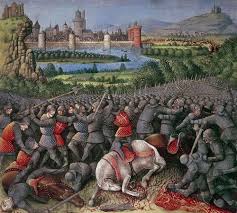
The event that brought Saladin to the stage of history was the Battle of Hattin against the Crusaders on July 4, 1187, and the conquest of Jerusalem. "Hattin" is located within the borders of today's state of Israel. JOURNEY TO ISRAEL I told my wife I wanted to see Jerusalem. Together, we embarked on a ten-day journey to Israel. Since Arab countries do not allow those with Israeli visas in their passports to enter their countries, the Israeli Consulate, to make things easier for travelers, never stamps visas directly into passports. Instead, they prepare it as a separate page and place it inside the passport. *** Tel Aviv was depressing and a concrete jungle. We didn't want to stay. We rented a car and set off for Jerusalem. After an hour's drive, we arrived in Jerusalem. From the moment I first entered the city, I was filled with a strange, hard-to-understand spiritual feeling. No city had ever had such an effect on me before. After settling into the hotel, we began exploring Jerusalem with guides. Four things impressed me the most: First, the Via Dolorosa. The Turkish equivalent of this Latin word can be translated as "Path of Suffering." Jesus Christ, at the request and with the support of the Synagogue and Jewish religious leaders (rabbis), was condemned to death by the Romans who governed Jerusalem. In those years, those condemned to death were executed by crucifixion. Jesus Christ was not only condemned to death but also made responsible for carrying the massive cross-shaped wooden beam on which he would be crucified from the prison to the top of the hill where he would be crucified. In later years, this path that Jesus Christ walked from prison to the hill where he was crucified was called "Via Dolorosa." Jesus Christ could not bear the weight of the cross he carried, fell seven times on this painful path, struggled to get up, and continued on his way. Second; it was Al-Aqsa Mosque. Prophet Muhammad, on the night of the Miraj miracle, traveled from Mecca to Jerusalem on a mythological mount called Buraq (621). Here, with Gabriel, he ascended to heaven from the point where Al-Aqsa Mosque is located. This sanctuary, known as Bayt al-Maqdis in those years, would later be known as Al-Aqsa Mosque. Third; it was the Kotel, or the Western Wall. The wall, 485 meters long, was 18 meters high. What impressed me most was the Jewish community lining up at the foot of the wall with holy books in their hands, praying to God by loudly reading the holy book, in a sense, weeping. Fourth; it was the city of Bethlehem, just south of Jerusalem, where Jesus Christ was born. Jesus Christ was born here, in a cave that was also used as a stable. Today, a church stands where Jesus Christ was born. *** After two days in Jerusalem, we headed south towards the port city of Eilat on the Gulf of Aqaba. We crossed the Negev Desert, with its copper-colored rocks and sometimes Bedouin tents, possessing a unique mystery. The road we followed sometimes forced us to follow the Egypt-Israel border line, fenced with barbed wire. Eilat was a beautiful and pleasant city. Its atmosphere reminded me of California. A little beyond the city was Egypt, and a little further was Jordan. I took my first diving lesson in Eilat. Accompanied by a diving instructor, I dived into the Red Sea with an oxygen tank on my back. The underwater world was dazzling with butterflyfish, lionfish, turtles, and a thousand kinds of fish. We didn't have much time. The next day, towards evening, we crossed the Negev Desert again, but this time following a different route. Our goal was to see the Dead Sea and then head north. It was close to midnight. We started looking for a place to spend the night. There were no hotels or motels around. Following a sign, we went to a Kibbutz center called Mitzpe Shalem. There was no accommodation in the Kibbutz due to people coming from all over the world hoping to find healing in the Dead Sea. We ate our fill and left the Kibbutz, parked by the Dead Sea, and spent the night in the car. It was a good thing we did. When we woke up with the morning sun, we were greeted by an unforgettable view. The rays of the morning sun reflected on the Dead Sea, the density of the salt created a prism effect, and thousands of rainbows surrounded us. I put on my swimsuit and entered the Dead Sea. There was no need to swim. Since the Dead Sea is the saltiest lake in the world, you float on the water due to its buoyancy. (Note: In the USA, salts brought from the Dead Sea are sold at high prices for healing purposes.) We set off. Our goal was to reach Lake Tiberias in the north via Nablus. Nablus is famous for its food. I planned to visit the city of our Palestinian brothers and have lunch in this city famous for its künefe. While slowly driving through the city center of Nablus, where Palestinian Arabs constitute the majority, something unexpected happened: stones began to rain down on our car from all directions. A hateful crowd surrounded us. We were either going to be lynched or our car would be set on fire. We were face to face with death, no joke. I got out. I shouted in English, "I am Kurdish. I am Muslim. Why are you doing this?" I walked towards the crowd. A few of the thrown stones hit my shoulder and feet. The crowd did not expect such an outburst from me. There was a moment of hesitation. In the meantime, my wife had also gotten out of the car, trying to understand what was happening. My wife's Chinese facial expression further calmed the crowd. They realized we were not Jewish. A middle-aged man who spoke English well approached, and with a sad expression, said, "We thought you were Jewish because your car's license plate was Tel-Aviv!" Our car was damaged, but there was no immediate need for repair. I was angry. With an irritated expression, I quickly left the city. We spent the night in the city of Tiberias on the shore of Lake Tiberias. The next day, we were going to go to the place called "Horns of Hattin," where the Battle of Hattin took place. Hattin was not far from the city of Tiberias. Immediately after breakfast, we arrived at the Hattin battlefield after a short one-hour journey. BATTLEFIELD OF HATTIN It was August. Despite being morning, the air was stifling. The temperature was rising rapidly. There was no one around. In front of me were two hills, like the horns of a bull, about 600-700 meters apart.
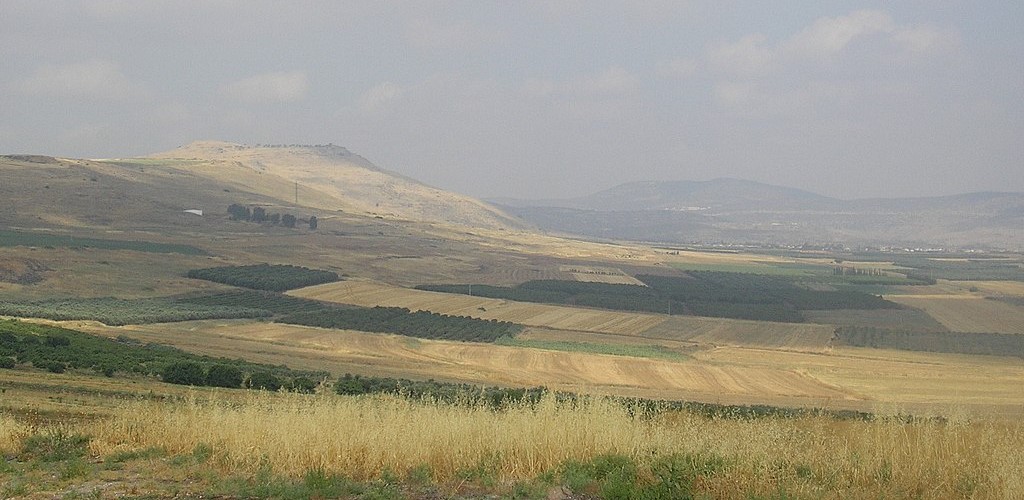
Battlefield of Hattin
I knew exactly what had happened on this battlefield, second by second. I felt as if I was not in an empty field, but right in the middle of the pitched battle that had taken place 808 years ago. I was explaining the events and detailing the battle, hoping to capture my wife's interest. My wife was not interested in history. What I was telling her did not interest her. She preferred to take pictures with her professional Nikon camera. Before the battle began, Saladin, the leader of the Islamic Army, set up his war tent on the hill facing Lake Tiberias; the Crusader Army and Guy of Lusignan, the King of Jerusalem, set up their tent on the other hill. The battle between the two armies continued mercilessly in the middle of the two hills.
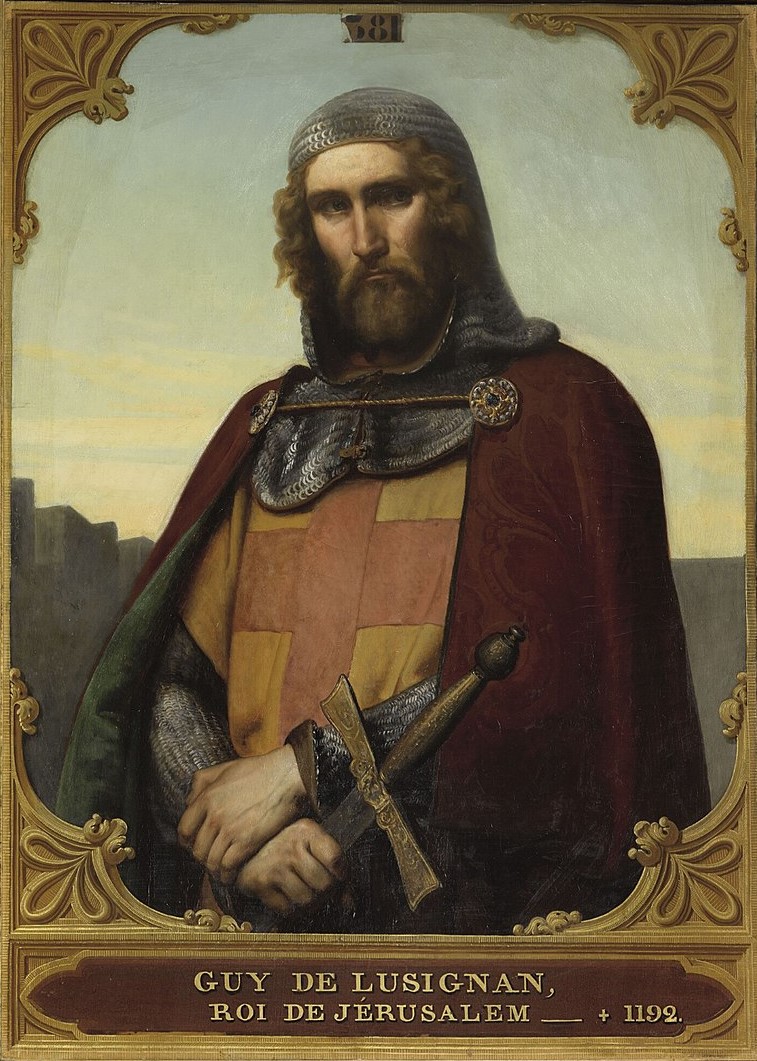
Guy of Lusignan, King of Jerusalem Saladin had learned the art of war down to the finest detail from his uncle Shirkuh, who is considered the greatest military genius in Kurdish history. To weaken the armored knight army, he cut off their water supply. In the July heat, the Crusader Army writhed in thirst, trying to advance towards Lake Tiberias, but the Islamic Army thwarted their efforts. A light breeze began to blow towards the hill where the King of Jerusalem was. Saladin did not want to miss this opportunity. He set fire to the dry grass on the ground. Flames and smoke rapidly advanced towards the enemy lines. The Crusader army, writhing in thirst, found itself in an even more difficult situation. Disarray and disorganization began in their ranks.
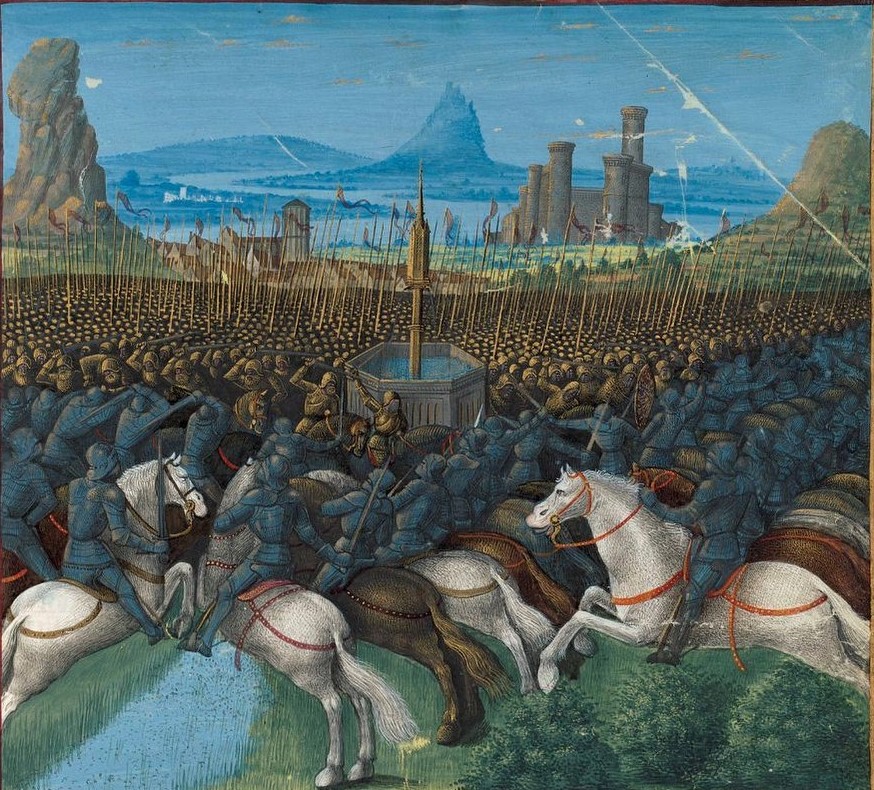
Battle of Hattin (The battlefield is also known as "Horns of Hattin" due to the two hills) Saladin stood in front of his tent, issuing orders. His 17-year-old son, Al-Afdal, was right beside him. The Kurdish historian Ibn al-Athir recounts Al-Afdal's observations in his own words: "The King of Jerusalem's aides waved flags and gave orders. The Crusader Army attacked the hill where my father was with all its might. If they had killed or captured my father, the war would have been over. The armored knight unit of the Crusader Army was powerfully cutting through the Islamic Army, rapidly approaching us. At that moment, my eyes involuntarily fell on my father. He was anxious. His face had turned pale with sadness. For a moment, he stroked his beard. The Islamic Army was in a state of panic. My father ordered his commanders next to him: "Defeat them! Do not let Satan triumph!" My father's words were effective. The disorganized Islamic Army regrouped. It launched a counter-attack. It pushed the Crusader army back towards the opposite hill. Not only that, but it began to advance towards the King's tent. In my joy, I shouted, "We have defeated them!" Then the Crusader army counter-attacked again, rapidly advancing towards our hill. My father again ordered: "Defeat them! Do not let Satan triumph!" The Islamic Army regrouped again and launched a counter-attack. Thereupon, I shouted again: "We have defeated them!" My father turned to me and gave me a stern look: "Be silent! We cannot consider them defeated until the King's tent falls." The moment my father said this, the King's tent also fell. My father raised his hands to the sky, saying, "Allah, thanks be to you!" and cried with joy." Guy of Lusignan, King of Jerusalem, and Raynald of Châtillon, who were captured, were brought to Saladin's tent. Raynald of Châtillon was a troublesome knight. He had threatened the holy cities of Mecca and Medina by sending pirate ships across the Red Sea and plundered Muslim villages in a wide area. Not only that, but he had attacked the Hajj caravan and killed innocent people, including Saladin's sister. When Saladin received the news, he swore to personally cut off Raynald of Châtillon's head. When the King of Jerusalem and Raynald of Châtillon were brought before Saladin, the historian Imad ad-Din al-Isfahani was also in the tent. He recounts what happened as follows: "Saladin invited King Guy and sat him next to him, then Raynald entered. He sat to the right of the King next to Saladin. An interpreter reminded Raynald of his sins: 'How many times have you sworn an oath and broken it? How many times have you signed agreements that you would never respect?' Raynald replied to the interpreter: 'Kings always act this way. I will say no more.' Meanwhile, King Guy was weakened by thirst, his head swaying as if drunk. Saladin spoke in a reassuring tone and had cold water brought, offering it to the King. The King drank and then extended the remaining water to Raynald, whose face was as white as chalk. The Sultan called out to the King: 'You did not ask my permission before giving him (Raynald) the water. Therefore, I am not obliged to show him mercy,' he said. (Note: According to the customs of the time, if a captor gives water to a prisoner of war with his own hand, the prisoner's life is spared. Mücahit) After Saladin said these things, he smiled in a way that left the two prisoners in fear, mounted his horse, and rode away. He directed the return of his troops, then came back to his tent. He ordered Raynald to be brought. Before Raynald arrived, Saladin took his sword in his hand, and as soon as Raynald entered, he struck a hard blow with his sword between Raynald's neck and shoulder bone. Raynald fell to the ground. His aides cut off his head. The rolling head stopped at the feet of the trembling King. The King was trembling. Seeing the King in this state, Saladin said in a reassuring tone, 'This man was killed because of his cruelty and ruthlessness.' The King, who witnessed the execution, was worried that his turn would come. Saladin reassured the King: 'It is not the custom of kings to kill kings; but this man crossed all boundaries. That is why I treated him this way.' *** While I was going back and forth between the two hills, reliving the battle, I hadn't even realized that 4-5 hours had passed. The sun was directly overhead. The midday heat was exhausting and oppressive. My wife was understanding, patiently waiting for me to return in the shade of the car where she had taken refuge. We set off. *** In the Six-Day War that took place between Israel and Arab countries in 1967, Israel occupied the strategically important Golan Heights on the Syrian border. It did not touch the Druze population but forced the Arab population to migrate to Syria. Syria captured a part of the Golan Heights in the 1973 war, but most of it remained in Israeli hands. Although the Golan Heights is a military zone, it is open to tourists. I definitely wanted to see the Golan Heights because I had greatly enjoyed watching the 1987 film "The Impossible Spy," which tells the life of the Israeli spy Eli Cohen. The Golan Heights is 1400 meters higher than the land on which Israel is built. Looking from the Golan Heights, you feel as if Israel is under your feet. For this reason, I believe it is impossible for Israel to give up the occupied Golan Heights. We set off again. After the city of Nazareth, where Jesus Christ spent his childhood, we followed the coastline and arrived in Tel Aviv via Acre. TARIQ ALI While continuing my life working for various companies in the USA, I found myself in Freiburg, Germany. Doing my doctorate and working as a consultant for international energy companies seemed more attractive to me. One day, I saw an advertisement in the Badische Zeitung newspaper, which reported news from Freiburg and the surrounding area: "British writer Tariq Ali will sign his book Das Buch Saladin (The Book of Saladin) for his readers."
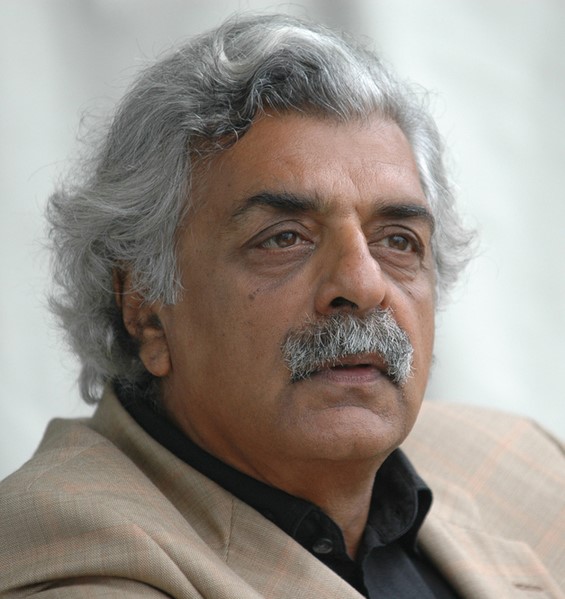
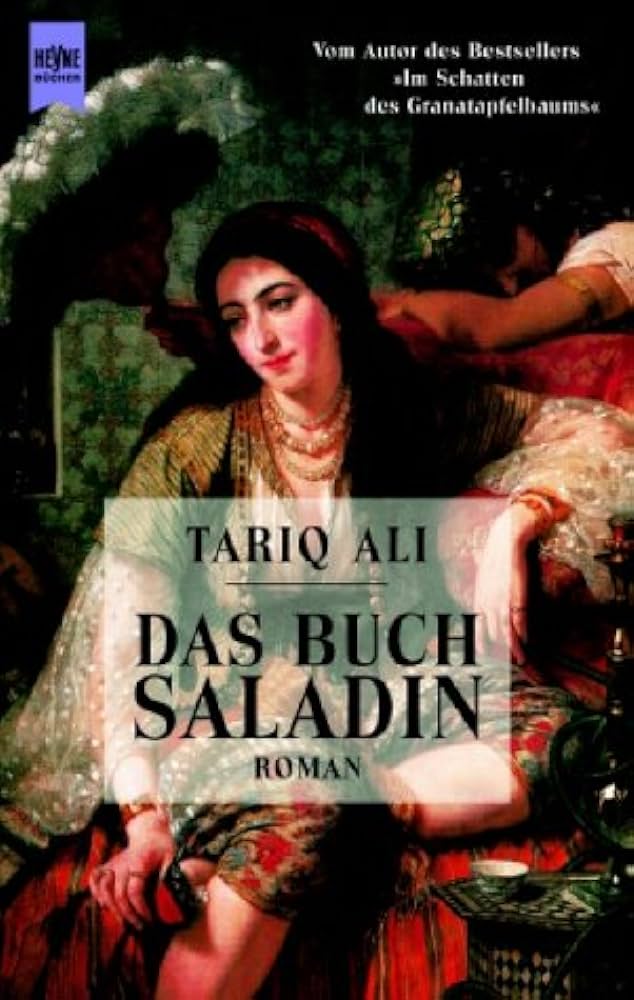
Tariq Ali and the cover of his book translated into German Tariq Ali, born in Pakistan in 1943, belongs to a political family. He studied Philosophy, Politics, and Economics at Exeter College in England. He became president of the Oxford Union. In 1964, he met the American Black activist Malcolm X. He participated in anti-Vietnam War protests. He befriended the famous singer John Lennon. In 1968, he joined the Trotskyist International Marxist Group and became its leader. In addition to dozens of books, Tariq Ali also wrote a book titled "Trotsky for Beginners" in 1980. *** At the time given in the newspaper advertisement, I was present at the "Literaturhaus / House of Literature" where Tariq Ali would sign his book. There was a lot of interest. It was the first time I had heard the name "Tariq Ali." Tariq Ali gave information about the book, speaking in English. He said that he largely based the information in his book on the Jewish scribe Ibn Yaqub, who lived during Saladin's time. However, he was unaware of the most important sources describing Saladin's era. Tariq Ali, not knowing Arabic, had written his book based on only a few sources translated into English. I bought the book and returned home. I lay on my bed and fell into deep thought. This was my second disappointment. I was angry with myself. I had collected a lot of material about the book. With a few months of work, I could have produced a comprehensive book. I felt disheartened. I didn't open the book for a few weeks. In the following days, I didn't go downtown, I didn't go to university. It was as if I had become estranged from life. *** In later years, I would experience an unfortunate event, losing all the documents, papers, and microfiches I had collected about Saladin during the days following my divorce. I had archived the information about Ziryab on my computer, but I had neglected to do the same for Saladin. After Tariq Ali's book, I lost my desire to write a book about Saladin. However, in later years, dozens of books about Saladin were published. I kept my promise to myself by publishing my book "Ziryab" in 2012. But the book I wanted to write about Saladin's life never saw the light of day due to my lost archives and notes. Every time I remember this, my heart still aches, and I feel crushed and guilty in the spiritual SHADOW of Saladin. LAST WORD The ancestral homeland of Saladin, the city of Dvin, is today in the Ararat Administrative Region of Armenia. The ruins of Dvin are 30 km south of Yerevan.

Representative image of the city of Dvin
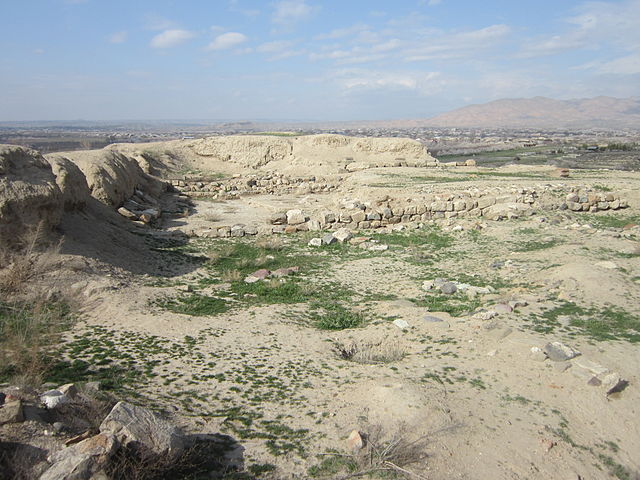
Today's ruins of Dvin When Artashat, the medieval capital of Armenia, was first built, it was defensible as it was surrounded by the Aras River on three sides. In later centuries, the Aras River changed its course, leaving Artashat undefended. This time, a new city named "Dvin" was built on a hill. Dvin, with a population of around 100,000, had different ethnic groups living side by side. The city of Dvin, built on a hill 30-35 meters high, was surrounded by strong walls, 16 meters thick and about 30 meters high. In addition, the castle was surrounded by a massive moat, 30-70 meters wide and 5-6 meters deep. The city, destroyed by an earthquake in 893, was rebuilt. The houses had deep wells dug to provide food supplies, and water was distributed to every house through clay pipes. The ruins of Dvin are on the banks of the Aras River, 30-40 km from Ramazankent, a district of Aralık. In this sense, Saladin and his family are children of the Sürmeli region. Iğdır did not claim Saladin's name. If I am not mistaken, there is only one mosque with this name in the Karaağaç neighborhood. Iğdır should internalize the name "Saladin," and embrace this historical figure and his spiritual legacy that the region has produced. PICTURES ABOUT SALADIN
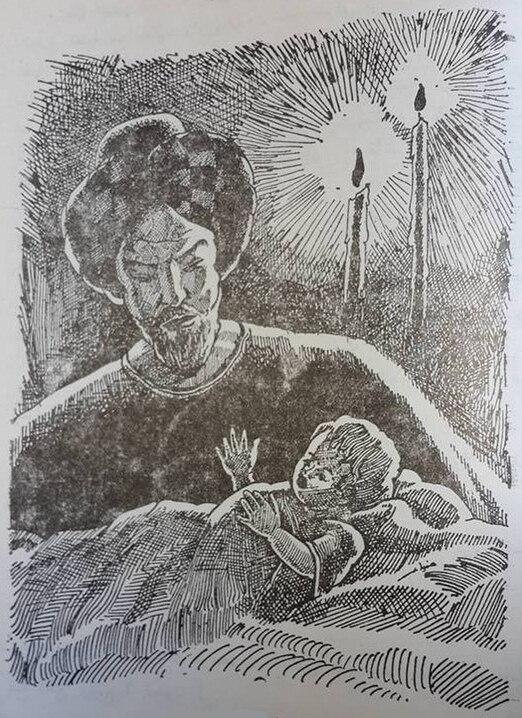
The birth of Saladin
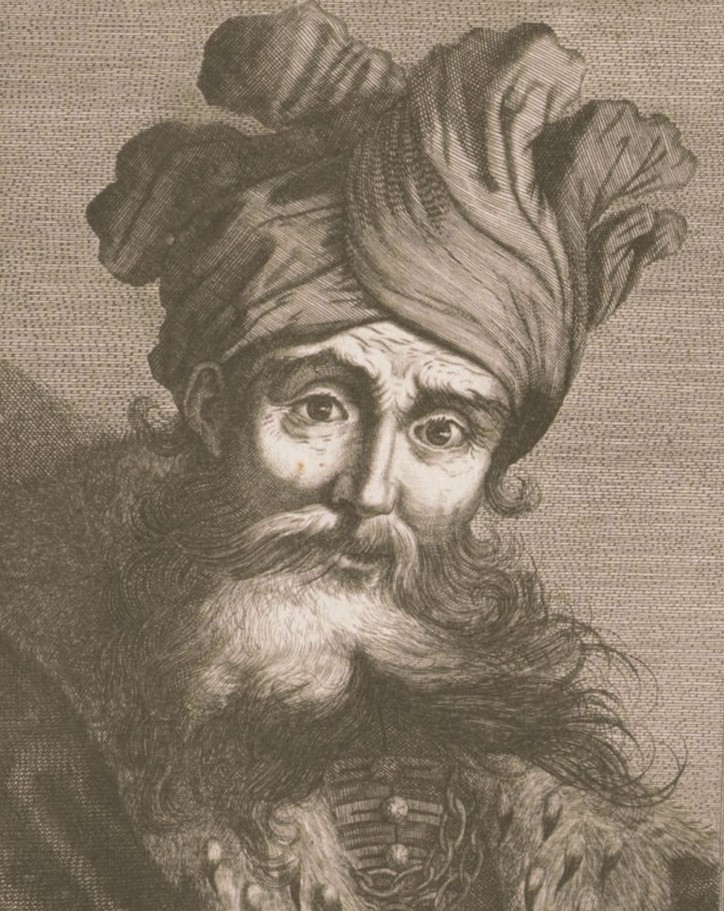
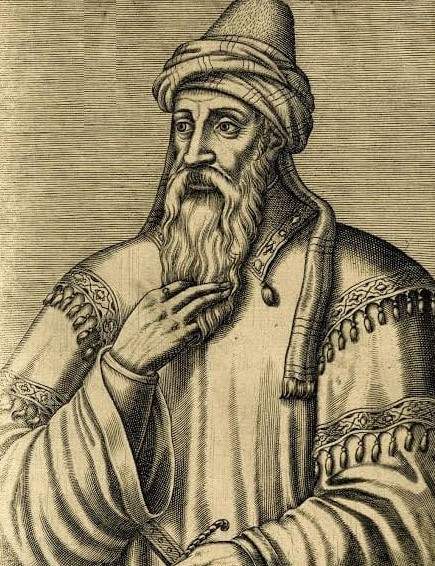
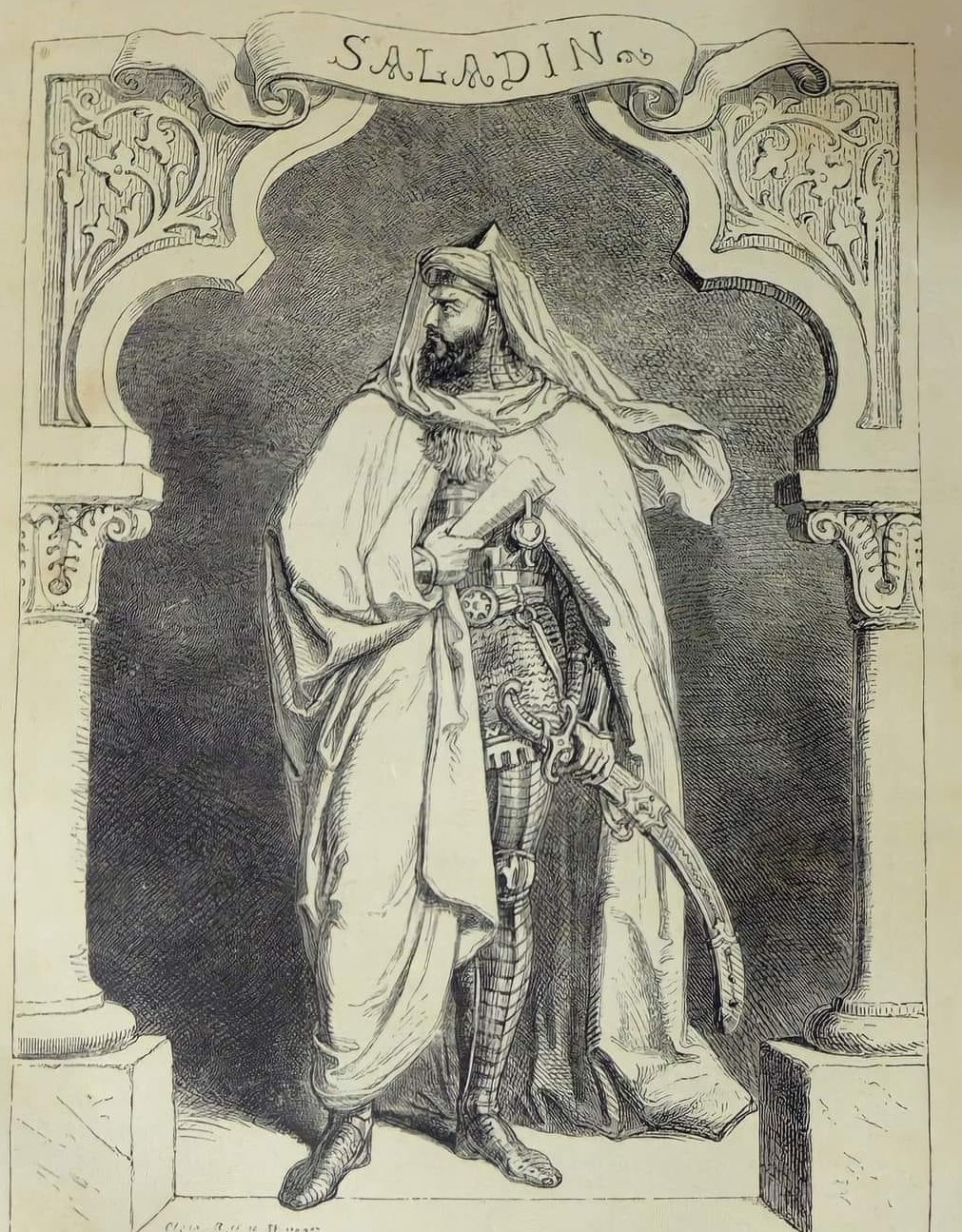
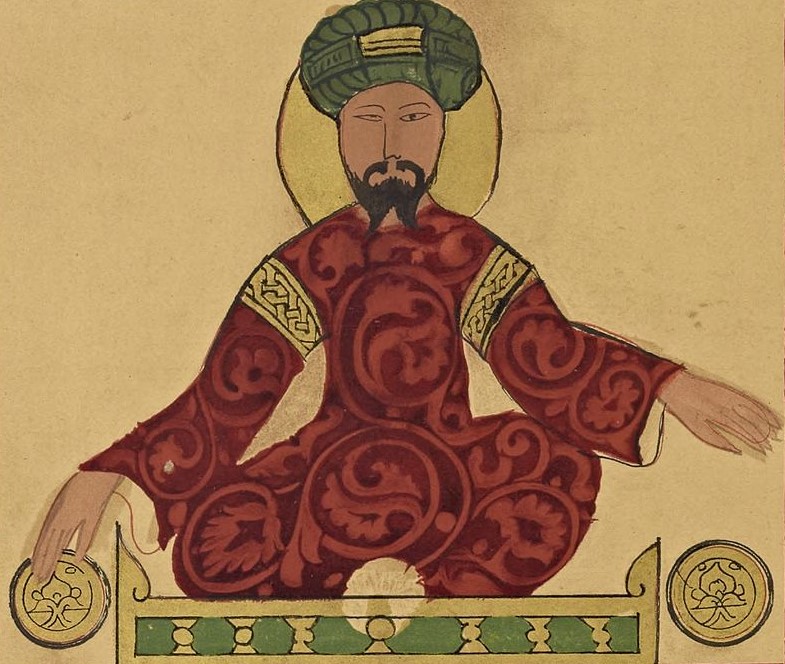
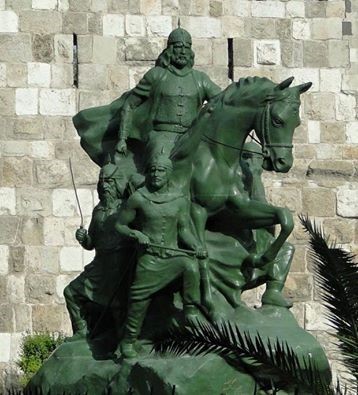
Statue of Saladin in Damascus
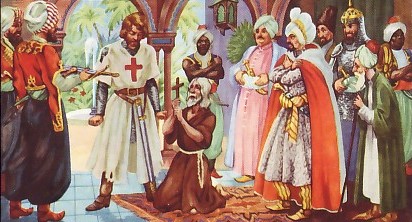
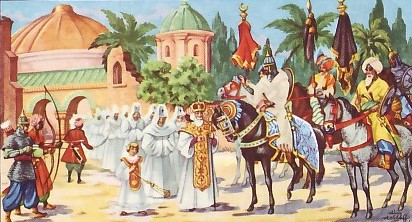
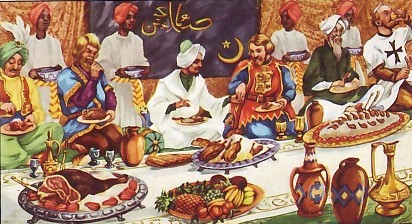
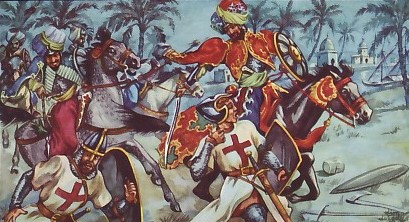
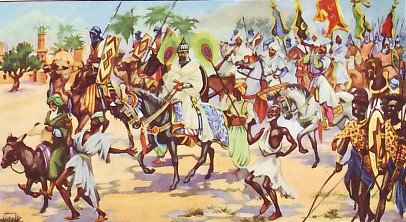
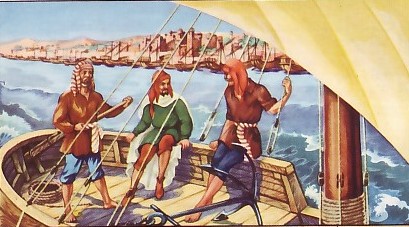
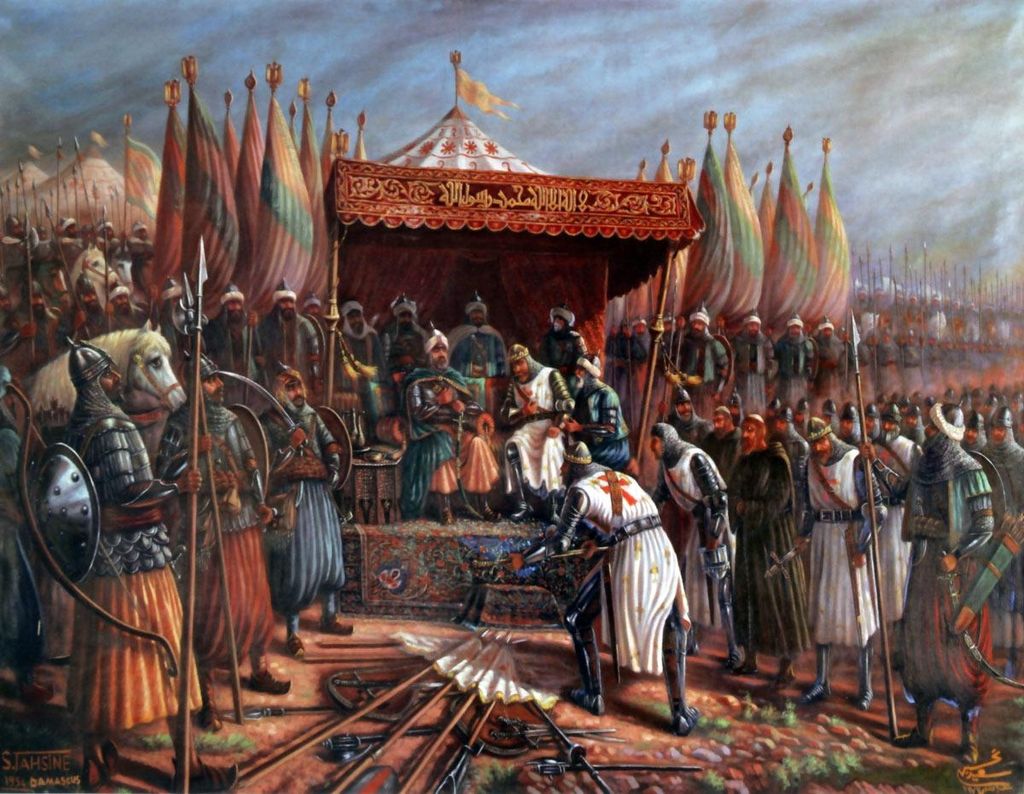
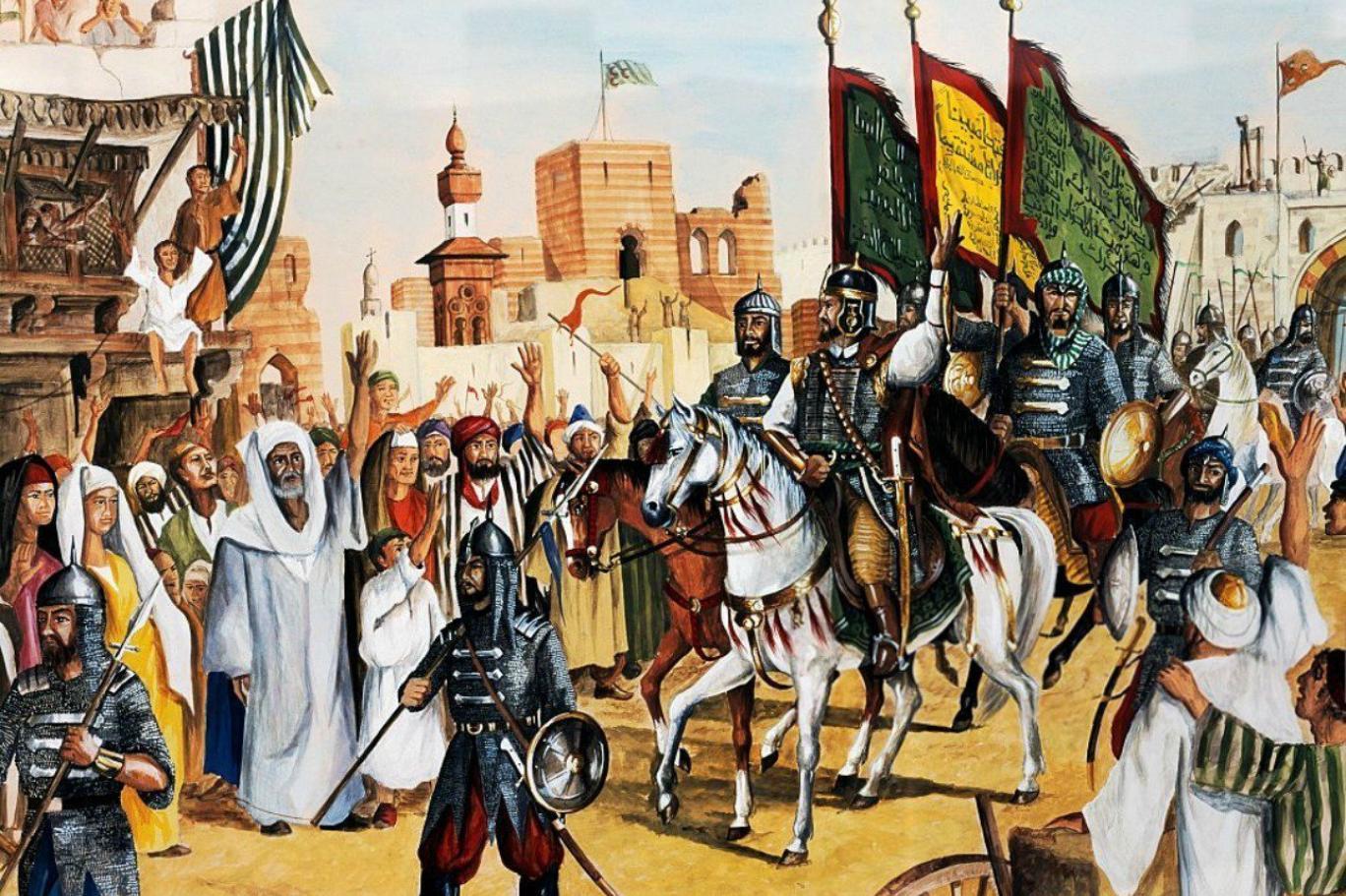
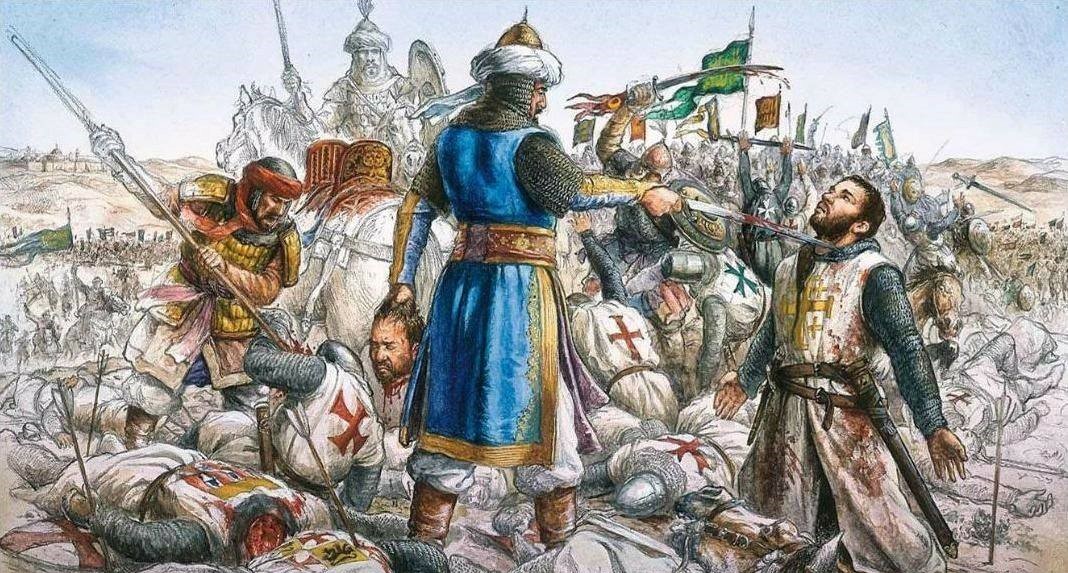
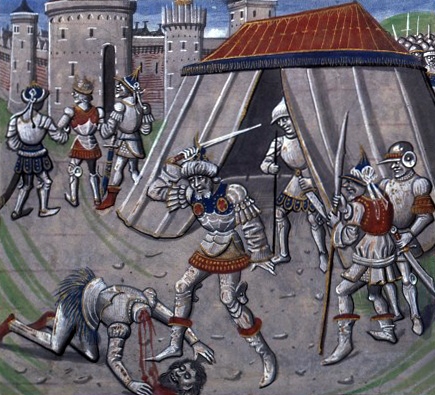
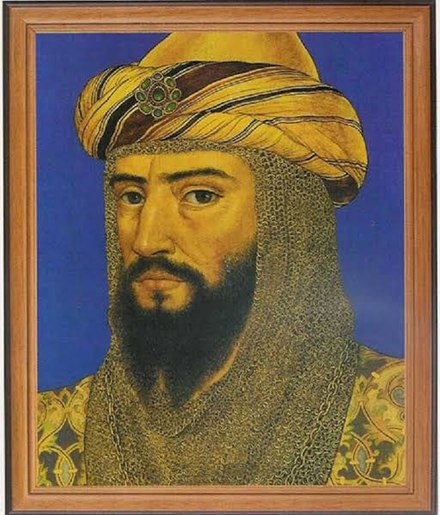
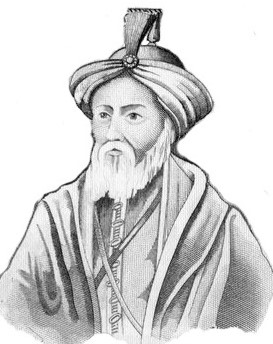
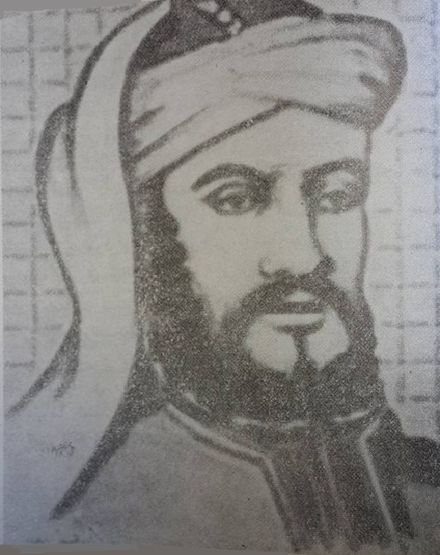
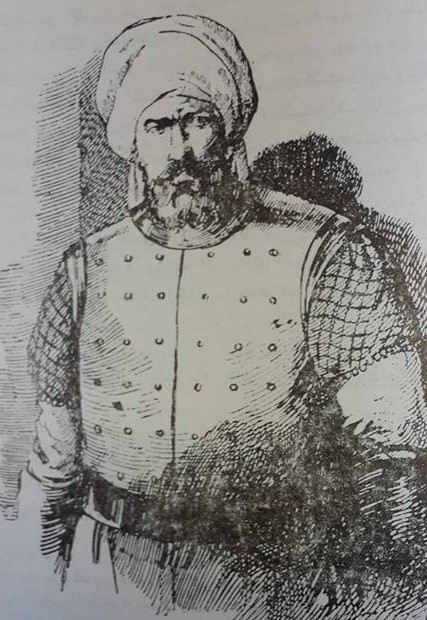
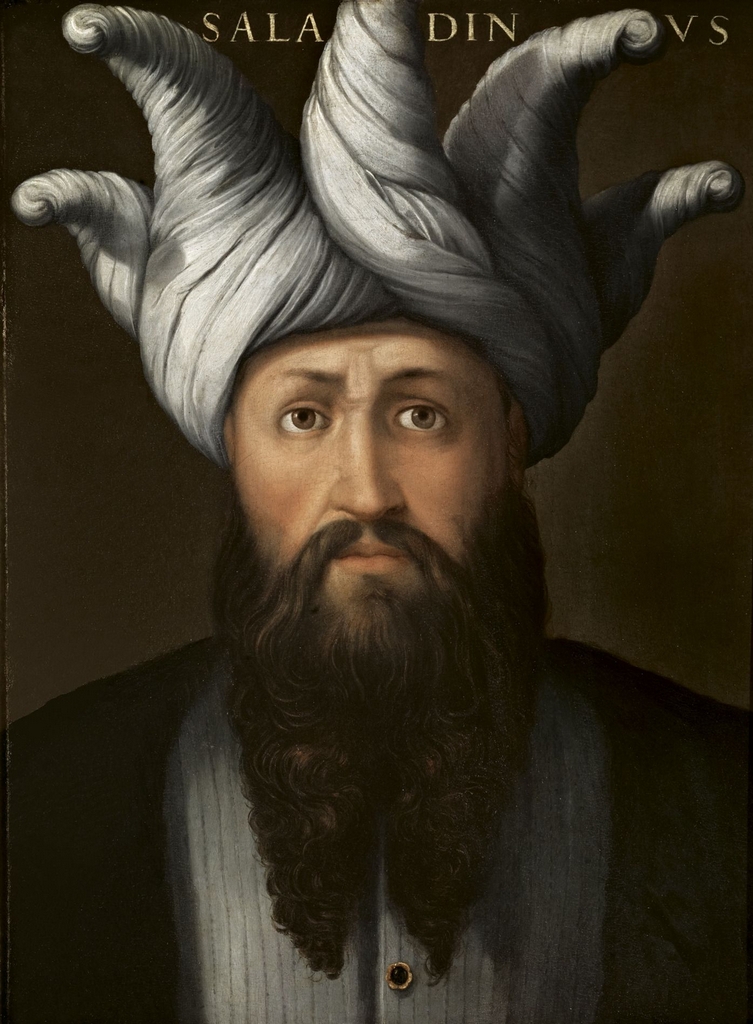
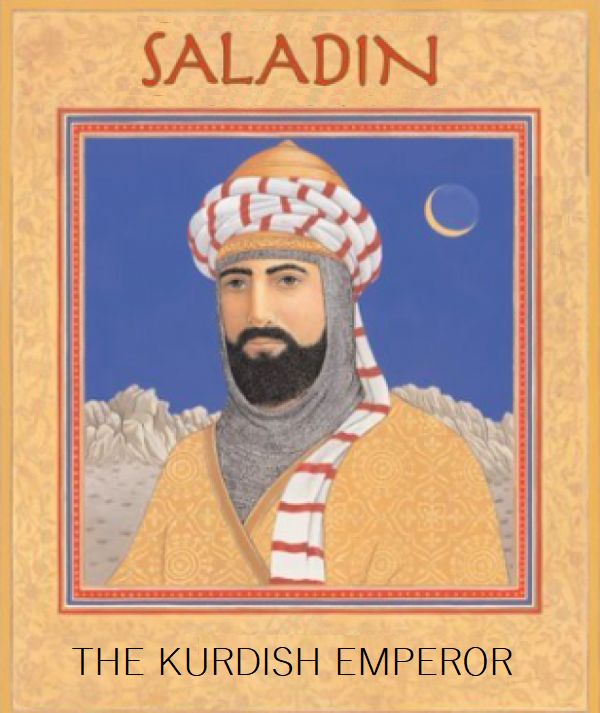
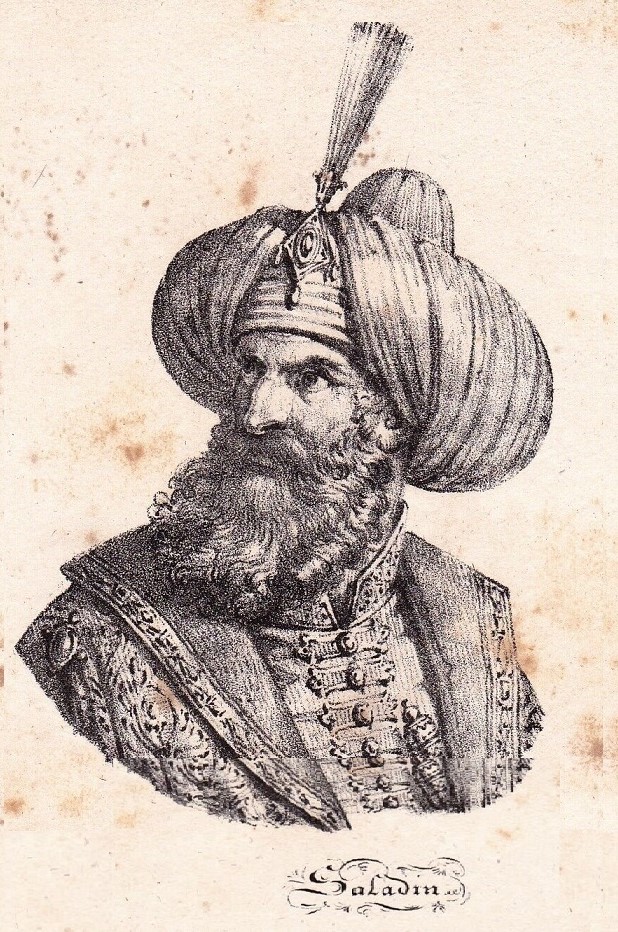
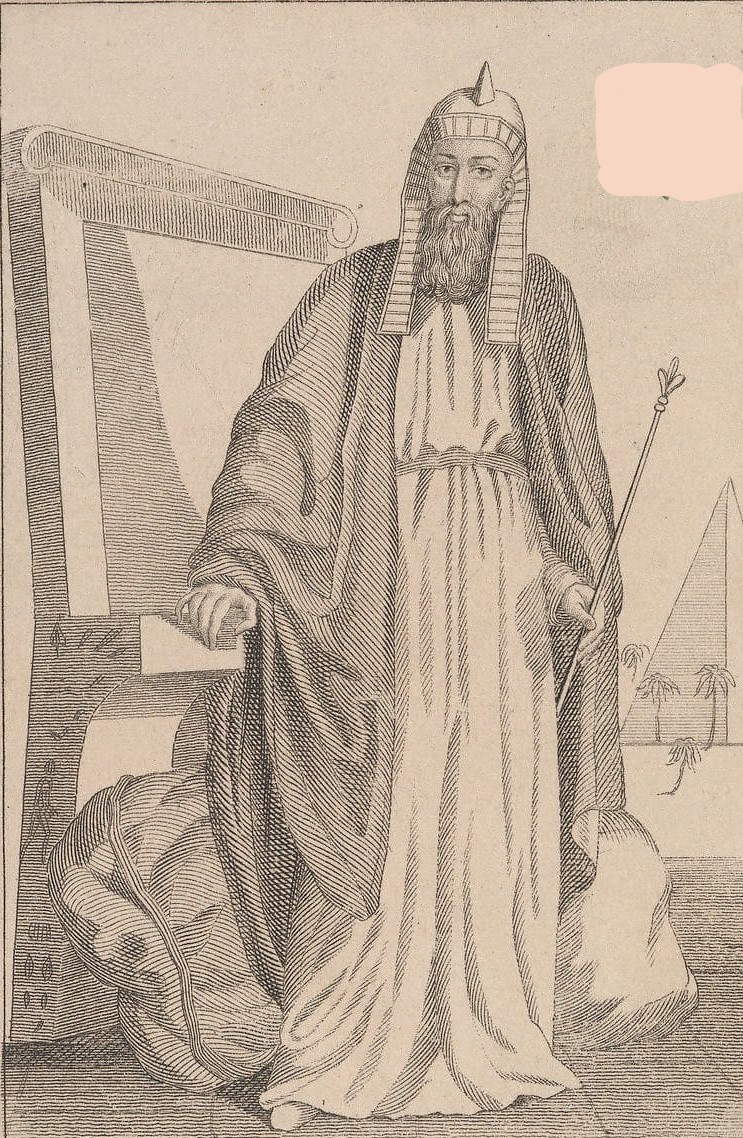
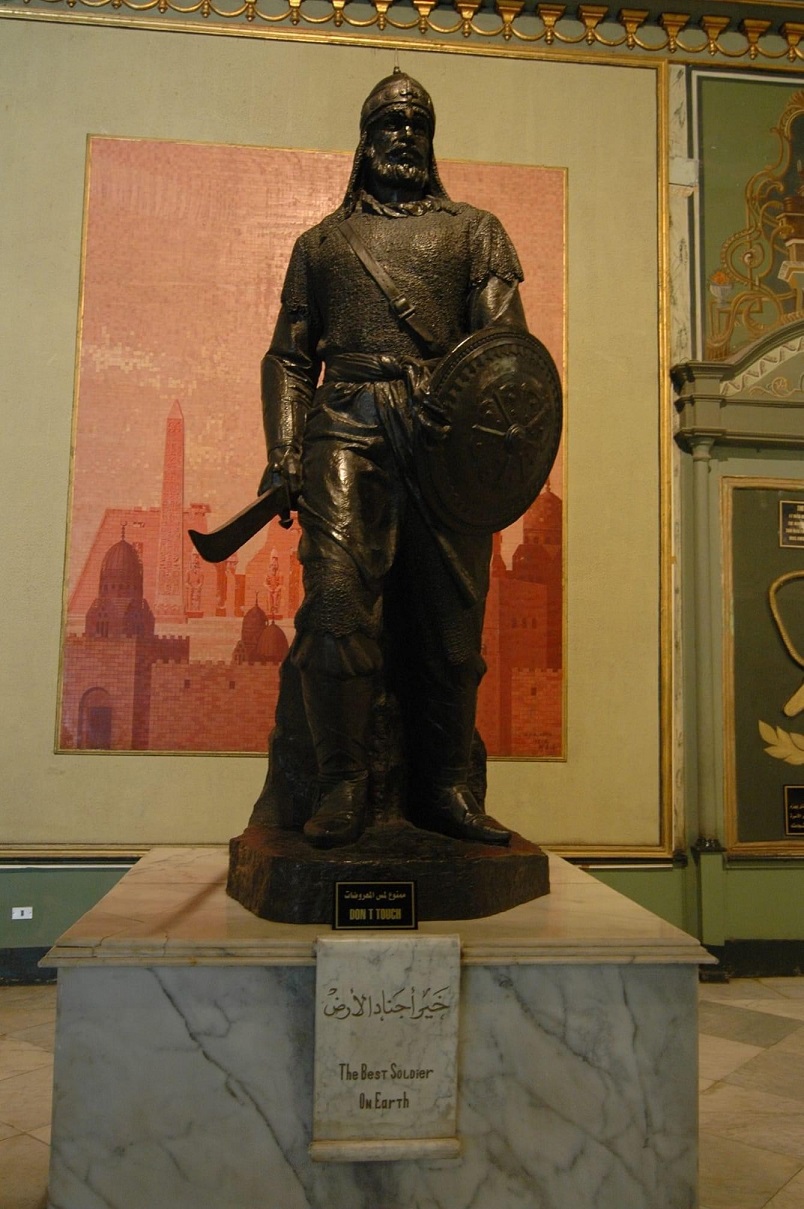
Statue of Saladin in the Cairo Military Museum (Caption below: The best soldier)
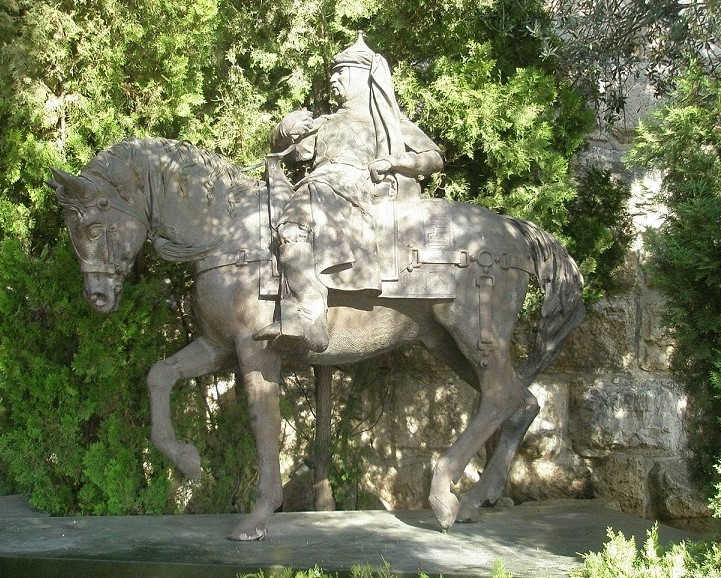
Statue of Saladin in Jerusalem
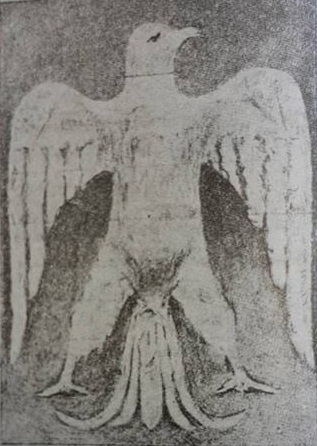
Saladin's Eagle in Cairo Citadel
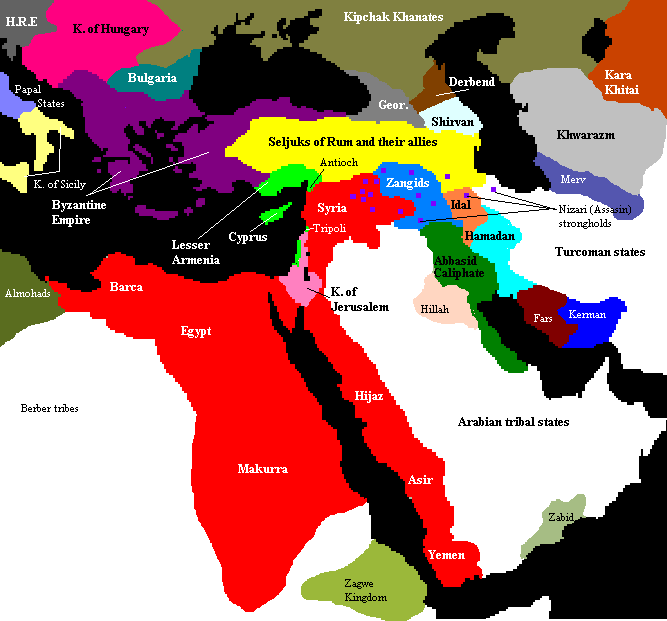

Ayyubid Kurdish State (red) Statue of Saladin in "Saladin Citadel" in Cairo
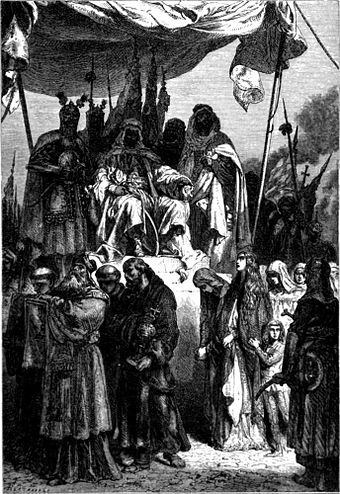
Christian inhabitants passing before Saladin after the conquest of Jerusalem
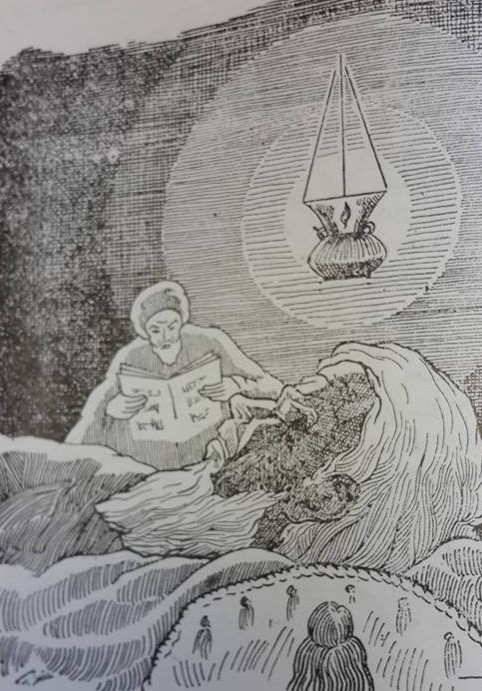
Saladin on his deathbed
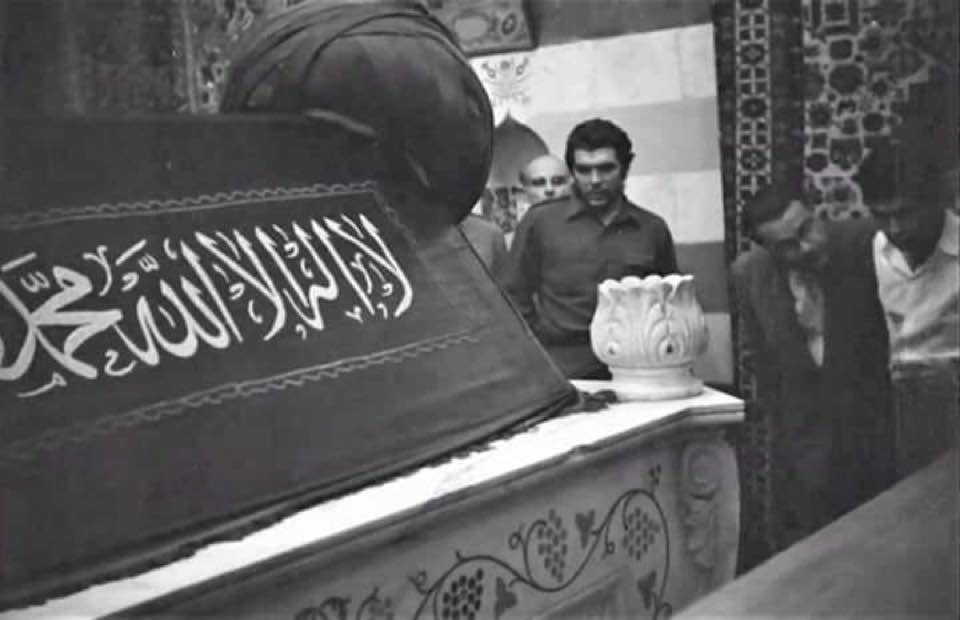
Che Guevara visiting Saladin's tomb in Damascus (1959)