Shanidar Cave and Humanity's Crossroads
This essay explores the significance of Shanidar Cave, the re-creation of Neanderthal faces, and the potential implications for humanity's future, contrasting Homo sapiens with Neanderthals.

Dear Readers:
It would not be an exaggeration to say that dreams are half of my life. This has always been the case since my childhood. Especially during my years in France, nightmares and dreams would turn my mind upside down, deeply affecting my daily life. I sought treatment, but it didn't work. My psychiatrist friend, giving up, laughed and said, "It seems that for you, dreams will remain real life and real life will remain a dream; don't bother trying to get treated."
***
A few days ago, I lay in bed, once again captivated by the spell of a dream:
I am in a large metropolis. I see strange creatures around. Their posture, their clothing, their gait are different from ours... Well, not that different. They also have two legs, two hands. They stand upright like humans. The only difference is perhaps that they are more massive and hairy.


I am watching a football match. On the field, humans and those strange creatures are playing together. I am watching TV. They are also in a beauty pageant... Finally, I can't resist asking my friend who they are:
"These are Neanderthal people. Have you seen Steven Spielberg's film Jurassic Park?"
"Yes!"
"You know, in the film, a biotechnology company revives dinosaurs using DNA technology. These strange creatures you see around are Neanderthal humans. They were re-created using DNA technology on bones found in Shanidar Cave in Northern Iraq. We will now live together."
***
I suddenly wake up. In the darkness of the night, I rethink the dream. The article I read the day before comes to mind. The results of the research on the bones found in Shanidar Cave had been published. My subconscious had drawn its own conclusion from what was written in that article, inviting me to another world in my dream.
SHANIDAR CAVE


Shanidar Cave is located in Northern Iraq, northeast of Erbil, 125 kilometers from the city. It is an archaeological site where Neanderthal human remains have been found.
During excavations from the 1950s to the 1960s, the remains of a total of ten Neanderthal individuals, dating back 35,000-65,000 years, were discovered in the cave. This number increased to twelve in 2018. These individuals were named Shanidar-1, Shanidar-2, Shanidar-3, Shanidar-4, and so on. The excavations yielded important information about Neanderthal social behaviors and cultures.
For example, "Flower Man," known as Shanidar-4, was found buried with flower remains, providing clues about Neanderthal burial rituals. These findings indicate that Neanderthals were not merely primitive beings struggling for survival, but also possessed a certain social structure and emotional depth.
On May 2, 2024, news broke on the websites of international archaeology journals: "Face of Neanderthal Found in Iraqi Cave Recreated."
This referred to the re-creation of the facial expression of a Neanderthal named Shanidar Z. The analysis strongly suggests that Shanidar Z was an elderly woman. Furthermore, the discovery of stone tools at the excavation site proves that Neanderthals exhibited intelligence to make daily life easier for themselves.

The recreated face of Shanidar Z
It is thought that the Neanderthals identified in Shanidar Cave may have come from Siberia during the Ice Age.
TWO HUMAN SPECIES: HOMO SAPIENS AND NEANDERTHALS
Our world has known two different human species: one is Homo sapiens, meaning all people of every race and color on Earth today; the other is Neanderthals, of whom no trace remains. Whether these two human species converged in a common ancestor in the depths of the past remains a mystery. A known reality is that the two human species, Homo sapiens and Neanderthals, somehow diverged from each other 500,000-800,000 years ago. To define the habitats of both human species, we need to know which regions of our world were completely covered by glaciers during the ice age.
OUR WORLD IN THE ICE AGE


Our world in the Ice Age and the distribution of Neanderthals (red) and Homo sapiens during that period
During the Ice Age, vast areas worldwide were covered by glaciers. Especially the following regions were covered by extensive ice sheets during the Pleistocene Ice Age:
North America: A large part of North America was covered by an ice sheet. This ice sheet spread over an area that included most of present-day Canada and the northern parts of the United States.
Europe: In Europe, the ice sheet covered all of present-day Scandinavia and a large part of Northern Europe. Glaciers extended to a large part of the British Isles and western Russia.
Asia: A large part of Siberia was covered by ice sheets. However, significant parts of Central and South Asia were less affected by glacial impact.
Southern Hemisphere: Antarctica was completely covered by ice and still is.
Likewise, the southern tip of South America was covered by glaciers along the Andes Mountains. In addition, the high regions of New Zealand and New Guinea were also covered by glaciers during the ice age.
Due to these glaciers, sea levels were 120-200 m lower than today. Today, the English Channel, which separates England from Continental Europe, is 34 km wide and has an average depth of about 50 m. During the Ice Age, England and Continental Europe were connected by a land bridge. Similarly, the Bering Strait also connected Asia and North America as a land bridge.
THE SPLIT AND THE EMERGENCE OF TWO HUMAN SPECIES


Neanderthal people
Neanderthals lived in Africa, sharing a common ancestor with Homo sapiens. At that time, there were no physical differences between them. For an unknown reason, human groups that broke away from the African region spread northwards, into glaciated areas. They evolved to adapt to the physical conditions of the region.
The reason Neanderthals lived in cold regions is related to both their evolutionary adaptations and the ecological conditions of the period:
Adaptation: Neanderthals were physically well-adapted to cold climate conditions. Features such as their short and strong body structure, wide rib cages, and large nasal structures provided advantages such as more effective heat retention in cold air and warming of the air before it reached the lungs. These features are ideal for living in cold climates.
Existing Ecology: During the period when Neanderthals lived, Europe was covered with ecosystems such as vast forests and taiga. These regions were rich in animal species that needed to be hunted, such as large mammals. Neanderthals' hunting skills developed in environments where such large animals were abundant.
Evolution of Settlements: Neanderthals evolved in these regions as a result of their ancestors, who migrated from Africa, spreading into Eurasia. Over time, with the expansion and retreat of glaciers, their habitats may have naturally shifted northwards and into colder regions.
Competition: As the glaciers melted, Homo sapiens from Africa spread northwards. While Neanderthals were adapted to cold climates, Homo sapiens thrived in temperate climates. As Homo sapiens multiplied and migrated north, Neanderthals were pushed into colder northern regions where there was less competition. Neanderthals struggled to adapt to temperate climates, but Homo sapiens had a greater capacity for adaptation. This led to the demise of the Neanderthals.
CONCLUSION
Homo sapiens, that is, us, have become a conceited, arrogant, boastful, proud, and even "spoiled" species.
There is something we have forgotten: Dinosaurs existed on Earth for 165 million years, but one day they suddenly disappeared. We have only existed on this Earth for 300,000 years. As Homo sapiens, we have proven this: We are not in harmony with nature; we are ready to destroy nature for our own interests. Not only nature, but we also ruthlessly plot and fight to destroy our own species.
Neanderthals were in harmony with nature. They were in solidarity with their own kind and did not group together and fight each other like us.
In my opinion, Neanderthals found in Shanidar Cave should be re-created using DNA technology, and the future of the world should gradually be left to them.
We Homo sapiens, who cannot escape wars, massacres, and the greed for wealth, should bid farewell to this world, just like the dinosaurs. I ask someone to remind Elon Musk that he should give up on his space program and dreams of settling on Mars.
ANECDOTES... ANECDOTES... ANECDOTES...
YETI OR ELTİ?
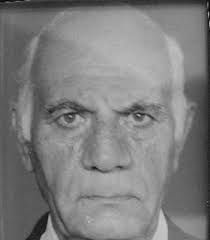
Hamit Hun
In Iğdır of the 1970s, the newspaper Günaydın was quite popular. It would headline topics that attracted public interest, breaking sales records in rural areas with low literacy rates by using plenty of colorful pictures and illustrations.
One day, Günaydın newspaper ran a headline on its front page, adorned with a huge picture: YETI CAME. It spoke of the existence of a gigantic, bear-like hairy creature depicted walking upright like a human in the snow of the Himalayas. In coffee houses, this picture from the newspaper was passed from hand to hand, people shivered with fear, and this monster called YETI suddenly became the nightmare of the people.

YETI walking in the Himalayas
In those years, the streets between neighborhoods were not lit, so it was pitch dark, and those returning home at night would imagine all sorts of creatures, scaring themselves. Those who saw the picture of the YETI were now returning home even more frightened at night.
On such a day, when the peace of the district was disturbed by the YETI rumors, Azeri and Kurdish compatriots sat at Hamit Hun's table in the coffee house and showered him with questions:
"Oh, Hemit Bey, what do you say, could this YETI's path lead this way?"
"Hemid Beg, li gor gotina şivanên me li Glîdagê çend YETÎ dîtine. Şivanan pez berdan û reviyan." (According to our shepherds, they saw a few YETIs on Mount Ağrı. The shepherds abandoned their flock and ran away.)
Hamit Hun tried to make scientific explanations and convince the citizens that there was no such danger, but eventually realizing he was wasting his breath, he got up from the table, muttering to himself, "Enough! Enough!"
Walking down the road, he met Adil Kuk, a Laz-origin colorful character of Iğdır. Adil Kuk was pensive. Hamit Hun asked curiously:
"What happened, Adil, why are you pensive?"
"Don't even ask, Hamit Bey. My brother's wife will be our guest tonight, and for days my wife has been nagging me, saying, 'What I suffer from this ELTİ (sister-in-law)!'"
As Hamit Hun walked away, he muttered to himself:
"Everyone is panicking because the YETI is coming, and Adil's family is panicking because the ELTİ is coming. What a strange world!"

Adil Kuk and Mecit Hun