Melayê Cizîrî: The Great Philosopher Who Poured Kurdish Cultural Memory into Poetry
Melayê Cizîrî, a 17th-century Kurdish poet and philosopher, is celebrated for elevating the Kurmanji language to a high cultural and philosophical level, embodying the rich intellectual tradition of Cizre.

In recent days, Cizre has hosted one of the most significant cultural gatherings in its history. The International Melayê Cizîrî Symposium brought together academics, researchers, and intellectuals from across the region, bringing the great poet's legacy back into the spotlight. One of the most striking aspects of the event was the participation of Masoud Barzani, the honorary president of the Kurdistan Region of northern Iraq. Barzani's meaningful visit served as a reminder that Melayê Cizîrî is not only Cizre's but the entire Kurdish geography's shared cultural memory; it showed that his legacy in language, literature, and Sufism has transcended regional value to resonate on national and international scales.
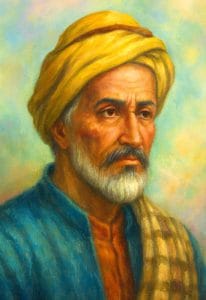
In the deeply layered cultural world of the Middle East, there are certain names without which it is impossible to grasp the spirit of this geography. Melayê Cizîrî is one such name. Mela Ahmedê Cizîrî, by his real name, is not merely a divan poet but a thinker who brought together Cizre's scholarly heritage, the philosophical vein of the Kurdish madrasa tradition, and Sufi intuition to a high aesthetic level in Kurmanji. To understand him is to understand both the foundation of Kurdish literary identity and the historical memory centered in Cizre. Classical sources do not provide very detailed information about Cizîrî's family. Nevertheless, the available clues—the madrasa culture in Cizre, the continuity of scholarly families, and a mind capable of profoundly using three languages—offer us a strong hint. Cizîrî was not an ordinary village mullah. Such a level of mastery in Arabic, Persian, and Kurdish, the ability to penetrate the discussions of wahdat al-wujud (unity of existence) with such depth, and the ease with which he incorporated astronomical and mathematical concepts into poetry, could only be possible for someone raised in a family environment dedicated to scholarship for generations. We do not have clear genealogical records, but the intense scholarly background behind his poems almost compels us to see him as part of a scholarly family belonging to Cizre's deeply rooted madrasa circles. (It is generally accepted that Melayê Cizîrî was born in Cizre around 1570 and died in the same city around 1640.) The period in which Melayê Cizîrî lived was a turbulent era marked by fierce competition between the Ottomans and the Safavids. The delicate balance established between the two empires since Çaldıran was frequently disrupted throughout the 16th and 17th centuries. The Botan region, located precisely on this border, was at the center of politics, trade, and conflict. Although the Principality of Botan was formally subordinate to the Ottomans, it enjoyed extensive autonomy in its internal affairs. Cizre served as both the administrative and cultural capital of this principality. The historical climate in which Sharaf Khan wrote his Sharafnama and the climate in which Melayê Cizîrî composed his divan are actually two dimensions of the same world: one writes the history of Kurdish political existence, the other embodies the depth of the Kurdish language and thought world in poetry. The social structure of this period rested on three strong pillars: the tribal system, the beylicate administration, and the madrasa network. Tribes were the basic unit of social organization, beylicates provided the legal and political framework, and madrasas held intellectual authority. Cizre was one of the points where these three elements intersected. It is precisely for this reason that a multifaceted personality like Cizîrî, who was both a mystic, a poet, and a philosopher, could emerge in this geography. The madrasa provided him with an intellectual backbone, Sufism gave him an inner world, and political turmoil and the spirit of the border region instilled in him a deep historical consciousness. Melayê Cizîrî's education represents the highest level of the classical Islamic madrasa curriculum. He was proficient in fields such as Arabic morphology and syntax, rhetoric, semantics and eloquence, logic, kalam (Islamic scholastic theology), philosophy, and tafsir (Qur'anic exegesis), as well as rational sciences like mathematics and astronomy. He had complete mastery of classical Persian poetry. Traces of Hafiz, Saadi, Attar, and Mullah Jami are clearly felt in his poetry. However, this influence is not at the level of imitation but rather an original synthesis that constructs a new metaphysics and aesthetics through Kurmanji. The crucial point is this: despite possessing this knowledge, Cizîrî wrote his divan not in Arabic or Persian, but in Kurmanji. This choice was not merely a linguistic preference but also a strong cultural stance. This is where Melayê Cizîrî's philosophy, language, and identity intersect. At the heart of his thought world lies Ibn al-Arabi's Akbari lineage. Wahdat al-wujud (unity of existence), the ontological connection between man and divine truth, the stages of the soul, and love as a path of transformation are the main axes of Cizîrî's poetic universe. Love, for him, is not an ordinary emotional motif. Love is a burning fire that takes man out of himself, melts his ego, and brings him closer to truth. The beloved appears sometimes as a concrete human, sometimes as divine beauty, and sometimes as man's own truth. This multilayered structure elevates Cizîrî beyond being just a poet, placing him at the level of a metaphysical philosopher speaking through Kurmanji. One of the most important features of Cizîrî's poetry is his almost flawless application of the aruz meter in Kurdish. Aruz is a meter developed within the patterns of Arabic and Persian. Adapting the sound structure, word lengths, and syllabic rhythm of Kurdish to these patterns is not as easy as it seems. Cizîrî overcomes this obstacle, and while working Kurmanji within aruz, he neither breaks the language nor distorts the meter. On the contrary, he unites the inner music of Kurmanji with aruz. Thus, Kurdish, for the first time on this scale and depth, becomes a high-culture language at the level of divan literature. This situation shows that the Kurdish language established its own aesthetic and intellectual domain long before the concept of nationalism in the modern sense emerged. At this point, we come to the frequently asked question: Was there Kurdish nationalism in Melayê Cizîrî? This question requires a historically careful answer. Cizîrî was a man of the 17th century. Neither the French Revolution had occurred nor had modern theories of nation emerged. Identities were shaped more around religion, Sufi orders, tribes, regions, and dynasties. Therefore, expecting 20th-century political Kurdish nationalism from Cizîrî would be anachronistic. Searching for modern themes such as "nation," "nation-state," or "political independence" in his poems would be a misreading. Nevertheless, the impact of what Cizîrî did is extremely decisive for modern Kurdish identity. Because he consciously chose Kurdish, wrote his work in Kurdish despite his mastery of Arabic and Persian, and made this language a vehicle for philosophy and Sufism. In other words, Cizîrî is not a nationalist in today's sense, but he is one of the strongest early founders of Kurdish linguistic consciousness and cultural identity. The fact that he is one of the first names that comes to mind when "Kurdish classical literature" is mentioned today is not just about his poetic technique. It is also about a language crossing the threshold of taking itself seriously. In his poems, we do not find a direct political statement like "I am Kurdish." However, his attitude towards language, geography, and tradition reveals a clear sense of belonging. His references to Cizre and the Botan line, his style that glorifies regional identity, and his determination to establish Kurdish as a high literary language make him a pioneer not of modern nationalism, but of cultural identity construction. The aesthetic and metaphysical infrastructure of what Ehmedê Xanî brought to an ideological plane with Mem û Zîn can be found in Cizîrî. Cizîrî's influence on subsequent Kurdish poets is multilayered. Traces of Cizîrî are visible in Feqiyê Teyran's mystical flights, in Melayê Bateyî's verse, and especially in Ehmedê Xanî's intellectual structure built around love, fate, justice, and the unfortunate destiny of the people. While Xanî brought the issue of language and identity to a clearer, more political language, the aesthetic and Sufi ground on which he stood was largely the ground built by Cizîrî. Some symbolic patterns, themes of love and exile, and expressions of grappling with fate that emerged in the dengbêj tradition in the 19th century also bear Cizîrî's shadow. A few couplets are enough to look a little closer into his world. In one of his famous couplets describing the burning intensity of love, he establishes the relationship between the candle and the moth: "Şem‘ê te got me: ji kîjan berfê min te ribe? Pervaneyî me tu yî, te neçûye be şerabe." "The candle said to me: From which snow can I protect you? I am the moth, I could not have stayed without drinking your fire." In another couplet, he summarizes the relationship between existence and non-existence in a single sentence, two lines that are almost a philosophy book: "Cihê nebînî hebû be, xeyalê te bû nebe. Her çi hebû, tu yî bu; her çi tune bû, tu nebe." "Whatever appears in existence is your imagination. Whatever exists, it is you; whatever does not exist, it is you." In another couplet, he turns to humanity's cosmic relationship: "Tu yî çavê kudretê, tu yî deng û nefesê, Tu yî hemû eynî, tu yî hemû ma‘nen sebebê." "You are the eye of power, you are the sound and the breath. You are all that is visible, and you are the cause of all meanings." Even these few examples are sufficient to show that Cizîrî was both a wordsmith, a metaphysician, and a cultural architect who elevated Kurmanji to the highest level of thought. Today, the symposiums held in his name in Cizre, modern academic studies, and reissued editions of his divan show that this great poet continues to occupy our minds centuries later for good reason. To read Melayê Cizîrî is not merely to read a poet. It is to read together the process of a language gaining self-confidence, the soul of a geography, and how a tradition of thought steeped in Sufism spoke through Kurmanji. In short, Melayê Cizîrî is not a "Kurdish nationalist" in the modern sense. But he is one of the strongest founding voices of the Kurdish language, Kurdish culture, and a civilization rooted in Cizre. His poetry both sheds light on the past and deeply nourishes today's identity debates from behind. In this respect, he is much more than a poet. He is the face of a civilization's memory speaking through Kurmanji. This symposium held in Cizre today is of great significance not only for Melayê Cizîrî but also for remembering all Kurdish thinkers, scholars, poets, and cultural leaders who have remained in the shadows throughout history. If Kurds want to keep their cultural memory alive and bring forgotten figures to light, they should organize such academic gatherings more frequently and comprehensively. Every symposium both makes visible the great heritage of the past and instills a strong sense of self-confidence and cultural continuity in new generations. Remembering figures like Melayê Cizîrî is not just a literary debt but also an act of cultural revival.