Murder in Mexico: Trotsky
The author recounts his journey to Mexico, initially driven by childhood memories of football and ancient pyramids, which unexpectedly led him to confront his long-held prejudices against Leon Trotsky through the lives of Diego Rivera and Frida Kahlo.
Dear Readers, People can never know when they will confront the cruel and rigid prejudices they have shaped over the years, to which they are undeniably devoted. Furthermore, they cannot predict the extent and impact of the profound disappointment they will experience in such moments. Such an event happened to me. As a young person who had adopted the spirit and values of the revolutionary youth movement known as the "Generation of '78," I was continuing my education at Istanbul Technical University. For us, the name "Trotsky" was etched in our minds as cursed, traitorous, and a counter-revolutionary who had sought refuge with imperialists. It was impossible for me to change this. For many years, I carried this prejudice with me. I always stayed away from Trotsky's name and his books. Until… PUERTO VALLARTA (pueto valata) It was during my MBA studies at the University of Pennsylvania. I had a ten-day holiday. My wife and I made a plan to go somewhere. I was not keen on going to Europe. Due to the time zone difference, I would succumb to the curse of "jet lag," feeling dazed for 3-4 days. On the other hand, I longed for a warm, seaside vacation. My wife suggested without hesitation: "Then, let's go to P.V. (pi vi)!" "Where is P.V.?" "Puerto Vallarta! Mexico's famous coastal city on the Pacific Ocean… In a sense, the apple of Mexico's eye. Its deep blue sea, pristine air, enchanting nature, dense forests surrounding the city… Moreover, many famous films have been shot in this city. It's a favorite city of Hollywood celebrities. Worth seeing!"
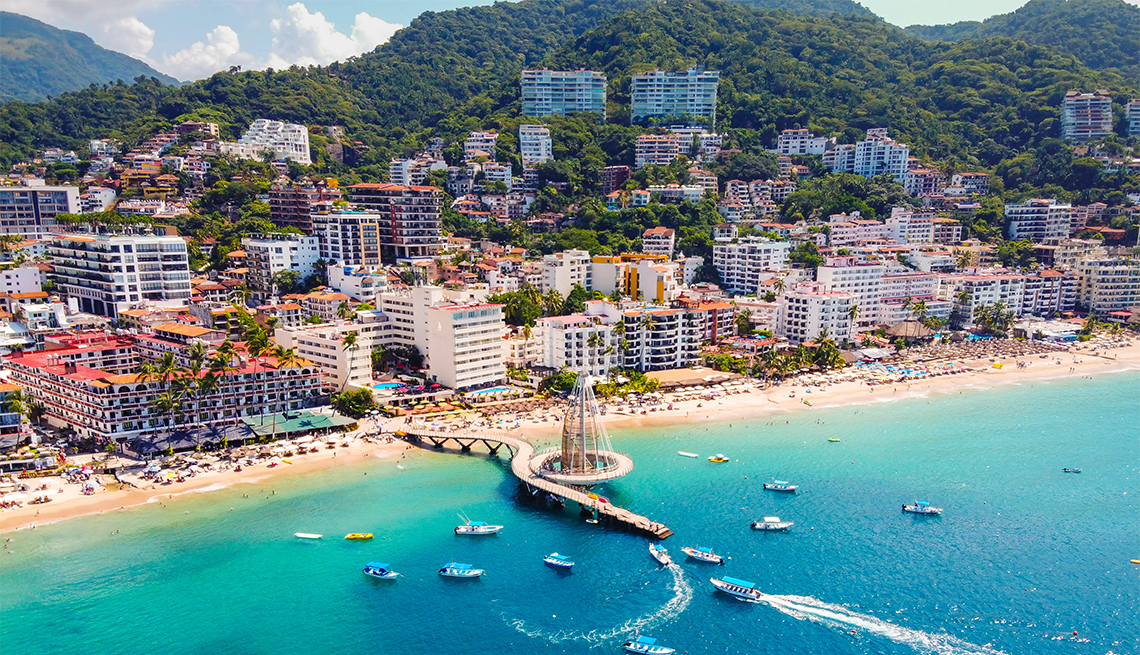
Puerto Vallarta
Once a small fishing village, Puerto Vallarta suddenly became a Hollywood hotspot when the 1964 film "The Night of the Iguana" was shot there, transforming from a small village into a popular destination frequented by movie stars. We spent five days in P.V. Suddenly and for no apparent reason, I wanted to see Mexico City (A humble reminder: The country's name is Mexico, and its capital is Mexico City). There were two reasons for this: First, to visit the Pyramids of the Sun and Moon located in the city of Teotihuacan, 40 km north of Mexico City; second, to see the Aztec Stadium, which had been etched in my memory since childhood and youth. My wife was also eager to see Mexico City: she was planning to visit the home and museum of two artists whose names I had never heard before, Diego Rivera and Frida Kahlo. The distance between the two cities is about 800 km. Unable to find a direct flight, we set off by bus. After a challenging, arduous, and long journey, we reached Mexico City. As soon as we arrived in Mexico City, we wasted no time visiting the pyramids. I had taken short archaeology courses at Berkeley (börkli) University and had learned interesting facts about both pyramids.

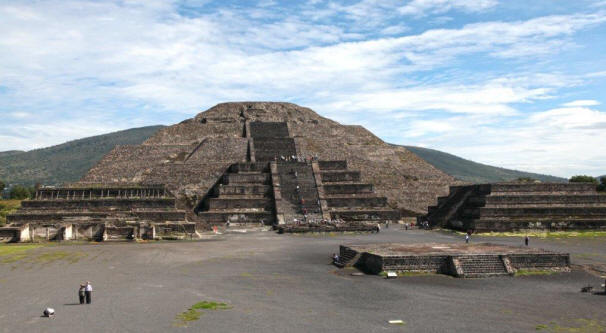
Pyramids of the Sun and Moon What surprised me most was that these pyramids were built 1400 years before Columbus, at a time when the American continent was unknown to Europeans, meaning the existence of the Egyptian pyramids was also unknown. How did humanity, while progressing on the path of civilization, feel the need to build massive pyramids unaware of each other? According to my archaeology professor, the reason was clear: humanity, wanting to be close to the sky, to the Gods, could only reach the greatest height possible with a pyramid-shaped structure. This reality also shows that the idea of God is a universal concept inherent in human creation, independent of time and space. *** We were tired. We returned to the hotel. The next day, we were going to visit the Aztec Stadium. AZTEC STADIUM I was a 12-year-old child. I was passionate about football. My peers and I played football all day, supported teams, collected pictures of world football stars from Melek / Golden chewing gum, made collections, and knew their names by heart. Pelé was a living legend who had won the hearts of all football fans.
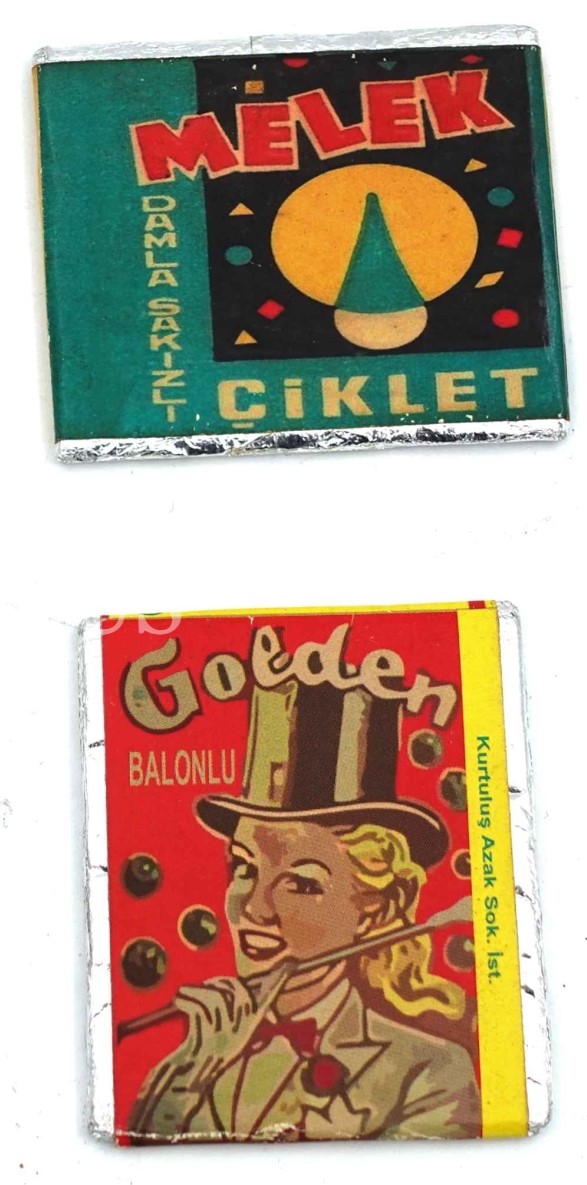
Nostalgic Melek and Golden chewing gums The 1970 FIFA World Cup was to be held in Mexico between May 31 and June 21. At that time, I was in the highlands. I will never forget that on June 21, the final match was to be played between Brazil and Italy. Halit Kıvanç, with his booming and exciting narration, had us children glued to the radio. We listened excitedly to the match, which started at 12 PM in Mexico, around 8-9 PM Turkish time, in a black goat-hair tent. I remember jumping for joy when Pelé scored the first goal and hugging my grandmother, who didn't speak a word of Turkish and didn't understand what was happening. Brazil defeated Italy 4-1 to become world champions. That evening, two names from Halit Kıvanç's narration stuck in my mind: Pelé and the Aztec Stadium. 16 years passed. It was 1986. I was in Paris. The FIFA World Cup was again being played in Mexico. This time, Maradona was there instead of Pelé. I watched all the matches with pleasure. Argentina and West Germany reached the final. On June 29, a fierce match at the Aztec Stadium… Argentina was the champion. Maradona lifted the cup. The Aztec Stadium, where Pelé and Maradona had lifted the championship cup, had unknowingly left a deep impression on my mind.
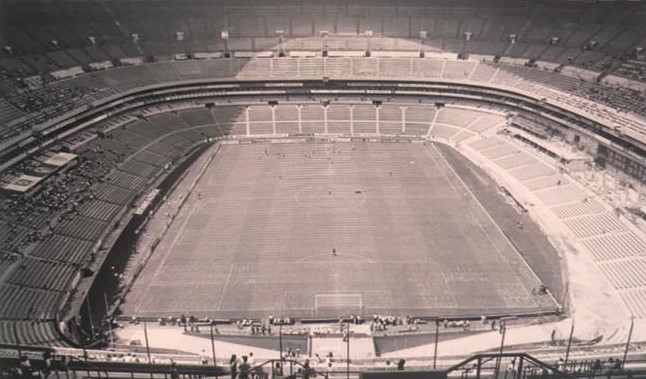
Aztec Stadium The walls of the Aztec Stadium were not high, but once inside, it had an awe-inspiring appearance. The stadium was bowl-shaped, as if buried in the ground. I sat in a row and communed with the Aztec Stadium. My mind drifted back to 1970. I tried to recall the excitement of a 12-year-old child, by the radio, in a goat-hair tent, under the moonlight. At the same time, I relived those days with pleasure, remembering Maradona's "Hand of God" goal against England in the quarter-final match on June 22, 1986, also in this stadium, and his "Goal of the Century," where he dribbled past six English players and the goalkeeper.
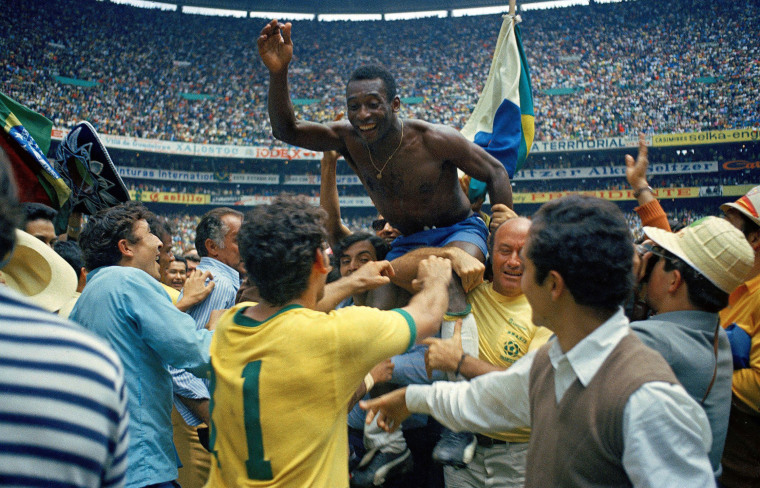
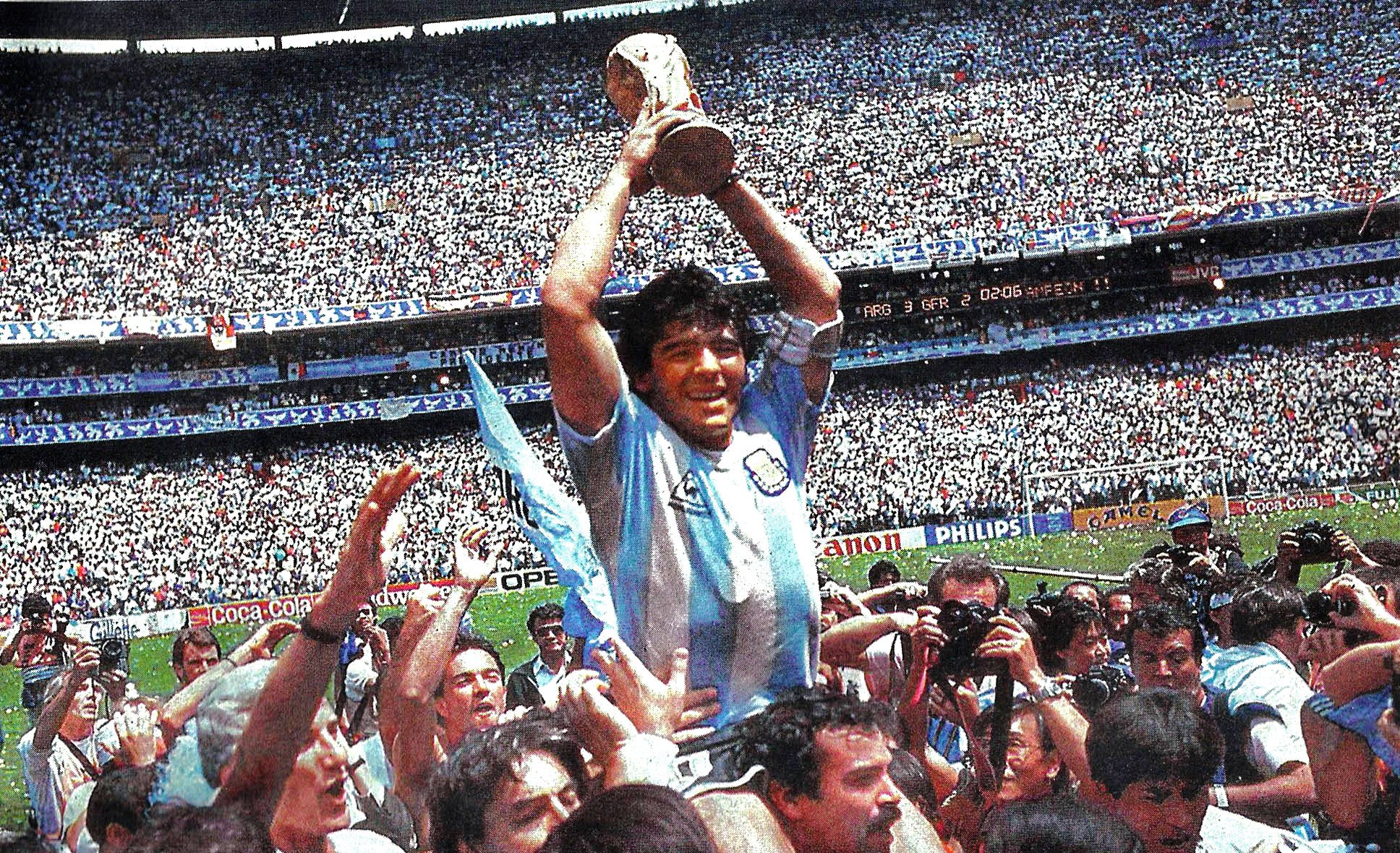
Pelé and Maradona at Aztec Stadium 16 years apart *** When we returned to the hotel that evening, I felt at peace. I had seen what I wanted to see and had begun making plans for our return. My wife objected: "Tomorrow, we will visit the Diego Rivera and Frida Kahlo museums." In European art circles, neither Diego Rivera nor Frida Kahlo were known. After the film "Frida," directed by Julie Taymor in 2002, dozens of books were written, and Frida Kahlo suddenly became world-famous. "I've never heard of these names!" The next day, we first visited the Palace of Fine Arts (Palacio de Bellas Artes). Thus, I became acquainted with Diego Rivera. GENIUS OF FRESCO ART: DIEGO RIVERA
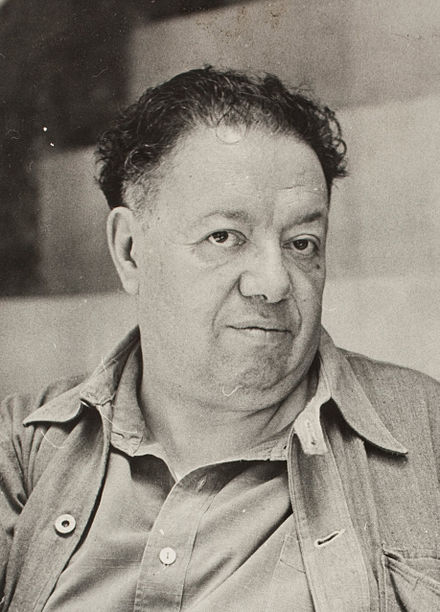
Diego Rivera Diego Rivera, born on December 8, 1886, in Guanajuato, Mexico. At the age of ten, he met painter José María Velasco and took night classes at the San Carlos Academy in Mexico City. In 1907, he went to Spain on a scholarship and had the opportunity to work in the studio of the famous painter Eduardo Chicharro. He later settled in Paris. He was lucky. He befriended artists like Pablo Picasso and Amedeo Modigliani. He became attached to communist ideology. In 1920, he went to Italy to study Renaissance frescoes (wall paintings), and impressed by what he saw, Rivera drew sketches, thus beginning a new period in his life. Diego Rivera returned to Mexico in 1921. He created a series of political and social murals expressing the hopes and actions of the Mexican Revolution. In 1923, he covered the walls of the Ministry of Public Education building with frescoes. The harmonious life of the pre-Columbian natives and the oppression and brutal slavery practices of the post-Columbian Spanish invaders are the main subjects of the frescoes. Diego Rivera stayed in the USA from 1930 to 1934. He earned his living by painting murals in San Francisco, Detroit, and New York. Most interestingly, the world-famous Rockefeller Center commissioned Diego Rivera to paint a fresco on the building's wall. Diego Rivera, a communist, created the fresco titled "Crossroads," but as if to take revenge on the imperialist Rockefeller family, he placed a portrait of Lenin in one corner of the fresco. It caused a scandal. The Rockefeller Center management immediately destroyed the painting. Defiantly, Diego Rivera recreated the same fresco on the wall of the Palace of Fine Arts when he returned to Mexico.
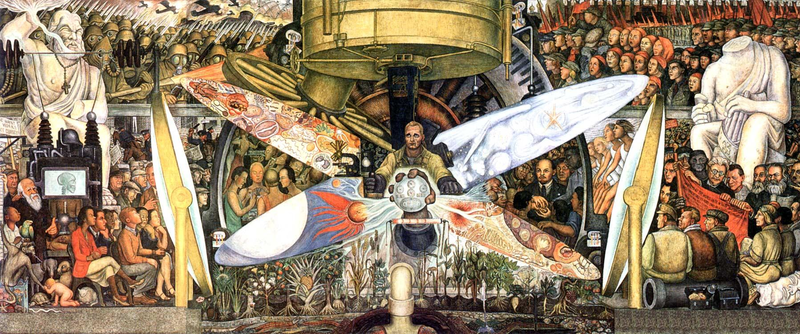
Communist Diego Rivera paints a fresco on the wall of Rockefeller Center, secretly placing Lenin's portrait in a corner of the fresco Diego Rivera married Frida Kahlo, a painter as famous as himself, twice. Frida Kahlo was the third wife of Diego Rivera, who married four times. Diego Rivera died on November 24, 1957, in his house in southern Mexico City, which once briefly hosted Trotsky and his wife and is now used as a museum.
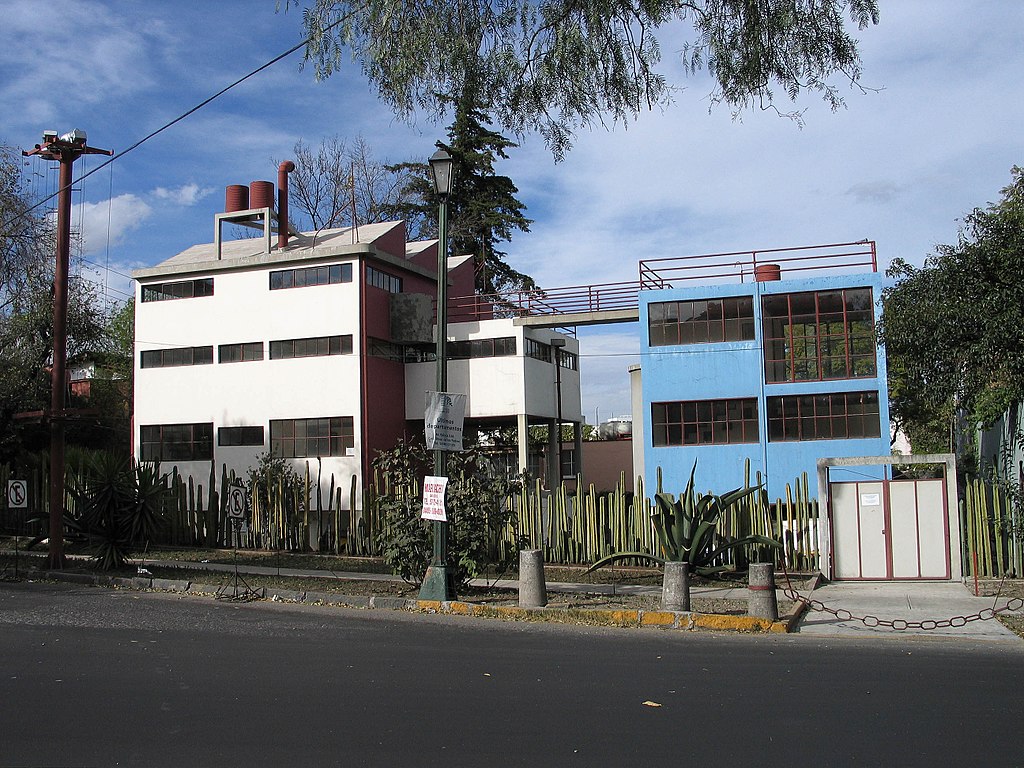
Diego Rivera's house, now a museum ***
Diego Rivera's frescoes of Lenin (left) and Karl Marx, Engels, and Trotsky (right) As I toured the museum, I was excited to see Karl Marx, Engels, Lenin, and Trotsky in the frescoes. My wife had not expected me to show such interest in Diego Rivera's works. I exclaimed excitedly: "Look! That's Lenin! And this is Trotsky!" "Who are they?" The average American doesn't concern themselves with world politics. For my American wife, these names meant nothing. Pleased with my interest in Diego Rivera, my wife added: "Diego Rivera was married to the painter Frida Kahlo. Now we're going to the Frida Kahlo Museum." It was impossible for me to refuse. As I entered Frida Kahlo's blue-painted museum house, I felt as if I had entered another world. Every object was placed with an artistic sensibility, deeply affecting the human soul. We entered a room. Photographs hung on the wall. In one photo, Trotsky and Frida Kahlo were together. I couldn't make sense of it. The picture was taken in Mexico City in January 1937. I turned to my wife: "This is Trotsky! How can this be?" My mind was confused. After the museum, we went to Mexico City's largest bookstore. I bought all the books about Diego Rivera and Frida Kahlo. When I returned to the hotel, I began reading them with great interest. The books transported me to another world. Trotsky, fleeing Stalin's persecution, came to Mexico City with the help of Diego Rivera and Frida Kahlo, where he was granted asylum. He was murdered in this city by Stalin's agents. When I learned that the house where Trotsky was murdered had been converted into a museum, I made a plan: "Tomorrow, we will go to the Trotsky House Museum in Coyoacán!" "How can that be? We're flying to New York tomorrow." "Let's postpone it for a day. I absolutely want to see this house." "Who is Trotsky anyway? Is he that important?" I remained silent. I continued reading the books with excitement. FRIDA KAHLO
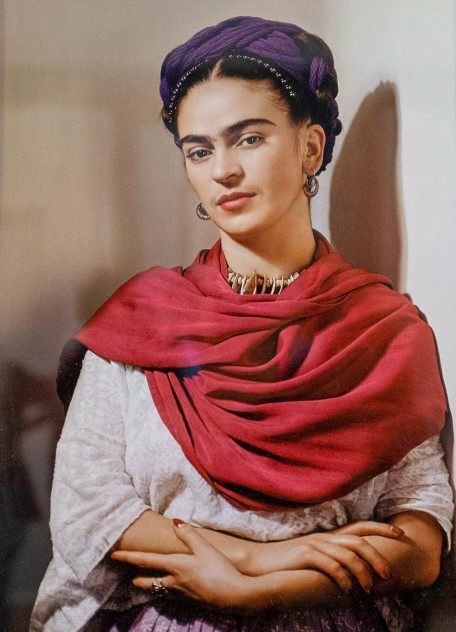
Frida Kahlo was born in Coyoacán, south of Mexico City, in 1907. At the age of six, she contracted polio and became disabled. She attended the National Preparatory School, which was one of the best educational institutions of its time. She became acquainted with art, literature, and philosophy. She joined an anarchist literary group. A traffic accident at the age of 18 changed her entire life. On September 17, 1925, while returning home from school, the bus Frida was on collided with a tram. Many people died. One of the tram's iron rods entered Frida's left hip and exited through her pelvis. After this ominous accident, Frida Kahlo's entire life was spent among corsets, hospitals, and doctors. She lived with unceasing pain in her spine and right leg, underwent 32 surgeries, and as if that weren't enough, her right leg, crippled by polio, was amputated in 1954 due to gangrene. After the accident, Frida Kahlo remained in the hospital for a month. Encouraged by her family, she began to paint in the hope of alleviating her distress and pain. She painted self-portraits by looking at the mirror on the ceiling of her bed. Her first self-portrait was titled "Self-Portrait in a Velvet Dress" (1926).
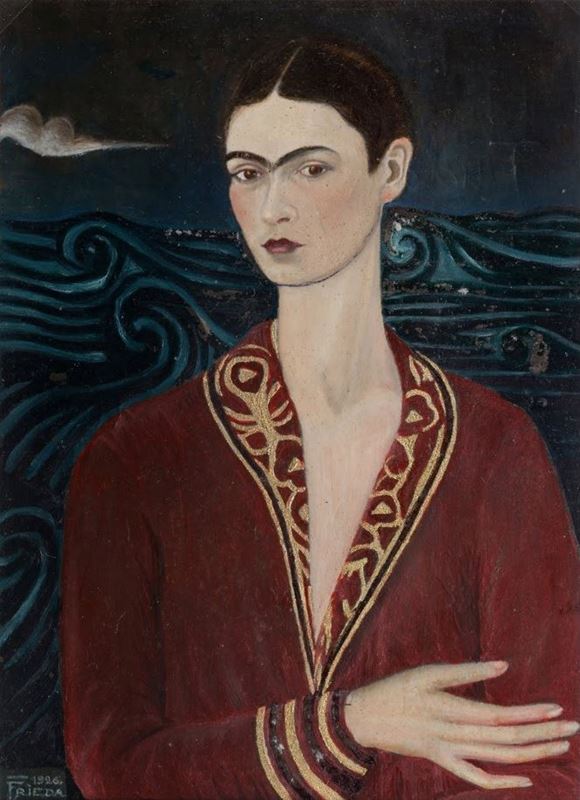
Frida Kahlo's work "Self-Portrait in a Velvet Dress" In 1927, Kahlo finally began to walk and established close relationships with art and political circles. She attended artists' invitations and socialist discussions. Frida Kahlo joined the Mexican Communist Party in 1929.
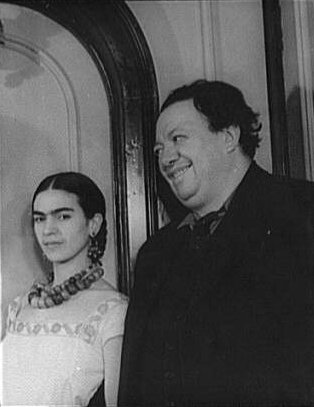
Frida Kahlo and Diego Rivera (1932)
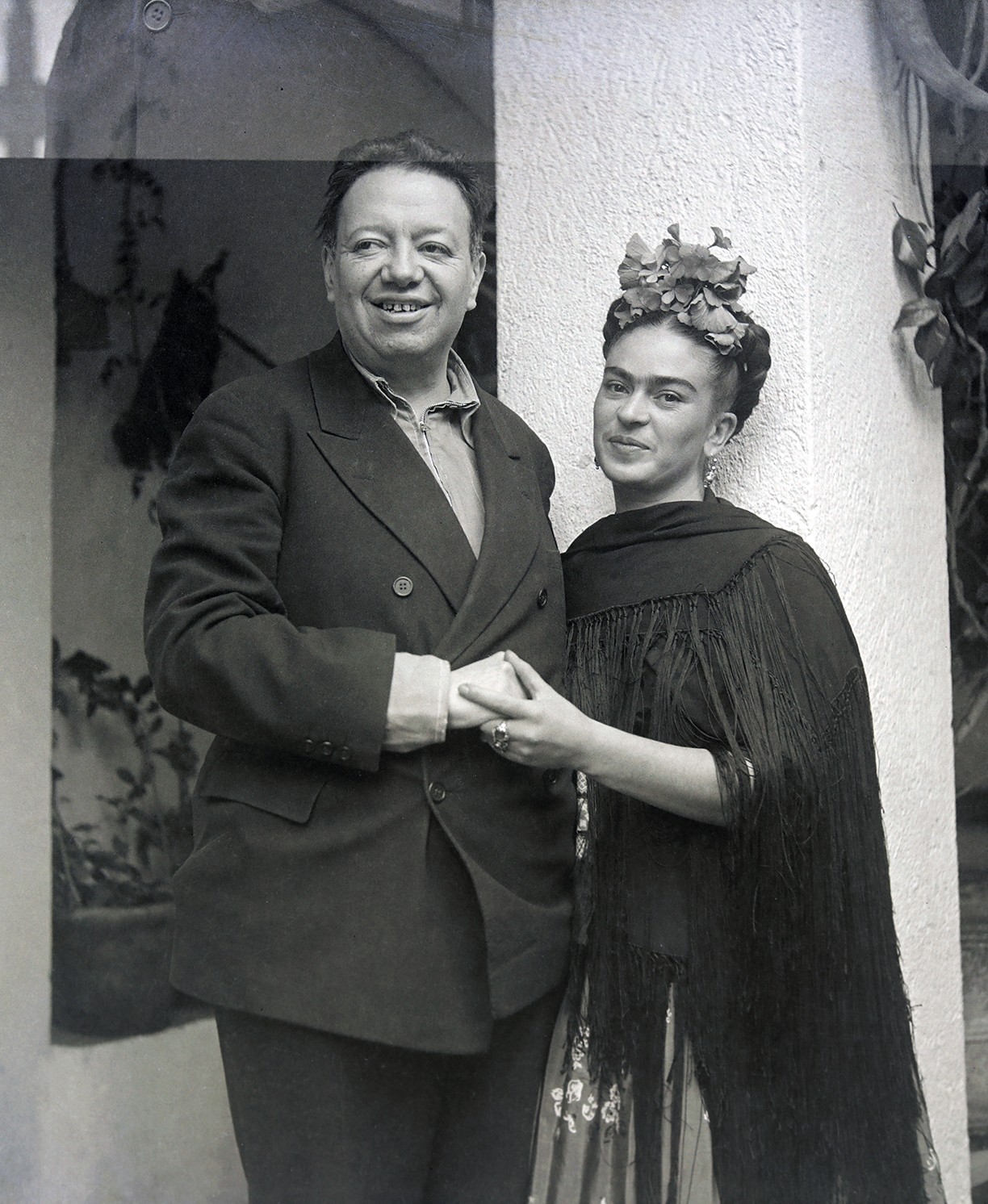
Frida Kahlo and Diego Rivera Frida Kahlo met Diego Rivera through a friend and showed him her paintings. A romantic relationship developed between them. They married on August 21, 1929. Since 22-year-old Frida Kahlo was slender and delicate, and 42-year-old Diego Rivera was large, art circles likened this marriage to "the marriage of an elephant and a dove." Frida Kahlo painted her second self-portrait in the year she married. In the same year, after Diego Rivera was expelled from the Communist Party, Frida Kahlo also left the party. In 1930, she went to the USA with her husband and lived there with Rivera until 1933. In the second year of their marriage (1931), she painted her famous work "Frida and Diego Rivera."
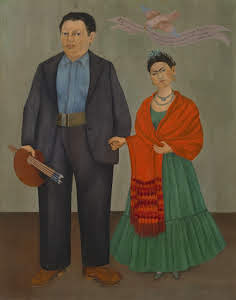
Frida Kahlo's painting "Frida and Diego Rivera" The couple had a stormy marriage. Due to health problems, Frida Kahlo aborted one child and had two miscarriages in a row. Frida Kahlo separated from her husband in 1939 due to his infidelity, but they remarried a year later. This time, they settled in the "Blue House" where Frida Kahlo spent her childhood.
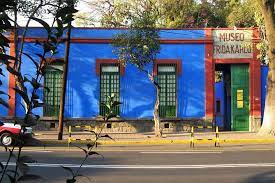
Frida Kahlo's Blue House, now a museum Frida Kahlo, whose health often deteriorated, painted with all her might to cope with unbearable pain. She opened exhibitions. The exhibition she opened in New York in 1938 brought her great fame. In 1943, she began teaching at an art school called "La Esmeralda." Despite her poor health, she taught for ten years. Her students later became famous as "Los Fridos" (Frida's students). Frida Kahlo rejoined the Mexican Communist Party in 1948. In 1950, she was hospitalized due to spinal problems. She stayed in the hospital for 9 months. In July 1953, her right leg, which had gangrene, was amputated. Frida Kahlo was diagnosed with pulmonary embolism. She passed away on July 13, 1954. Her body was cremated. Her ashes are in the Blue House Museum. Diego Rivera donated the Blue House to the state in 1955 to be a museum. Frida Kahlo's last work is the still life titled "Viva la Vida."
Frida Kahlo's last work: "Viva la Vida" Frida Kahlo has been recognized as one of the symbolic figures of the feminist movement due to her courageous stance on issues such as sexual freedom, respect for different opinions, the right to abortion, love affairs, the pain of infidelity, and her free use of her private life in art. Frida Kahlo had love affairs during her marriage. One of the most important of these was her secret love affair with Trotsky, a leading figure of the Russian Revolution. Trotsky came to Mexico in 1937 with special permission from the Mexican President, obtained with the help of Diego Rivera and Frida Kahlo, and settled in Frida Kahlo's Blue House with his wife.
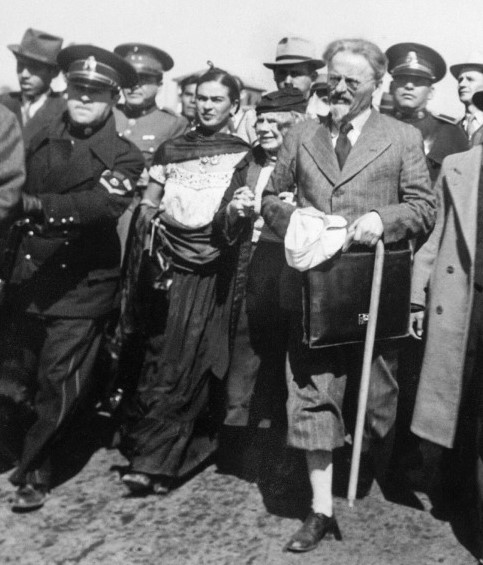
January 9, 1937. Trotsky and his wife arrive in Mexico (from left to right: Frida Kahlo, Natalia Sedova, and Trotsky) The couples spent time together. Soon, Frida Kahlo and Trotsky grew closer. When Trotsky's wife noticed their relationship, Frida Kahlo broke up with Trotsky.
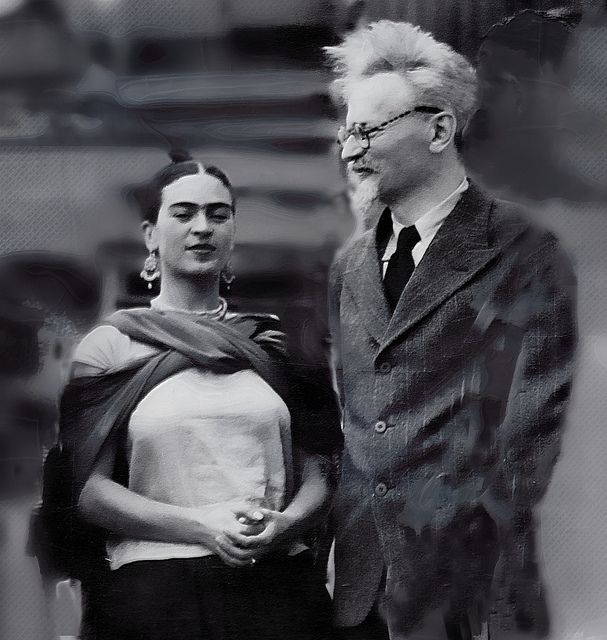
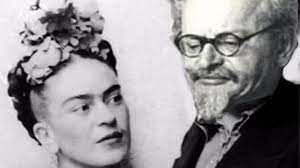
Frida Kahlo and Trotsky Frida Kahlo and Trotsky had many commonalities that drew them to each other: both possessed strong and unyielding characters. Both were in constant struggle with those around them. Frida Kahlo was 29, Trotsky 57. Since Frida Kahlo conversed with Trotsky in English, Trotsky's wife, who did not speak English, was initially unaware of the extent of their romantic relationship. When Natalia Sedova realized this, she wrote to a friend: "I don't want to eat, I'm filled with a feeling like falling to the ground and never getting up again. I'm helpless."
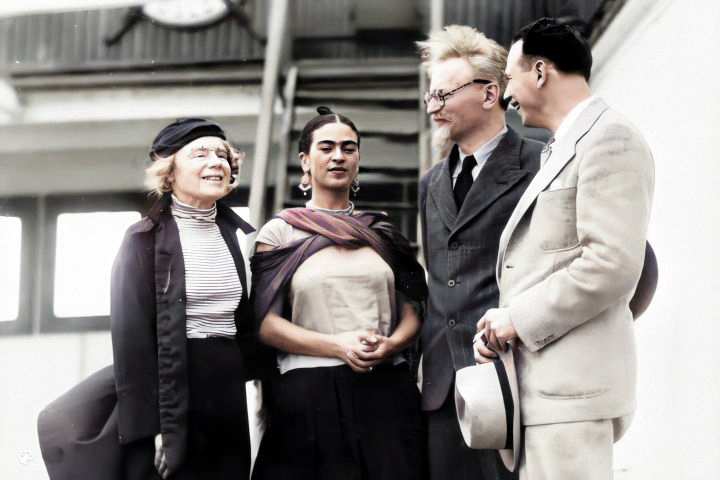
Natalia Sedova, Frida Kahlo, Trotsky
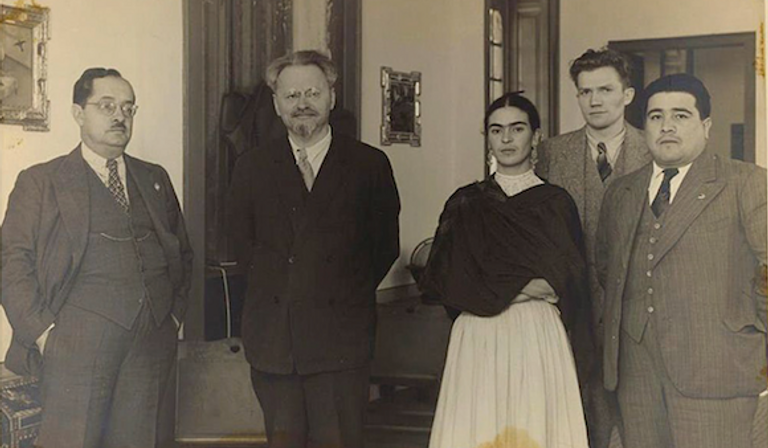
Trotsky, Frida Kahlo, and comrades At the end of June 1937, Trotsky left the Blue House and moved to the villa where he would later be murdered. The relationship between the two thus ended. They last saw each other in January 1939.

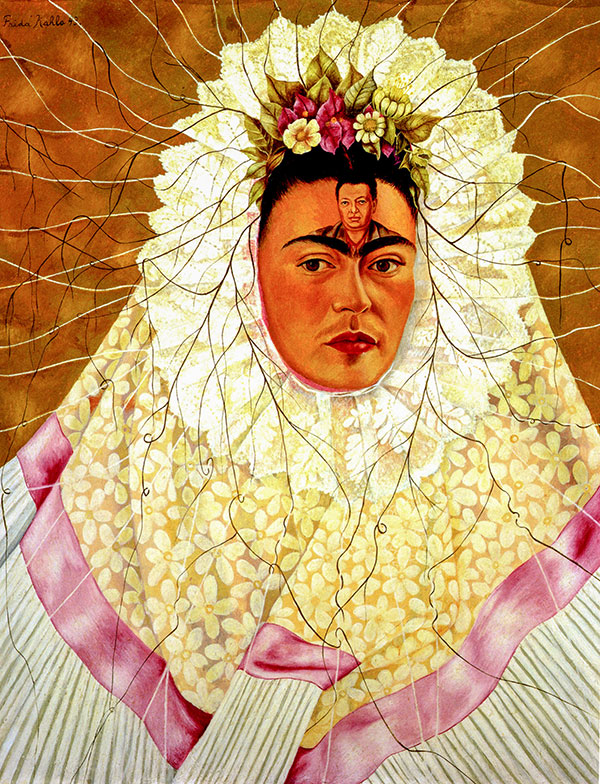
Frida Kahlo's self-portrait dedicated to Trotsky (1937)
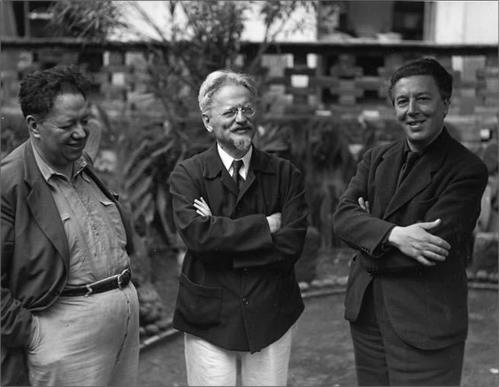
Diego Rivera, Trotsky, and French surrealist writer André Breton (Mexico City) André Breton went to Mexico in 1938 with facilities provided by the French government. He had the opportunity to meet Trotsky. Together, they penned the manifesto "For a Revolutionary Independent Art," which laid the foundations of the Surrealist movement. The manifesto, published under the names of André Breton and Diego Rivera, called for "complete freedom in art," which seemed impossible at the time. RAMON MERCADER
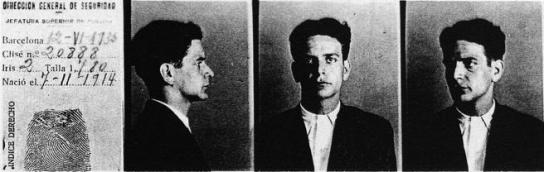
Ramon Mercader's police archive photo The full name of Trotsky's assassin is Jaime Ramón Mercader del Río. In the press, he became known by his shortened name, Ramon Mercader. Ramon Mercader was born on February 7, 1913, in the city of Argentona, Catalonia, Spain. His father was Catalan, and his mother was Spanish. His mother, Caridad Mercader, was a devout Communist and Soviet agent. Caridad Mercader was a mother who rushed from one action to another, consuming five packs of cigarettes a day. She instilled communist ideology in her son. In the mid-1930s, Ramon Mercader, as a Communist, served in left-leaning organizations during the years of the Second Spanish Republic (1931-39). He was imprisoned. He was released from prison in 1936. During the Spanish Civil War, he joined the Soviet Intelligence Organization NKVD. He underwent special training in the Soviet Union. Ramon Mercader, on instruction, infiltrated communist groups loyal to Trotsky, acting as one of them. In 1938, while a student at the Sorbonne University in Paris, he met an American woman named Sylvia Ageloff, known for her proximity to the Trotskyist movement.
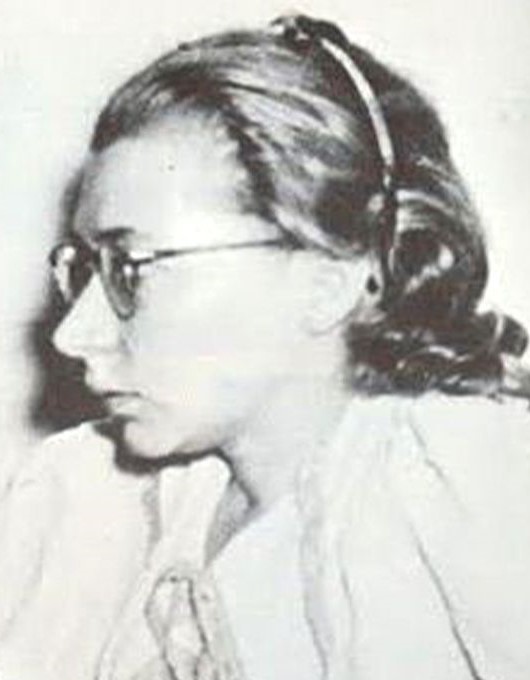
Sylvia Ageloff (She would return to New York immediately after the murder and would not give interviews until her death) With her help, he prepared a fake identity under the name "Jacques Mornard." He was now the son of a Belgian diplomat. Sylvia Ageloff returned to Brooklyn / New York in September 1939. Soon after, Ramon Mercader went to the USA with a fake Canadian identity under the name "Frank Jacson," this time with the help of a Canadian friend who had served in the Spanish Republican Army during the Spanish Civil War. Ramon Mercader told Sylvia Ageloff that he had obtained the fake identity to avoid military service, to gain her trust. In October 1939, Ramon Mercader went to Mexico City. He convinced Sylvia Ageloff, who had a special friendship with Trotsky, to come to Mexico City as well. They had a love affair. Sylvia Ageloff occasionally visited Trotsky's house, strengthening her special friendship and gaining Trotsky's trust.
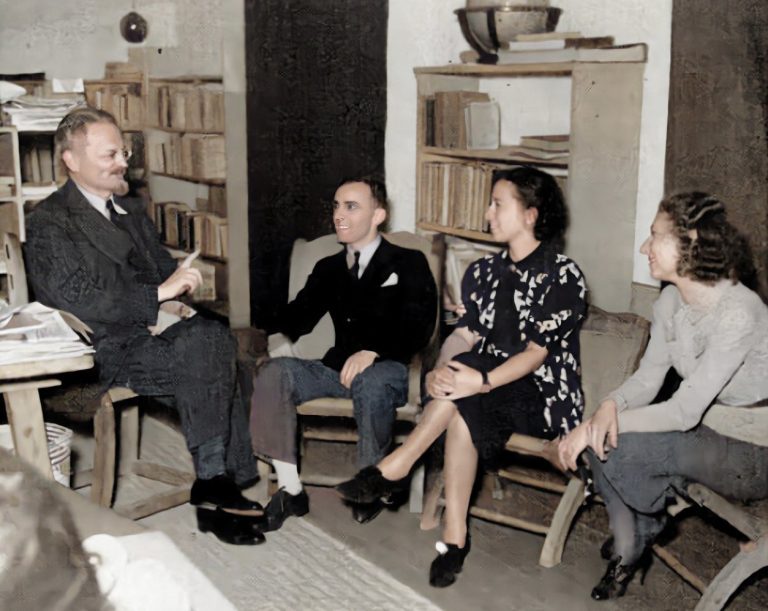
Trotsky and Sylvia Ageloff (second from right) The Mexican Government, having received assassination warnings, moved Trotsky in April 1939 to a villa in the Coyoacán area, south of Mexico City, with a large garden in front of his house and surrounded by high walls. There was also a small police booth in front of the iron entrance gate of the house complex. Even members of the Trotskyist Party stood guard on the wall, armed. Despite all this protection, Trotsky's house was subjected to an armed attack planned and implemented by the NKVD. One night, Stalinist union members in Mexico City, dressed as police, neutralized the police officer in the booth, entered through the iron gate opened by the betrayal of one of the Trotskyist party members, and launched an armed attack on Trotsky's bedroom. Trotsky and his wife survived the attack unharmed by hiding under the bed. For Trotsky, the founder of the Red Army who shook the world, such an armed attack was an ordinary event. However, Stalin's order was clear: "If Trotsky is eliminated, the imperialist threats against the Soviet Union will also disappear. Trotsky must be eliminated within a year." The failure of the armed raid disturbed Stalin most of all. Hitler had annexed Austria on March 12, 1938, attacked Poland on September 1, 1939, and World War II had begun. There was a secretly signed "Non-Aggression Pact" between Stalin and Hitler. Trotsky criticized Stalin in his writings, accusing him of cowardice. Therefore, Trotsky had to be eliminated as soon as possible before the war escalated further. A second plan was made without delay. After the armed attack, the house's security was further increased. It was now impossible to raid the house with weapons. Stalin gave the order to kill Trotsky to Nahum Eitingon, of Jewish origin, born in Belarus, and a member of the Cheka secret police organization since 1920. Interestingly, Nahum Eitingon was the person who made Ramon Mercader a Soviet agent during the Spanish Civil War.
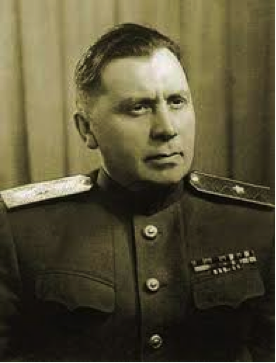
Soviet agent Nahum Eitingon, tasked by Stalin to eliminate Trotsky Nahum Eitingon tasked Ramon Mercader with approaching Trotsky and killing him at an opportune moment. Ramon Mercader's lover, Sylvia Ageloff, could easily enter and exit Trotsky's protected house. One day, Sylvia Ageloff asked Trotsky, "I have a friend who admires you. She wants to meet you." Thus, Ramon Mercader met Trotsky and had a brief conversation. Ramon Mercader did not remain idle; he drew a sketch of the house and conveyed the necessary information for a second armed attack to Nahum Eitingon. TROTSKY'S FAMILY Trotsky married twice. He met his first wife, Aleksandra Sokolovskaya, in exile in Siberia and married her in 1900. They had two daughters named Zinaida and Nina. Relatives took care of the children. When Trotsky escaped from Siberia and settled in Paris, he met Natalia Sedova. They began to live together. They had two sons from this marriage: Lev Sedov and Sergei Sedov.
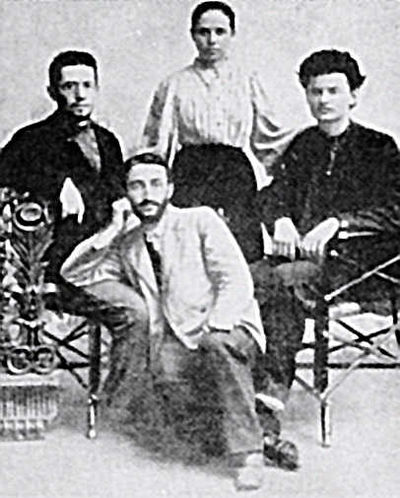
Trotsky (seated far right) and his first wife Aleksandra Sokolovskaya (1897) Trotsky's daughter Zinaida married twice. From her first marriage, she had a daughter named Alexandra Moglina. From her second marriage, they had a son named Esteban Volkov. Esteban Volkov lived with his grandfather Trotsky in Mexico City, turned the house where he was murdered into a museum, and upheld his spiritual memory. It is useful to look at the fate of Trotsky's family members: ALEKSANDRA SOKOLOVSKAYA: Trotsky's first wife, Aleksandra Sokolovskaya, was also Trotsky's comrade-in-arms. They married in 1900 during their Siberian exile. They had two daughters, Zinaida and Nina. Trotsky escaped from exile in Siberia alone in 1902 and settled in Paris. From that day on, his relationship with Aleksandra Sokolovskaya was severed. Their two daughters were raised by relatives. Aleksandra Sokolovskaya was arrested in 1937 during Stalin's "Great Purge" campaign and died in a labor camp in 1938. NATALIA SEDOVA
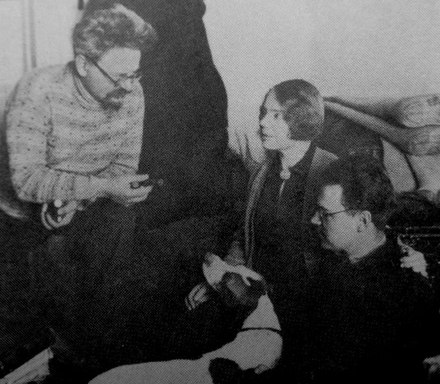
Trotsky (left) and his wife Natalia Sedova, in exile in Kazakhstan (1928)
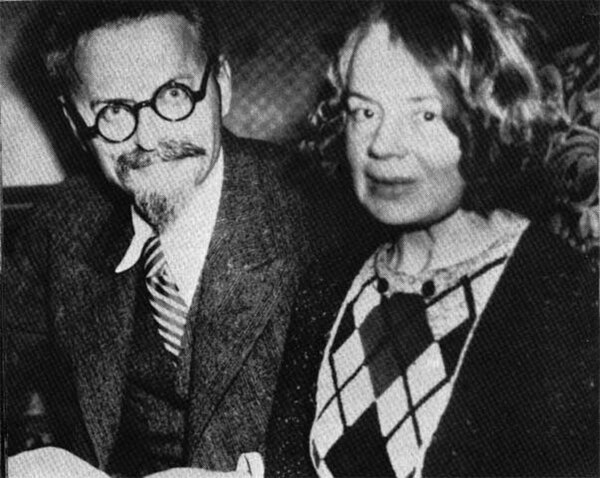
Trotsky and Natalia Sedova (Büyükada, 1932) Trotsky married Natalia Sedova in 1903. They had two sons, Lev Sedov and Sergei Sedov. With the 1917 Russian Revolution, he returned to Russia with Trotsky. When Trotsky was exiled by Stalin in 1929, she accompanied him, and they lived together successively in Büyükada (Turkey), France, Norway, and Mexico. After Trotsky's murder in 1940, she continued to spread Trotskyist ideas. She carried the pain of losing her children and husband in her heart. Natalia Sedova gradually lost faith in the Trotskyist Movement. She died in France in 1962. ZINAIDA VOLKOVA: Trotsky's daughter Zinaida, born in 1901 from his first marriage, married twice. She struggled with depression. In 1933, she committed suicide by gas in Berlin. NINA NEVELSON: Trotsky's daughter Nina, born in 1902 from his first marriage, died of tuberculosis in 1928.
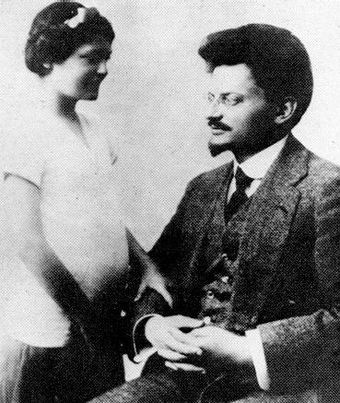
Trotsky and his daughter Nina (1915) LEV SEDOV: Trotsky's son Lev Sedov, born in 1906 from his second marriage, embarked on life as an active revolutionary. He supported his father's ideas. In 1938, he was found dead under suspicious circumstances in a hospital in Paris. In later years, it would be understood that the Soviet Secret Police NKVD was behind this murder. SERGEI SEDOV: Trotsky's son Sergei Sedov, born in 1908 from his second marriage, despite leading a quiet life, could not escape Stalin's wrath. He was arrested and executed during the "Great Purge" campaign of 1937. Trotsky had two known grandchildren. Both were born to his first daughter, Zinaida Volkova. Zinaida Volkova had a daughter named Alexandra Moglina from her first marriage. There is no information about Alexandra Moglina's life. Zinaida Volkova had a son named Esteban Volkov from her second marriage. Esteban Volkov lived with his grandfather Trotsky in Mexico City. After Trotsky's murder, he arranged the house as a museum and upheld Trotsky's spiritual legacy. Although not active in revolutionary socialist politics, Esteban Volkov remained deeply loyal to the principles and memory of his grandfather and his martyred family members throughout his long life. Therefore, I would like to provide detailed information about Esteban Volkov: TROTSKY'S GRANDSON ESTEBAN VOLKOV ("SEVA") Esteban Volkov ("Seva") was born in the Soviet Union on March 7, 1926. His Russian name is "Vsevolod." His mother was Zinayda, Trotsky's daughter, and his father was Platon Volkov, a leading member of the Trotskyist Left Opposition. His father was arrested and killed by the Stalinist regime. Seva visited his grandfather Trotsky in exile in Büyükada with his mother. Zinayda, suffering from tuberculosis and depression, left her son Seva with Trotsky and went to Germany for treatment in 1931. She hoped her family would return to Russia. However, Stalin revoked Trotsky's Soviet citizenship on February 20, 1932. Zinayda and Seva were included in this. Realizing that she could not return to Russia, Zinayda fell into depression in Germany. Seva, having been stripped of his citizenship, went to Germany to be with his mother with great difficulty. He sadly witnessed his mother's deteriorating health. Zinayda Volkova committed suicide by gas on January 5, 1933. She was thirty years old. Trotsky held Stalin responsible for his daughter's suicide. On January 11, 1933, he sent a letter describing the circumstances of his daughter's death to the Central Committee of the Communist Party of the Soviet Union. Hitler, who became Chancellor on January 30, 1933, seized power after the death of President Hindenburg (August 1934). Trotsky's eldest son, Lev Sedov, took his six-year-old nephew Seva and left Germany. Seva came to Paris with his uncle in 1935. Lev Sedov began to manage the activities of the Fourth International in Europe there. However, he was killed by the Soviet secret police in February 1938.
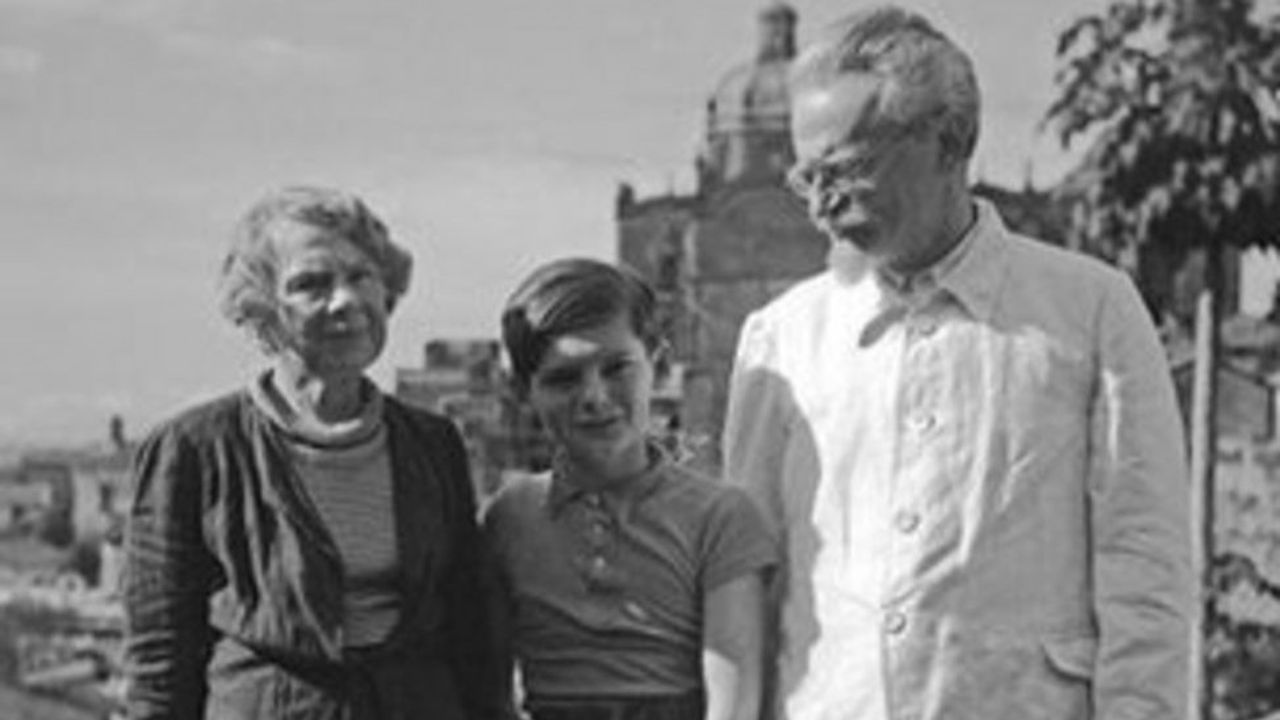
Seva (center), with Trotsky and Natalia Sedova (Mexico City) Seva arrived in Mexico in August 1939 and began living with his grandfather Trotsky and step-grandmother Natalia Sedova. TROTSKY'S MURDER
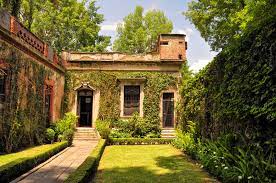
Trotsky's house, surrounded by high walls A Stalinist gang launched an armed raid on Trotsky's house in the early hours of May 24, 1940. The doors of Trotsky's villa in Coyoacán, where he lived and worked, were opened by a Stalinist agent who had infiltrated the Socialist Workers' Party. After entering the compound, the assassination squad fired machine guns into Trotsky's and his grandson's bedroom. Trotsky summarized this attack in his article "Stalin Wants My Death" as follows: "When the gunfire ceased, we heard our grandson's cry from the next room: 'Grandpa! Grandpa!' The child's voice, echoing in the darkness amidst the gunfire, remained in my memory as the most tragic moment of that night. The child threw himself under the bed when fired upon. The attackers shot at the bed, the bullet passed through the bed, hitting my grandson's big toe. The attackers then threw two incendiary bombs and left our grandson's room. Our grandson, crying 'Grandpa!', escaped through the flames, leaving a trail of blood, ran into the courtyard, entered the room of one of the guards protecting the compound, and hid. Upon our grandson's cries, my wife entered his empty room. Inside, the door and a small cabinet were burning. I went to her side. 'They've kidnapped Seva,' I said. This was a more painful moment than all the others. Far from our bedroom, in the courtyard or outside the walls, gunfire continued. Clearly, the attackers were retreating. My wife extinguished the flames using a rug. She had burns on her body. We tried to treat her burns for a week." Trotsky, his wife, and 14-year-old Seva miraculously survived the attack. However, very soon, three months later, a second assassination attempt was made on Trotsky's life, and this time Stalin achieved his goal. With the help of Sylvia Ageloff, a Stalinist agent working for the Fourth International committee, Ramon Mercader managed to enter Trotsky's villa and gain his trust (!). On August 20, 1940, Ramon Mercader came to the villa for the tenth time. He entered Trotsky's office under the pretext of having him review an article he had written. While Trotsky was carefully reading and correcting the article, Ramon Mercader pulled out a small ice axe he had hidden inside his jacket and struck Trotsky hard on the back of his head with its sharp point.
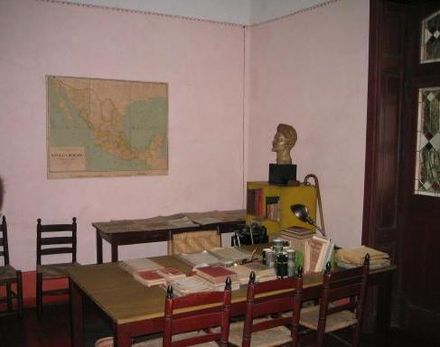
Trotsky's study where he was struck on the head (now a museum)
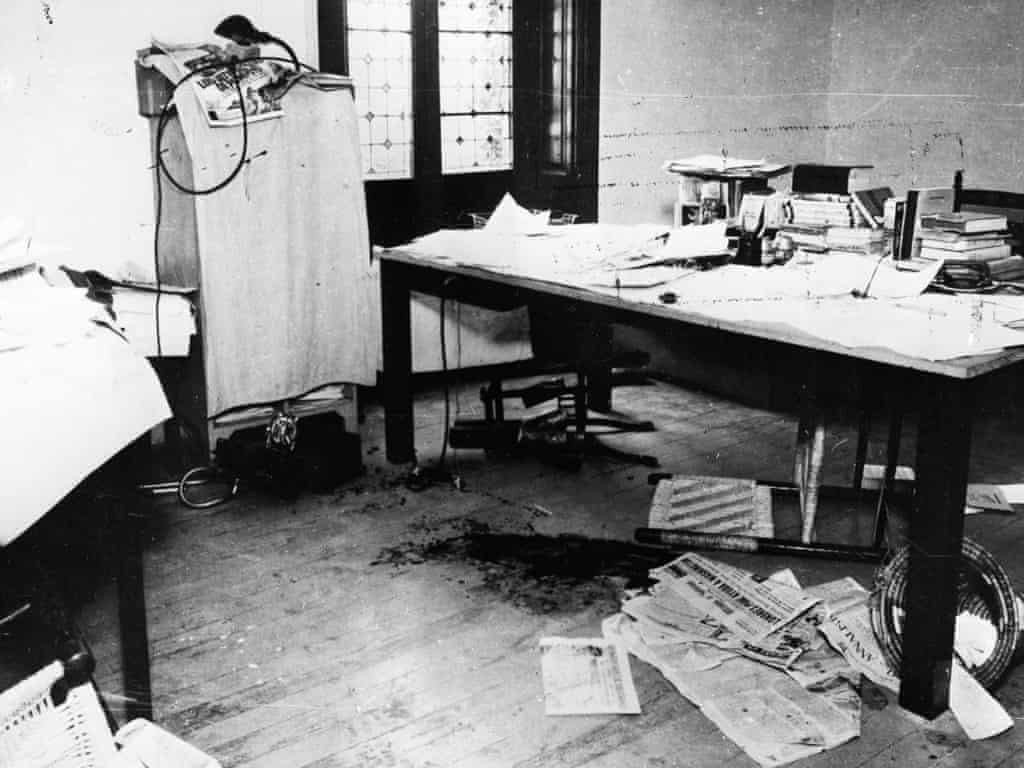
Trotsky's study (Immediately after the murder) Trotsky, having turned his head at that moment, narrowly escaped a fatal blow, rose to his feet wounded, and while shouting for help, began to struggle with Ramon Mercader. Trotsky resisted so violently that Ramon Mercader's hand was broken. Soon after, special security forces entered. As they were about to kill Ramon Mercader, Trotsky stopped them, saying, "Don't kill him! Take him alive! He must have important things to tell!" The wounded Trotsky was placed on a stretcher and taken to the hospital. He underwent surgery. Trotsky died the next day, August 21, 1940, from blood loss.
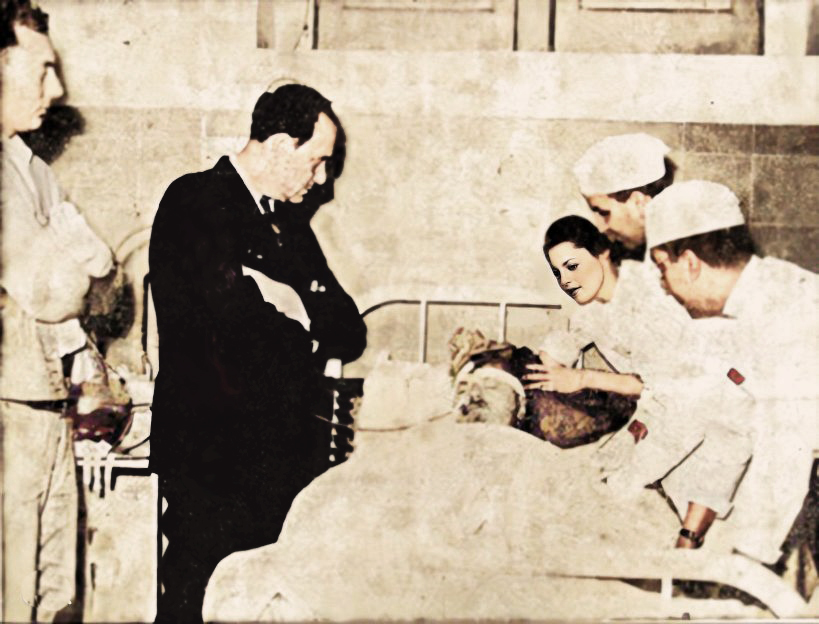
Trotsky, struggling with death in his hospital bed Esteban Volkov was not at the villa during the attack. However, he arrived home immediately after the attack. Years later, in an interview, Esteban Volkov described that horrific afternoon: "When I entered the study, I saw my grandfather lying wounded on the floor, but the guards and others prevented me from getting closer. My grandfather had said: 'Don't let Seva in, the child shouldn't see this!' Later, my grandfather passed through the garden for the last time on a stretcher carried by male nurses." Esteban Volkov lived in Mexico City for the rest of his life. He maintained a close relationship with his step-grandmother Natalia Sedova until her death. He became an engineer and signed successful projects in this field. He married. He was the father of four daughters. Esteban Volkov ("Seva") passed away in Mexico City on June 16, 2023, at the age of 97.
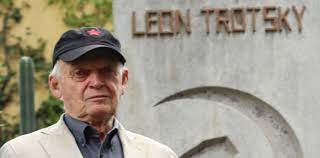
Trotsky's grandson Esteban Volkov *** While Ramon Mercader was assassinating Trotsky, Soviet agent Eitingon was waiting in a car in front of Trotsky's villa. He hoped that Ramon Mercader would kill Trotsky in his office without anyone knowing and walk out freely. However, when he saw Ramon Mercader emerging from the villa surrounded by police, Eitingon immediately left the scene and disappeared without a trace.
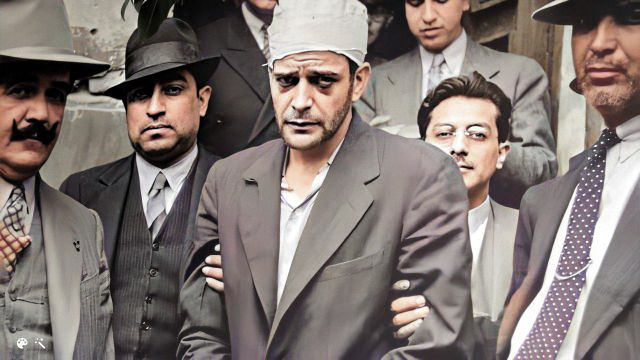
The assassin Ramon Mercader, immediately after the incident Ramon Mercader tried to conceal his true identity from the police. He introduced himself as "Jacques Mornard." He also fabricated a story: "I wanted to marry Sylvia Ageloff, but Trotsky prevented it. We had an argument with Trotsky. When Trotsky attacked me, I defended myself with the ice axe I carried in my jacket." "Why do you carry an ice axe?" "I am a professional mountaineer. I always carry an ice axe with me for climbs." Ramon Mercader was sentenced to 20 years in prison in 1943 under the name "Jacques Mornard." His true identity was only revealed after the collapse of the Soviet Union (1991).
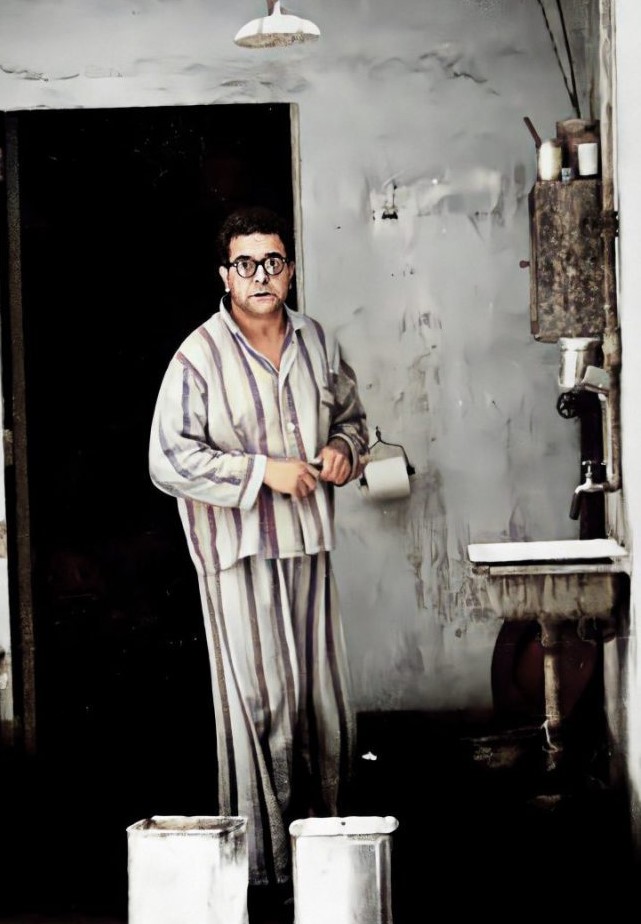
Ramon Mercader in prison The ice axe that killed Trotsky was confiscated by a Mexican police officer. Ramon Mercader had cut the handle in half to hide it inside his jacket. The Austrian-made ice axe is now displayed at the International Spy Museum in Washington.
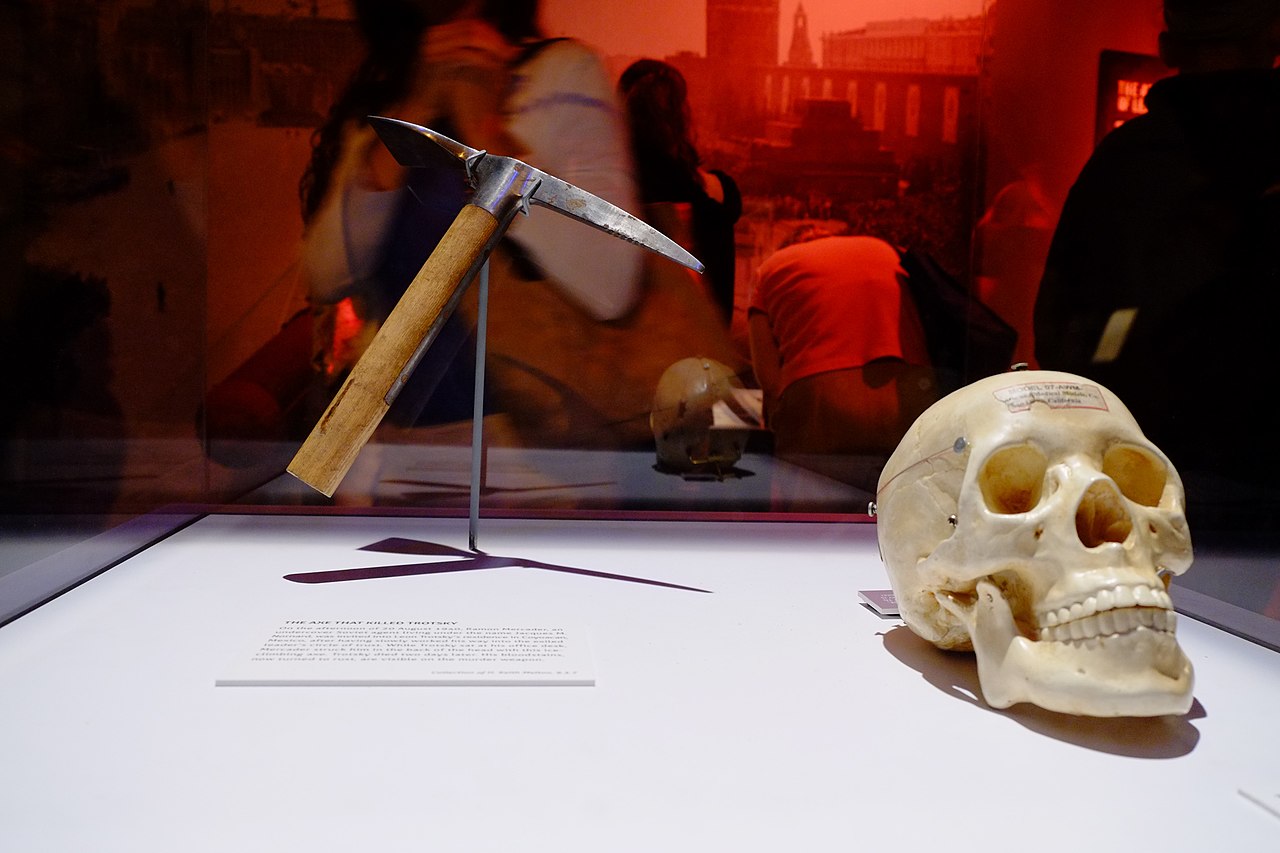
The ice axe used in the assassination of Trotsky (Note: The skull does not belong to Trotsky) RAMON MERCADER'S MOTHER RECEIVES THE "ORDER OF LENIN" Stalin rejoiced at the news of Trotsky's death. He certainly knew that Ramon Mercader had carried out this act. He invited Ramon Mercader's mother in Spain to Moscow and awarded her the "Order of Lenin." The bitter irony is that both the murdered Trotsky and the assassin's mother were of Jewish origin.
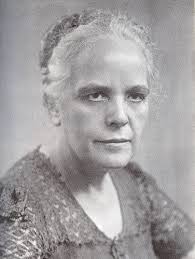
The assassin's mother, Caridad Mercader (Her son said of her: "A terrible woman! I became a Communist because of her.") Ramon Mercader's mother pleaded with Stalin in 1943 for her son's release. Despite all her efforts, Ramon Mercader remained in prison for 19 years and 8 months. He was released on May 6, 1960. He settled in Havana. He was ceremoniously welcomed by Fidel Castro. In 1961, he went to the Soviet Union. He was awarded the highest honor. He was declared a Hero of the Soviet Union.
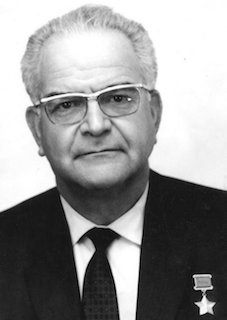
Ramon Mercader, with the Soviet Heroism medal The Soviet Secret Service arranged for Ramon Mercader to marry a famous Mexican woman while he was in prison. He had two children. Ramon Mercader died of lung cancer in Havana in 1978. To avoid an international scandal, he was buried in Kuntsevo Cemetery in Moscow under the pseudonym "Ramon Ivanovich Lopez."
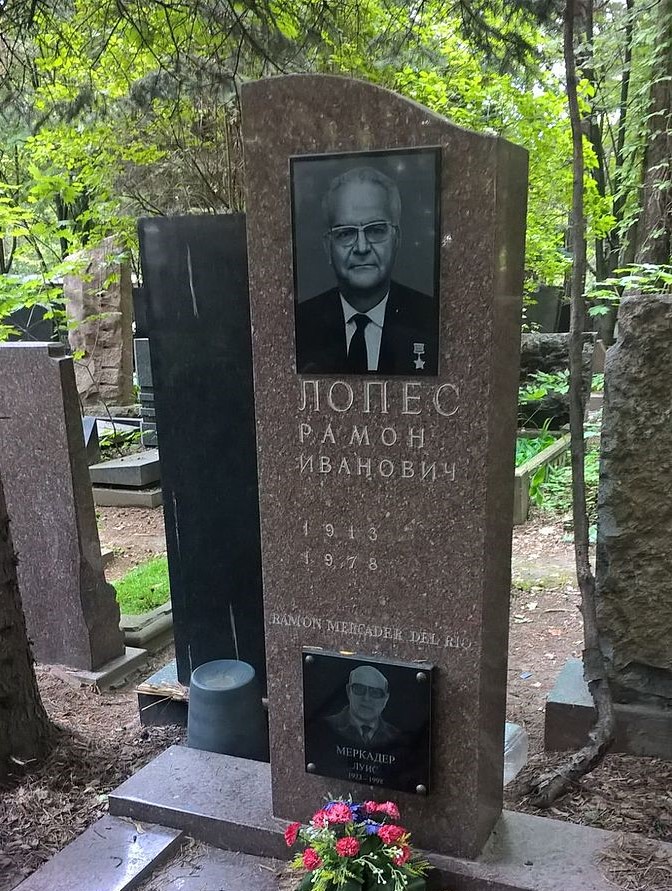
Ramon Mercader's grave in Moscow (under the pseudonym "Lopes Ramon Ivanovich") It is rumored that Ramon Mercader would say to his relatives until his death: "Trotsky's scream is still in my ears. I cannot forget it. I know Trotsky is waiting for me in the afterlife." TROTSKY IN BRIEF
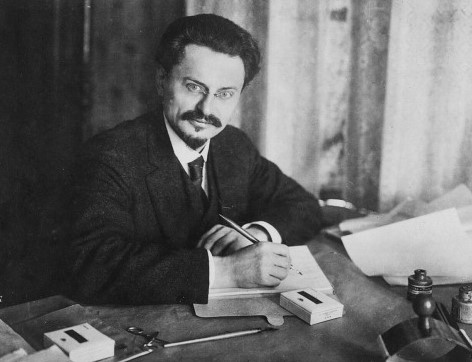
Trotsky was born on November 7, 1879, in the village of Yanovka in the Kherson region of Southern Ukraine. His real name was Lev Davidovich Bronstein. His family was of Jewish descent. His sister Olga was married to Lev Kamenev, a prominent figure in the Bolshevik Party. Trotsky began his education at the age of nine, going to live with his aunt in Odessa. He went to the city of Nikolayev to continue his education. He pursued higher education in mathematics and law. Trotsky could speak Russian, Ukrainian, Hebrew, German, English, French, and Spanish.
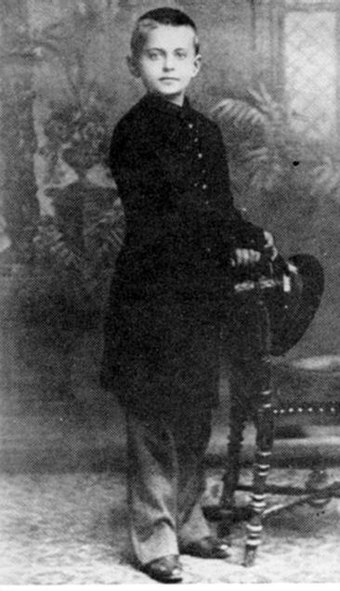
Trotsky (1888) During his student years, Trotsky came into contact with social democratic (socialist) circles. He joined revolutionary groups. He adopted the Marxist view. In 1897, he was among the founders of a secret organization called the South Russian Workers' Union in Nikolayev. He wrote various brochures and pamphlets to spread socialist ideas among the people. In 1898, he was arrested by the Tsarist police and imprisoned. He remained in prison for two years. After his imprisonment, he was exiled to Siberia. In exile, he married Aleksandra Sokolovskaya, a philosophy student who had adopted Marxist views. The couple had two daughters, Nina and Zinaida. While in exile in Siberia, he first used the pseudonym "Trotsky." (The name of the guard at the Odessa Prison was Trotsky. He took this name from him.)

Trotsky, after escaping from Siberia, in London (1902)

Trotsky reading Pravda (Truth) newspaper (1910) In 1902, Trotsky escaped from Siberia, going first to Vienna, then to London. Here, he joined the editorial group of the Iskra magazine, which included revolutionaries such as Georgy Plekhanov, Vladimir Lenin, and Julius Martov. He wrote articles under the pseudonym "Pero."
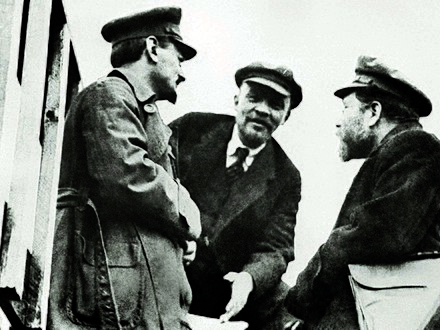
Trotsky, Lenin, and Kamenev (1919)
A year later, he attended the congress of the Russian Social Democratic Labour Party held in London. At this congress, two factions emerged within the party: Bolsheviks and Mensheviks. Trotsky sided with the Mensheviks against the Bolshevik Lenin. However, a year later, Trotsky left the Mensheviks, stating that he did not agree with their views. In 1903, he went to Paris. He met Natalia Sedov, and they married. In the 1905 Revolution, he returned to Russia, was arrested, exiled to Siberia, but escaped. He went to Paris. In 1917, before the revolution, Trotsky joined the Bolsheviks at Lenin's invitation.
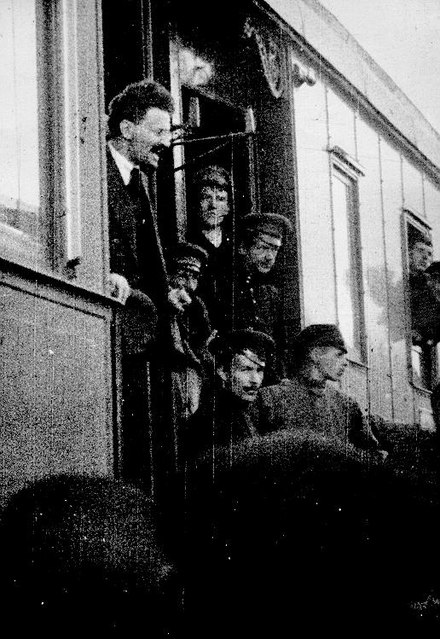
Trotsky, by train in St. Petersburg (1917)
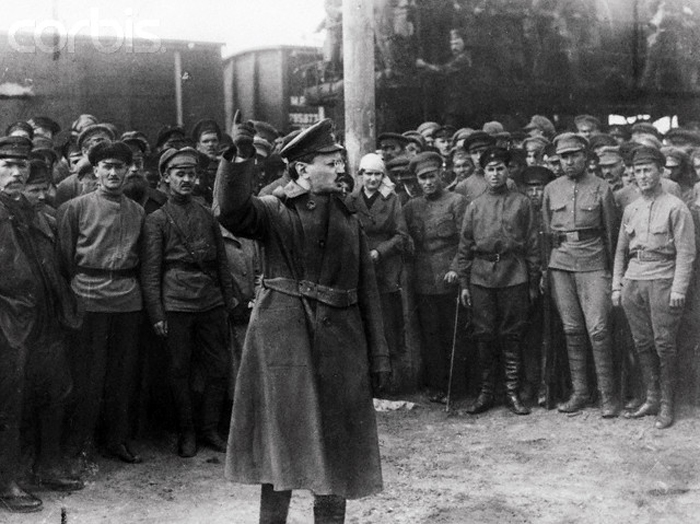
Trotsky addressing the Red Army
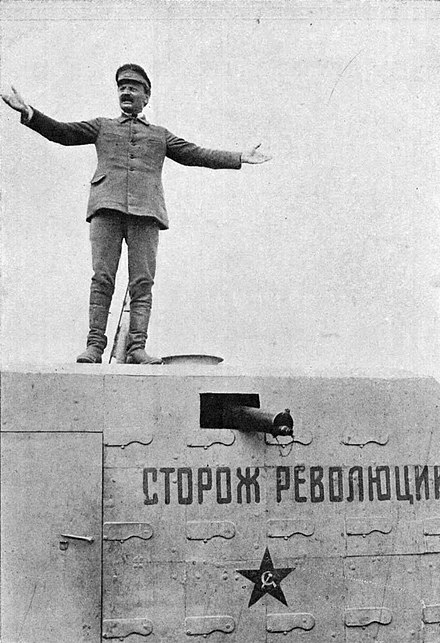
Red Army Commander Trotsky giving a speech on an armored train during the Civil War (Text: Guardian of the Revolution) After returning to Russia, Trotsky was elected Chairman of the Petrograd Soviet. He became one of the important figures of the Soviet Union. He was first appointed Minister of Foreign Affairs, then Minister of War. As Commander-in-Chief, he founded the Red Army. He commanded the army throughout the Civil War. Trotsky also played an important role in the establishment of the Communist International. After Lenin's death in 1924, he entered a power struggle with Stalin. In this struggle, he gradually lost his power and authority. He was removed from his positions as Commissar of War, member of the Politburo, and member of the executive committee of the Communist International. His party membership was terminated. On January 31, 1928, he was exiled to an area near Almaty in Kazakhstan. On January 18, 1929, he was expelled from the country on charges of counter-revolutionary activities.
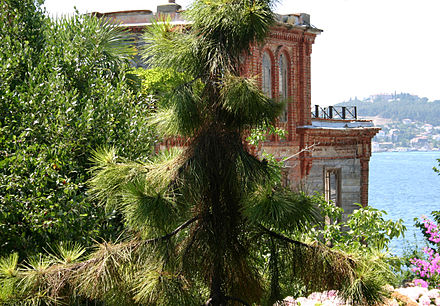
Trotsky's house in Büyükada Trotsky lived in Büyükada, Istanbul, between 1929 and 1933. During these years, he led a quiet life, writing his memoirs and thoughts. On February 20, 1932, he was stripped of his Soviet citizenship. On July 17, 1933, he went to France, where he stayed for 2 years. However, he was deported. He went to Norway, and after staying for 2 years, he was forced to leave that country as well. On January 9, 1937, he sought asylum in Mexico. He worked tirelessly for the construction of the Fourth International until his death.
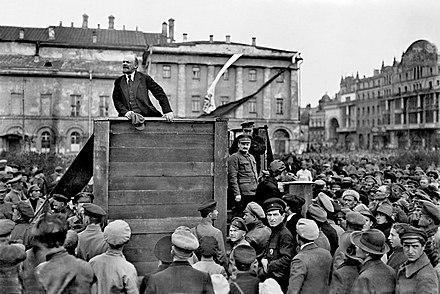
The long-debated photograph: May 1920. Lenin at the podium. Trotsky leaning against the podium. Stalin was not prominent in those years. After consolidating his power, Stalin destroyed all documents and photographs belonging to Trotsky. Then came this photograph, which had become public property. His secretary asked, "What should we do? Tear it up?" Stalin hesitated. "Remove Trotsky from there by photomontage." And so they did.
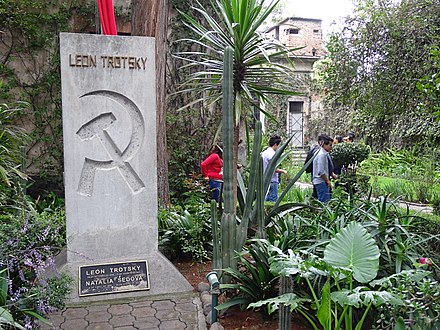
Trotsky's grave (in the garden of the house where he was murdered) CONCLUSION Upon my return from Mexico, I began reading Trotsky's books with great interest. His theory of Permanent Revolution was striking and convincing. His writings on art and literature are, in my opinion, of unique value. Compared to Stalin, Trotsky remains a colossal world citizen, while Stalin appears as a colossal "peasant." It was interesting how I had gone to Mexico for a holiday and returned with such a different outcome. Moreover, confronting my prejudices about Trotsky had been a bitter lesson for me.