Hatred from Generation to Generation
This essay explores the pervasive nature of hatred, from personal experiences at the Panmunjom border to societal and political manifestations, culminating in a satirical call to embrace hatred for national development.

Dear Readers,
“Hatred from Generation to Generation” is not merely a concept that finds its place in our daily lives, family lives, or political lives. It most often appears in situations and definitions related to “ethnic, religious, national, etc.”
“Hate Speech or Emotion” is so widespread in our world that people live in a world that is a “Sum of Hatreds” without realizing it. Over time, this “Emotion of Hatred” becomes internalized, transforming into a way of life for the individual.
If one day you were to remove this hatred from the minds and hearts of individuals, believe me, there would be no such thing as an “individual” left. As the famous metaphor suggests, “The fish lives in the sea, but is unaware of the sea”; similarly, people live within an emotion that is a “Sum of Hatreds” but are not even aware of it.
“PANMUNJOM” HATRED
In my youth, especially during my university years, there were so many things we were supposed to hate… Hatred of the bourgeoisie, hatred of the police, hatred of right-wingers, hatred of capitalism, hatred of the USA… Endless hatreds piled up, occasionally exploding, and we found ourselves swept away in a “flood of hatred.” Since there was no cure called “Managing Hatred,” we had no choice but to live as slaves to this emotion.
The feeling of hatred that truly made my heart tremble in my life was experienced at the “Panmunjom” border outpost.
It was July 1987. I was flying from Paris to Tokyo. Due to heavy rain and wind in Tokyo, there was a three-day stopover in Seoul, the capital of South Korea. I settled into a hotel and waited. I wanted to make the most of my three days. There were brochures in the hotel lobby. I started reading them. The tour package included: a visit to a traditional Korean village, a visit to the border village named Panmunjom where the armistice ending the Korean War was signed, and shopping in the market where traditional Seoul products were sold.
The tour bus picked up the few foreign tourists from different hotels in those years and first took us to an authentic village in Seoul.
Women, dressed in traditional “Hanbok” garments made of green, red, yellow, and blue colors, walked around, respectfully greeting tourists. In fact, the traditional Korean “Hanbok” dress and the “Dêre” dress, which I was familiar with from my childhood as an indispensable part of Kurdish women’s attire, are very similar. For this reason, I felt close to Koreans from the very first day. I also first encountered Kimchi, the traditional Korean pickle, and Bulgogi kebab in this prototype traditional Korean village.
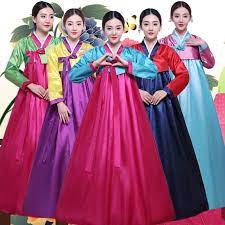
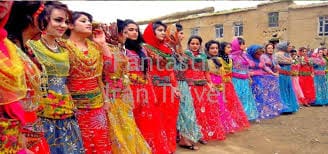
Korean girls wearing “Hanbok” Kurdish girls wearing “Dêre”
Our second stop was the Panmunjom border outpost. The Korean War began on June 25, 1950, and turned into a horrific three-year war. With major powers like China, the Soviet Union, and the USA taking sides, the war became even more brutal, claiming the lives of hundreds of thousands of soldiers and millions of civilians.
On July 27, 1953, the parties met in a hut in the border village named “Panmunjom” and signed an armistice. The border between South and North Korea passes right through the middle of this hut. The large hall where the agreement was signed was divided in two by a rope. South Korean soldiers stood guard on one side, and North Korean soldiers on the other.
Guarding soldiers are serious and disciplined everywhere in the world. However, the facial expression of the North Korean soldier I witnessed there was so strained with hatred that it seemed as if he would shoot us all if he had the power. When we went outside, we encountered a similar situation. A line was drawn with chalk, and a South Korean soldier stood 1 meter on this side of the line, and a North Korean soldier 1 meter on the other side, with their weapons ready to fire.
The hatred in the North Korean soldier’s gaze made one’s heart tremble, inviting one from this world to other worlds, to a world of death, massacre, and genocide. Believe me, Hitler’s Gestapo would seem innocent in the face of such hatred.
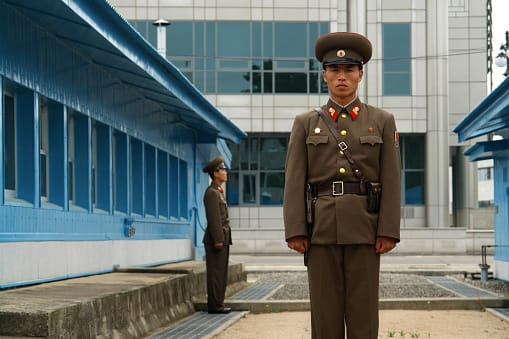
North Korean Soldier
(In 1987, the soldiers carried weapons, and their gazes were filled with a thousand times more hatred than this)
When I returned to the hotel, an American couple who had joined the tour with me were sitting in the lobby. They smiled and invited me to join them. In those years, I struggled to speak English fluently. The first question that came to my mind was:
“Why are the North Korean soldiers so angry? The South Korean soldiers, on the other hand, were calm.”
It turned out that in those years, 50,000 US soldiers were stationed in South Korea. The American gentleman was one of these soldiers. His wife from the US had come to visit him.
“The North Koreans are constantly digging tunnels under the Han River and planning attacks on South Korea. Last month, such a tunnel, large enough for tanks to pass through, was discovered. Perhaps their anger is due to this.”
The Han River flows right through the middle of Seoul. It was the widest river I had ever seen. The Han River marked the North Korea-South Korea border somewhere in the northwest, then entered South Korean territory and flowed south.
“The North Koreans also dug tunnels under the Han River many times in the 1970s. One of them was large enough for 30,000 soldiers to pass through in an hour. They were detected and bombed.”
Even in those years, South Koreans believed that the North Koreans would one day invade their country and that a major war was inevitable.
As I tried to understand the hatred of brother for brother, our French-speaking guide arrived. There were two East Asians with him. They were also Korean. They had come from another city. Like us, they were curious about the capital and joined the tour. I jokingly interjected:
“I thought my friends were Japanese!”
Upon hearing the word “Japanese,” the Korean female guide’s facial features tensed:
“We hate the Japanese. And they don’t come to our country either.”
“Why?”
“In 1910, they occupied our country and colonized it for 35 years. They banned our culture and language. During World War II, they used our women as sex slaves.”
The Korean female guide spoke with such hatred that I almost forgot the hatred I had seen in Panmunjom.
When I lay in bed that evening, for the first time, I questioned myself, my mind, and my heart. Yes, I too was a slave to hate speech. I questioned my youth. Then I brought to mind the two countries I had lived in until then, Belgium and France:
In Belgium, the Flemings hated the Walloons;
In Belgium, the Flemings and Walloons together hated Moroccan immigrants;
Moroccan immigrants also hated the Belgians;
The French hated Algerians;
Some French hated other French because they collaborated with the Germans in World War II;
The French hated Black people who came from colonies in Africa and the Caribbean;
Black people and Algerians also hated the French.
In short, there was no end to hatreds.
CONCLUSION
As the May 14 election day approaches, hate speech has also begun to rise in our country. I do not possess a magical power to scrape hatred from hearts and minds. Therefore, I make an appeal:
“Let’s spew out our hatred to the very end! Let’s spew it out to the very end! If hate speech is insufficient, let’s create new hatreds. Look, some of our esteemed (!) politicians are very successful in this regard. I sincerely congratulate them. Please, please! Let’s create hatred, let’s spew out hatred! Only then will our country develop rapidly! Come on, let’s all spew out hatred together!”
Perhaps we will feel relieved by spewing it out.
ANECDOTE… ANECDOTE… ANECDOTE…
ELECTION IN IĞDIR
It was election day in Iğdır, once upon a time.
Voters, with a calm and dignified demeanor, took to the streets, stepping along the dusty road with a great sense of duty towards the ballot boxes where they would cast their votes.
Eşref was still in his bed, in a deep sleep. His wife nudged him awake:
“Eşref, Eşref! Get up! Let’s go and cast our votes!”
Eşref mumbled, without moving or even opening his eyes:
“Oh, wife! Leave me alone! I’ve done what I needed to do for two months. I’ve turned everything upside down. I’ve got all the parties and candidates in the palm of my hand. I’ve filled my pocket with money. For two months, I haven’t paid for tea or food. Whoever wins, I will still be the winner. I’ll be able to get whatever I want done. Today is the day for the sefekler, gijler. Let them go and cast their votes!”
(Note: “sefek, gij” means “naive and foolish” in the local dialect. As one of these gij, I will cast my vote on May 14.)