The Crossroads of the Founding Fathers: Turkey, America, and the Paradox of Freedom
This essay compares the founding narratives of Turkey and the United States, highlighting the paradoxes of freedom and equality for marginalized groups like Kurds and African Americans.

Dear Readers,
The term "Founding Father" is used to describe historical leaders who not only drew the borders of a state but also built its political regime, constitutional structure, and social spirit. These individuals emerge on the stage of history during periods of war, revolution, anti-colonial struggle, or post-imperial reconstruction, leaving behind not only a new political structure but also an identity and an ideology.
Among the Founding Fathers of the United States are figures such as George Washington, Thomas Jefferson, Alexander Hamilton, and Benjamin Franklin; in Turkey, the founding cadre includes Mustafa Kemal Atatürk, İsmet İnönü, Kazım Karabekir, Fevzi Çakmak, Rauf Orbay, and Ali Fuat Cebesoy. The founding cadres of both countries brought about a change in regime, established a constitutional order, and built a national identity within their respective contexts. However, they exhibit significant differences and similarities in terms of the inclusiveness of the structures they established and how they treated minorities or historically excluded communities.
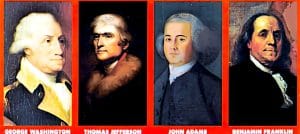
US Founding Fathers: (from left to right) George Washington, Thomas Jefferson, John Adams, and Benjamin Franklin
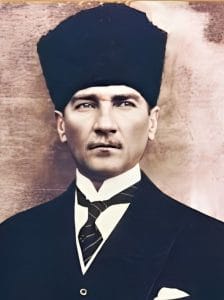
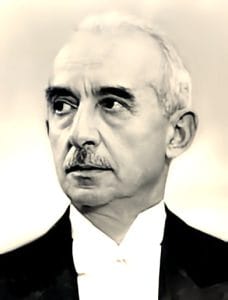
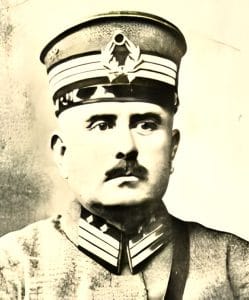
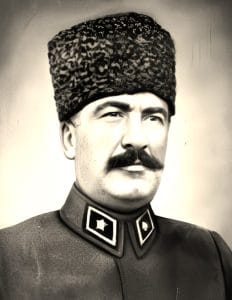
Turkey's Founding Fathers: (from left to right) Mustafa Kemal Atatürk, İsmet İnönü, Kazım Karabekir, and Fevzi Çakmak
In this article, my aim is to compare the systems built by the founding fathers of Turkey and the US, both historically and sociologically; and to draw attention to the contradiction between the discourses of "freedom" and "equality" and their practical application, especially in the examples of Kurds and African Americans.
1. THE DISCOURSE OF LEGAL FREEDOM AND THE DISCREPANCY WITH REALITY
TURKEY
With the establishment of the Republic, all citizens were declared equal. The 1924 and subsequent constitutions adopted the principle that "no citizen shall be discriminated against on the basis of language, race, religion, or color." However, especially the Kurds (Kurmanji and Zaza speakers) were excluded from this discourse of equality. Their identity was denied; they were called "Mountain Turks," their language was forbidden, village names were changed, and educational and publishing activities were prevented for years.
US
Slavery was abolished with the 13th Amendment to the Constitution, adopted in 1865. The 14th Amendment granted citizenship rights to African Americans. Although equal citizenship was emphasized on paper, in practice, Black people were systematically excluded. Black Codes, Jim Crow laws, voter suppression, the culture of lynching, and the new system of exploitation built on convict labor showed that slavery continued in a modified form.
In both countries, the chasm between the discourse of "legal equality" and "de facto inequality" severely limited the participation of minorities in social and cultural life.
2. CULTURAL RIGHTS: A COMPARISON BETWEEN NATIVE AMERICAN RESERVATIONS AND THE MINORITIES OF LAUSANNE
In the US, historical treaties with Native Americans granted limited autonomy to some tribes within reservation areas. In these areas, they could establish their own educational, legal, religious, and administrative structures. In contrast, African Americans were not granted any collective rights.
In Turkey, the Treaty of Lausanne granted Armenian, Greek, and Jewish minorities the right to operate their own schools, foundations, and religious institutions. These rights remained limited to Istanbul-centric applications. The Kurds, not being recognized as a minority in Lausanne, did not obtain any collective cultural or linguistic rights. Kurds became the target of assimilation policies.
3. THE IDEOLOGICAL VISION OF THE FOUNDING FATHERS
US
The Founding Fathers of the US were influenced by Enlightenment thought. Concepts such as individual liberty, separation of powers, and religious pluralism were guaranteed by the Constitution. However, this founding philosophy excluded slavery and genocidal policies against Native Americans. Black people and indigenous peoples were left outside this principle of equality.
TURKEY
Turkey's founding cadre was influenced by French positivism and the Ottoman experience of centralization. Nation-building was aimed at nationalism, secularism, and modernization. However, this model adopted a homogenizing nation-state understanding rather than pluralism. The goal was for all ethnic groups to melt into a Turkish identity.
4. FOUNDING FATHERS: COLLECTIVE MEMORY AND PERSONAL CULT
A striking difference emerges when comparing the narratives of founding leadership in the US and Turkey. While George Washington is a prominent figure in America, other founding fathers such as Jefferson, Hamilton, Franklin, and Adams are also honored in a balanced way in historical narratives; money, monuments, and educational curricula reflect this plurality. In contrast, within the founding cadre of the Republic of Turkey, Mustafa Kemal Atatürk holds an absolutely central position. Although other pioneering figures such as İsmet İnönü, Kazım Karabekir, Fevzi Çakmak, Ali Fuat Cebesoy, and Rauf Orbay played a role on the stage of history, they have largely faded into the collective memory of the public. This situation clearly shows how identifying leadership with a single symbol can create a difference from a pluralistic founding legacy.
Although serious disagreements and political rivalries occurred among the Founding Fathers in the United States, these conflicts were generally conducted within constitutional institutions and through civil means. The difference in economic and administrative vision between Thomas Jefferson and Alexander Hamilton gave rise to the first major polarization in American political life. Similarly, John Adams and Jefferson experienced sharp divisions both in presidential elections and along ideological lines. In contrast, the tensions within the founding cadre of the Republic of Turkey led to much harsher consequences. The disagreements that began in the mid-1920s between Mustafa Kemal Atatürk and his close comrades-in-arms, Kazım Karabekir, Rauf Orbay, and Ali Fuat Cebesoy, turned into a serious purge, especially with the closure of the Progressive Republican Party and the İzmir assassination attempt trial in 1926. Some founders were tried for execution, removed from politics, or completely silenced. Thus, while a single-figure founding narrative emerged in Turkey, a polyphonic and pluralistic founding mythology developed in America.
5. CONTINUITY OF STRUCTURAL OPPRESSION
In the US, African Americans were systematically excluded economically and politically even in the post-slavery era. Structural problems such as police brutality, urban poverty, and educational inequality have continued to this day.
In Turkey, Kurds were suppressed, exiled, and their demands for cultural rights were criminalized throughout the 20th century. The period of armed conflict that began in the 1980s further increased the state's security-oriented reflexes. Political activity based on Kurdish identity was often suppressed.
However, one of the most devastating and irreparable consequences is the systematic prevention of education in the mother tongue. Kurdish children were deprived of the right to education in their own mother tongue. This led not only to a pedagogical but also to an identity, psychological, and cultural breakdown. A child whose mother tongue is forbidden or not accepted as the language of education suffers not only in learning but also in self-awareness. This situation has produced feelings of inferiority, cultural alienation, and memory loss for generations.
While international documents define education in the mother tongue as a human right, practices in Turkey have consistently delayed, ignored, or reduced this right to a political security issue. Even a second's delay in this right is a usurpation of a people's right to produce thought, express themselves, and ensure their cultural continuity. Structural problems such as police brutality, urban poverty, and educational inequality have continued to this day.
In Turkey, Kurds were suppressed, exiled, and their demands for cultural rights were criminalized throughout the 20th century. The period of armed conflict that began in the 1980s further increased the state's security-oriented reflexes. Political activity based on Kurdish identity was often suppressed.
CONCLUSION
Both Turkey and the United States are republics founded on the principles of freedom and equality. However, in both countries, these principles have not been fully applied to some communities historically. Although African Americans and Kurds were equal citizens at the constitutional level, in practice they were subjected to structural exclusion and systematic oppression. This situation reveals the limits and contradictions of the ideals of the founding fathers.
True freedom is possible not only in constitutional texts but also through the right to participate in life in education, language, politics, and culture. This comparative analysis shows that we must question the extent to which the principle of "equal citizenship" has been realized for all communities, both in the past and today.