The Kurdish Issue Is Not About Poverty, But About Existence
The Kurdish issue is fundamentally about identity, culture, and existence, not merely economic poverty, as historical evidence and global examples demonstrate.

Dear Readers,
In Turkey, some political and intellectual circles still prefer to explain the Kurdish issue through the lens of economic poverty and underdevelopment. According to these groups, once society becomes wealthy and development initiatives succeed, no problems will remain. The difficulties faced by Kurds are thus seen as artificial in this context, with the argument that "if the economy improves, identity demands will also fade." However, historical reality, collective memory, and global experiences fundamentally refute this reductionist understanding. This is because the Kurdish issue is not merely a matter that can be explained by hunger or poverty. At its core, the demands of Kurds are demands for identity, culture, and existence. And paradoxically, as societies become wealthier, these demands become even more visible and stronger. Historical Memory: The Framework of Existence for Kurds If the problems faced by Kurds were solely related to economic underdevelopment, they would have been resolved by now. However, the problem has deep historical roots:
- From the early days of the Republic, the prohibition of the Kurdish language, the changing of place names, and the denial of Kurdish identity in official documents with terms like "mountain Turk" are not economic problems but directly matters of identity and existence.
- Forced displacement policies and exiles were carried out not only for economic reasons but with the aim of cultural assimilation.
- The pressures faced by Kurds throughout the twentieth century have shown that identity demands are permanent, regardless of periods of increased prosperity.
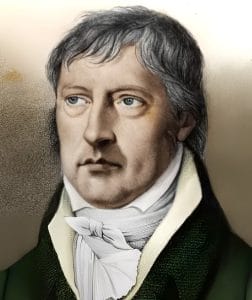
Therefore, explaining the Kurdish issue solely through poverty means ignoring the historical memory of Kurds. Philosophical Framework: The Issue of Recognition Hegel: The Struggle for Recognition Hegel's famous "master-slave dialectic" shows that the individual exists not only through biological needs but also through the need for social recognition. A person becomes free only when recognized by others. The problem faced by Kurds is precisely this: non-recognition. For this reason, economic prosperity alone does not offer a solution; the recognition of identity and language is a fundamental condition of existence.
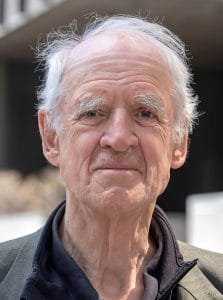
Hegel Charles Taylor: Multiculturalism and Recognition Canadian philosopher Charles Taylor describes the non-recognition of cultural identities as a form of "injury" to the individual. According to Taylor, identity is not merely an individual preference but part of a social value system. When the identity of a people is not recognized, it is a denial of their existence. Therefore, for Kurds, the issue is not just material conditions, but the recognition of cultural identity.
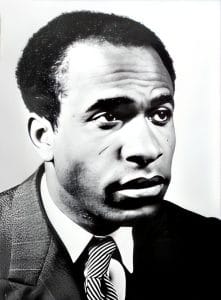
Charles Taylor Frantz Fanon: Colonialism and Identity Frantz Fanon sees the biggest problem of colonized peoples not in "economic poverty" but in the suppression of their identities. According to Fanon, identity denial is the deepest form of oppression that wounds human existence. The historical suppression of Kurdish identity confirms this reality pointed out by Fanon.
Frantz Fanon Global Experiences: Prosperity Does Not Suppress Identity Demands World history has repeatedly proven that identity and cultural rights do not disappear when poverty is eliminated; on the contrary, they become more visible in prosperity.
- Catalonia (Spain): It is Spain's wealthiest region. It enjoys a prosperity well above the European average. Despite this, Catalans have held independence referendums and insisted on the right to education in their mother tongue and official language status. Wealth has not suppressed their demands but made them more organized.
- Quebec (Canada): Despite being one of North America's most prosperous regions, there has been an intense struggle to constitutionally guarantee the French language. Laws have been enacted to prevent the erasure of the language from public spaces, and cultural identity has been protected.
- Scotland (United Kingdom): Scotland, which achieved a strong position thanks to oil revenues and economic prosperity, nevertheless held an independence referendum and insisted on demands for political and cultural autonomy.
- Ireland: Despite its economic leap, dubbed the "Celtic tiger" of Europe, intensive policies have been developed to preserve the Irish language and grant it official status. The people have striven to assert their identity not only through economic prosperity but through language and culture.
- Basque Country: Despite being one of Spain's most industrialized and wealthy regions, the Basque people have not given up their struggle for language and identity. The rise of organizations like ETA is also a result of the suppression of these identity demands.
These examples show that economic prosperity alone does not solve identity problems; on the contrary, it strengthens identity consciousness. The Relationship Between Economy and Identity There is a contradictory relationship between economy and identity:
- During periods of poverty, identity problems are felt more acutely; because people feel excluded both economically and culturally. This creates a sense of double victimization.
- During periods of prosperity, identity demands are expressed in a more organized, conscious, and powerful way. Since people are not struggling with hunger, they have the opportunity to defend their cultural and political rights more openly.
Therefore, enrichment does not eliminate identity problems; it makes them clearer and stronger. The Function of Reductionist Discourse in Politics The economy-centric discourse is actually a functional tool in politics:
- It is simplistic: It reduces the problem to a single cause, thus not burdening politicians with the responsibility of seeking deep solutions.
- It is populist: It serves to obscure real issues by exploiting the economic difficulties of the people.
- It aims to render invisible: It dismisses the century-long struggle of Kurds for identity and language by confining it to an economic parenthesis.
Therefore, the discourse "if the economy improves, there will be no problem" is actually not a solution, but an escape strategy. The approach "if the country gets rich, all problems will be solved" is superficial populism. This discourse tries to make the Kurdish issue invisible by artificializing it, instead of recognizing it as a legitimate identity problem. However, the real solution is possible not only with economic development but also with the fulfillment of fundamental demands such as:
- The right to education in the mother tongue,
- Cultural autonomy,
- Democratic representation,
- Equal citizenship.
Conclusion: The Foundation of Existence is Identity The Kurdish issue is not about poverty, but about existence. Even if Turkey were the wealthiest country in the world, Kurds would not give up their demands for education in their mother tongue, freely living their cultural identity, and equal citizenship politically. Global experiences clearly show: As prosperity increases, identity demands do not weaken; on the contrary, they emerge more strongly. Therefore, explaining the Kurdish issue solely by economic crisis contradicts both historical facts and political realities. The real solution lies in considering economic development together with identity and freedoms. Mücahit Özden Hun August 27, 2025