Kiziroğlu Mustafa Bey and Muzaffer Şamiloğlu
This article explores the historical figure Kiziroğlu Mustafa Bey and the research conducted by the late Muzaffer Şamiloğlu, a former senator from Kars, whose life story and insights are shared.
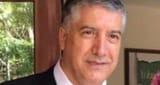
Dear Readers, when I heard that my dear friend Hüsnü Bediroğlu was rolling up his sleeves to bring a film project about Kiziroğlu Mustafa Bey, one of the unforgettable figures of our history, to life and that filming would begin soon, my mind took me back years, to the past. I first heard the name Kiziroğlu Mustafa Bey in the folk song sung with the soul-stirring voice of the great minstrel Murat Çobanoğlu from Kars:
“He came and went with a fury, peh peh peh
Kiziroğlu Mustafa Bey, hey heeey
He pierced through these mountains
Who is the aga, who is the pasha, who is the lady, who is the beloved, who who who who
Kiziroğlu Mustafa Bey, a bey's son, the son of Zor Bey…”
This melody stayed in my mind and heart for years.
Years passed. In 2001, during an interview with the late Muzaffer Şamiloğlu, a respected figure from Kars and former Senator of Kars, I heard him say: “Kiziroğlu Mustafa Bey’s village is within our lands today.” These words deeply affected me. Muzaffer Şamiloğlu not only provided this information but also shared his research on Köroğlu and Kiziroğlu with me. I conveyed all this information to the reader in my book titled IĞDIR SEVDASI.
Today, with a film project about Kiziroğlu Mustafa Bey on the agenda, my heart and mind inevitably turned to the late Muzaffer Şamiloğlu. I wanted to share both his life story in his own words and his valuable work on Kiziroğlu Mustafa Bey with you. I want you to see this article as both a debt of gratitude to the late Muzaffer Şamiloğlu and a modest contribution I can make to our cultural heritage.
I wish my brother Hüsnü Bediroğlu and the film crew success in their work. THE LATE MUZAFFER ŞAMİLOĞLU NARRATES (FROM THE BOOK IĞDIR SEVDASI) In 1604, when Iranian Shah Abbas I attacked Azerbaijan and captured Kars, my family resided in a village established at the mouth of the delta formed by the confluence of the Aras and Kura rivers. My ancestors, Nuri and Sofi, left their village due to the Iranian attack and migrated in different directions.
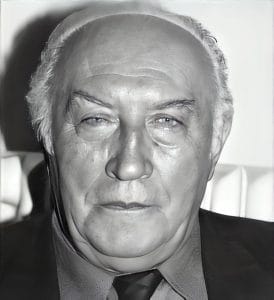
Muzaffer Şamiloğlu The family group affiliated with Nuri went and settled in the villages of Tutak district of Ağrı province, Solhurlu village of Digor district of Kars, and Karakale village of Susuz district, all within the borders of the Ottoman Empire. Those affiliated with Sofi reached Dagestan via Georgia. My family branch is descended from Sofi's group. During the First World War, when civil war and turmoil broke out in the Caucasus due to the Bolshevik Revolution, my grandfather Şamil, along with his brothers Rüstem and İbrahim Halil, came to Kars in 1918. Everything happened so suddenly that nearly 80% of the family members were stranded in Russia. Only a very small number of them were able to cross the border and come to Turkey in later years. These crossings continued to decrease until 1938. My grandfather's first task upon arriving in Kars was to gather his relatives, form a gang, and, in consultation with Ottoman forces, initiate resistance and attack movements against the Armenians and Russians. There were three prominent gang forces in Kars: my grandfather Şamil Bey's gang, Eli Bey oğlu Bekir's gang from Kümbet village of Arpaçay, and Gülizar oğlu Abdullah's gang from Porsuklu village of Susuz. Eventually, these three gangs united under my grandfather's leadership and fought together against the Armenians for three years. These gangs liberated the Kars and Ardahan regions from the Russians and Armenians. The soldiers of Kâzım Karabekir Pasha arrived later. When Mustafa Kemal visited Kars in 1924, he granted Çamçavuş village, which is part of Susuz, to my grandfather for his services in the national struggle, and my family settled in Çamçavuş village. In 1934, when my grandfather bought the 2000-decare farm belonging to Ataş oğlu Asaf in Kiziroğlu village, a part of our family also moved to Kiziroğlu. After leaving the judiciary in 1957, I devoted myself to farm work for a short time. I bought the lands around the farm and expanded it to 10,000 decares. I combined the spring waters on the land and raised trout. Soon after, I managed to establish a model farm with 500 breeding sheep, over 100 cows, and 30-40 wild horses. (I was producing 60 tons of kashar cheese annually.) After entering politics, I stayed away from the village, and the farm was gradually neglected. (In summer, families coming from Iğdır rent half of the farm land and engage in pasture animal husbandry.) *** I was born in Kiziroğlu village on June 24, 1924. My father (Yunus) and mother were in Kiziroğlu village; I was staying with my grandfather in Çamçavuş. I attended Çamçavuş village primary school until the fourth grade. When a part of my family settled in Kars, I finished the fourth grade at Kars Gazi Primary School. The year I moved to the fifth grade, a special order came from the Ministry of National Education. Children belonging to the Şamiloğlu family were to be transferred to the newly opened primary school in Susuz district. The reason for this was that the villagers had put forward the condition, "If the children of the Şamiloğulları go to the newly opened primary school, we will send our children too." The principal of Gazi Primary School, Rasim İlker, took my hand and brought me before Governor Akif İyidoğan: "Dear Governor, send all the Şamiloğulları, but Muzaffer is a diligent student, don't touch him!" he said. It was a strange twist of fate that Governor Akif İyidoğan, with whom I would later serve as Senator, rejected the principal's request, saying, "No! I cannot make an exception!" I was sent to the primary school opened in Cılavuz as if in exile. I studied middle school and high school in Kars. Although I won a place in medical school – I actually attended classes for 18 days – I registered for the Faculty of Law. There was a reason why I wanted to become a lawyer: a tragic event I witnessed in my childhood had given sacred value to the words and concepts of "rights and law" in my mind. My Father and Grandfather in Prison My grandfather Şamil Bey was cultured and educated. He spoke German, Russian, Armenian, Circassian, and many Caucasian languages as beautifully as his native tongue. It was the autumn of 1934. All family members had gathered in front of the farm building in Kiziroğlu village, trying to help with the sheep shearing. 15-20 workers, with wool shears in their hands, were laying over 500 sheep one by one and shearing their wool. In the midst of this commotion, a horseman, whom we learned had come from Artvin, approached us. Large baskets loaded with black dates were on the horse's back. He exchanged them for wool and left. We children filled our pockets with black dates and joyfully started playing. The next day, gendarmes came to the farm. They took my grandfather, father, and uncle Yusuf away. The village tax collector and also our blood brother, Tahir Efendi, had been killed in a place called Çiftbulak. Allegedly, my grandfather had ordered this killing; my father had shot at his horse; and my uncle Yusuf had executed the tax collector who fell from his horse! However, on the day of the incident, my grandfather, father, and uncle were busy shearing sheep at the farm. The fate of my loved ones, who were subjected to this slander and injustice, filled my child's heart with pain. My grandfather, father, and uncle were tried with a demand for 18 years in prison. There was a judge named Hilmi Bey. Thanks to his dissenting opinion, "I am in favor of their acquittal," which he added to the decision, the decision was appealed. My grandfather was released after one year; my father and uncle were released after 2.5 years in prison. When this happened, I was a fourth-grade student. Going to court every day and witnessing my loved ones being unjustly tried, I promised myself that I would become a lawyer in the future. After graduating from the Faculty of Law, I served my country and my people as a lawyer dedicated to justice for 40 years and 2 months. My Professional Life After the Faculty of Law, I served as a prosecutor and judge for many years. In 1957, I resigned from my position as a military judge in Hasankale and started working as a freelance lawyer in Kars. In 1965, I entered parliament as a Kars Deputy from the CHP. In 1973, I became a Kars Senator from the CHP. In 1979, I completely closed the chapter on politics. MY BOOK WORKS So far, I have published 12 books within my professional and personal areas of interest. I would like to share the story of a few of them with you: BOOK 1: “Köroğlu and Kiziroğlu Mustafa Bey” (Ankara 2000) Since Kiziroğlu, the village of the famous historical figure “Kiziroğlu Mustafa Bey,” is also the village where I was born and raised, I conducted research on this historical personality for many years. In fact, in the second grade of middle school, I wrote the following poem under the title “To My Village”: Köroğlu and Mustafa Bey Wielded swords here That's why in song and word You are on everyone's lips, Kiziroğlu So far, 37 books have been published on “Kiziroğlu Mustafa Bey,” three of which are by foreign authors. Two of the foreign books are by French authors, and one is by the Armenian historian Arakel. However, the only book among these that contains accurate information is “Halk Hikayeleri ve Halk Hikayeciliği” (Folk Tales and Folk Storytelling) by the late Prof. Dr. Pertev Naili Boratav, whom we condemned to live in France.
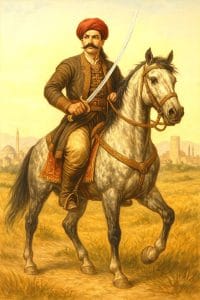
Kiziroğlu Mustafa Bey Researchers Fahrettin Kırzıoğlu introduces “Köroğlu” as being from the Aras region or Turkestan; Ümit Kaftancıoğlu introduces “Köroğlu” as being from Erzincan. However, the real Köroğlu is from Bolu province, as stated by Evliya Çelebi in his Seyahatname. I went to the Bolu region five times and continued my research. Finally, I managed to find the ruins of Köroğlu's father Yusuf's house. These ruins are still in Aşağısayık village, Dörtduvar sub-district, Gerede district, Bolu. The name of a place called “Nallıhan” is mentioned in Köroğlu's poems. During my research, I also managed to find the real “Nallıhan.” The story of this is as follows: Köroğlu set off with his brave men. When he stayed at an inn to rest, he noticed that his horse's horseshoe had fallen off. He ordered his brave men, “Follow the trail and find the horseshoe!” However, the horseshoe was broken and no longer usable. Köroğlu nailed this horseshoe to the door of the inn. From that day on, this inn became known as “Nallıhan.” “Georgia” is mentioned in Köroğlu's poems. During my trip to Georgia, one day I went to the Oriental Studies University in Tbilisi and talked to scientists about “Köroğlu.” The scientists said, “Documents show that Köroğlu came this far.” Köroğlu had three wives named Huruzat, Perizat, and Döne. When he was defeated by Kiziroğlu Mustafa Bey, he took refuge in Georgia; there he took Telli Nigar as his fourth wife. Köroğlu and Kiziroğlu Mustafa Bey's brave men confronted each other in a place called Suluçayır. A lot of blood was shed due to the fierce clashes. From that day on, the name “Suluçay” became “Kanlıçayır” (Bloody Meadow). The “Kanlıçayır” location is now within my titled property. Kiziroğlu Mustafa Bey is ethnically of Kurdish origin. Köroğlu calls out: He came and became our companion, the brave Kurd of Ajamistan He became the leader of three brave men Now he seeks four brave men *** Muzaffer Şamiloğlu, a valuable personality raised in Kars, passed away in Ankara on March 27, 2011. May his soul rest in peace, and may his place be in heaven.