Cactus Flowers and Geronimo
The author recounts his experiences in Arizona, visiting Saguaro National Park and various Native American reservations, focusing on the history of the Navajo and Apache nations, and the legendary Apache leader Geronimo.

Dear Readers:
It was the spring of 1996. I was working as a lecturer at the Thunderbird Global School of Management within Arizona State University in Phoenix, the capital of Arizona. I had started my position in the spring semester (February). My home was in Dallas/Plano. If I liked Phoenix and my job, I would move my home from Plano to Phoenix.
If we roughly divide America into North and South, the climate is cold in the North and hot in the South. Wealthy people in the North, upon retirement, desire to settle in a warm state and enjoy the last years of their lives. Two Southern states are favored by Northern retirees: Florida and Arizona.
Retirees were increasingly preferring Arizona over Florida due to the extremely destructive hurricanes that appeared every few years and the high cost of living there. Life was cheaper in Arizona. Everywhere was filled with first-class golf courses, a favorite of retirees. As a result, Phoenix had become a complete retirement city. This situation reflected on the city's mood and negatively affected those like me who wanted to build a career. I had made up my mind. I would return to Plano at the end of the semester.
One of Arizona's five important symbols is a giant cactus called Saguaro. A friend, learning that I would be leaving Arizona in June, made a suggestion:
"Before you leave, you must see the flowering cacti, especially the Saguaro cactus! Also, the Navajo Reservation is quite interesting! Don't forget: cacti bloom towards evening."
One weekend, in the afternoon, I set off for Tucson, a city 180 km south of Phoenix. After a 1.5-hour journey, I reached Saguaro National Park. I paid the entrance fee and began to drive around the park with pleasure. I must admit, what I experienced was one of the happiest moments of my life.
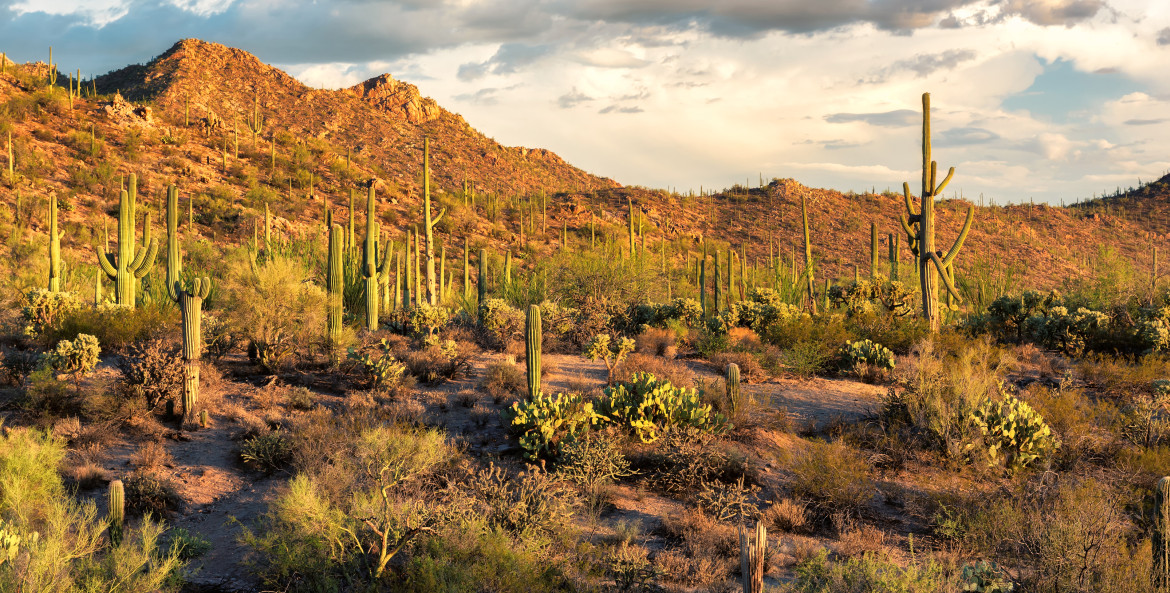
Saguaro National Park
The sun was about to set. Everywhere was filled with thousands of cacti, large and small, blooming in colorful flowers. The most striking were the gigantic Saguaro cacti. Their huge arms stretched towards the sky. Some exceeded 15 meters in height.
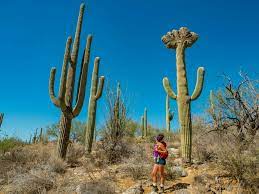
Saguaro cacti
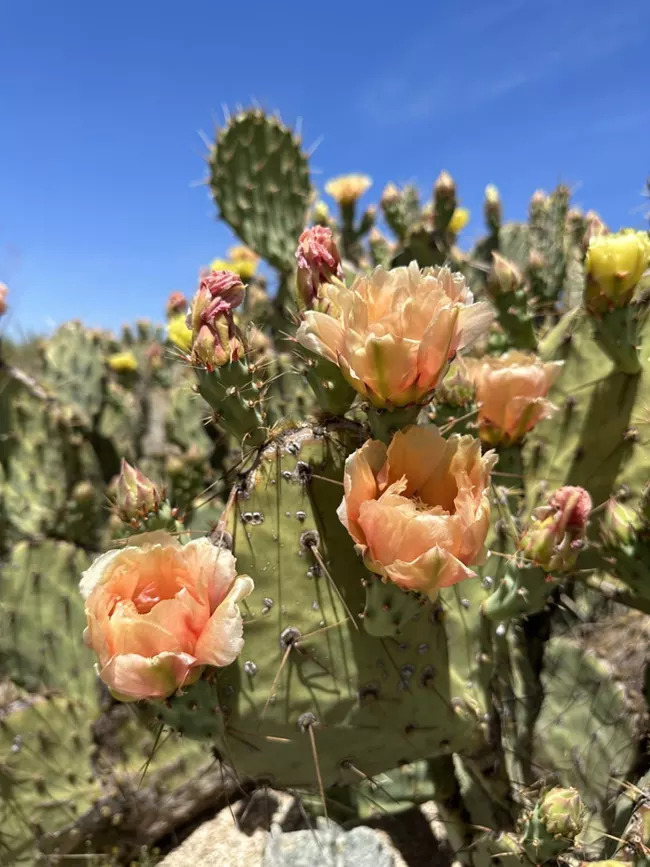
Cactus flowers
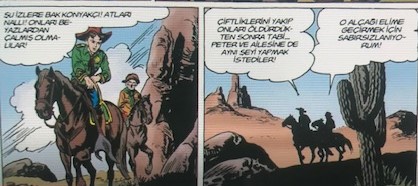
This scenery involuntarily took me back to the comic books like Tom Mix that I read in my childhood.
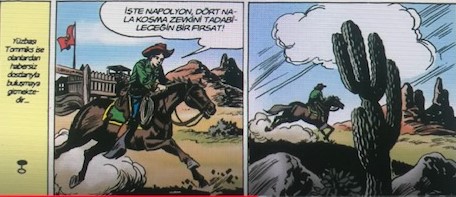
I spent the night in a motel near Tucson. The next day, I changed direction and headed north. My destination was the Navajo Indian Reservation.
NATIVE AMERICAN RESERVATIONS (NATIONS)
Native Americans are very unlucky. Their history is full of pain. They have been pushed into solitude. In the USA, Whites and Blacks are not concerned with the lives of Native Americans. Unfortunately, not much is known about Native Americans in our country either. Therefore, I would like to give a brief general overview of Native Americans:
In the USA, all matters related to Native Americans are handled by the Bureau of Indian Affairs (BIA), which is part of the Department of the Interior.
According to official BIA figures:
There are 574 federally recognized Native American Tribes in the USA. The area where each Native American Tribe resides is called a "reservation." In proper Turkish, we should translate the word "reservation" as "nation." Since some tribes live on the same reservation, there are 326 federally recognized reservations, meaning 326 semi-independent Native American nations in the USA. Each reservation has its own local government and laws, independent of the Federal Government and State Government.
Reservations in the USA are not concentrated in a specific region.
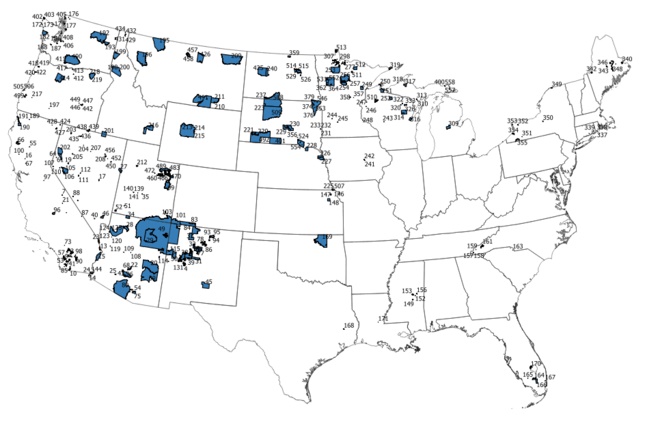
Blue areas indicate Native American reservations
As can be seen from the map, Arizona is the state with the highest concentration of Native American Reservations by area. The largest Native American reservation (i.e., nation) in the USA is Navajo. A large part of the Navajo Nation is within the borders of Arizona.
Each tribe is recognized as a "Nation" by the Federal Government. In this sense, there are 574 Native American Nations in the USA. It is estimated that Native Americans speak between 300 and 500 different languages. Today, only 175 of these languages are spoken daily. The others have either disappeared or are on the verge of disappearing due to assimilation.
There are three different laws in the USA: Federal law, State law, and Native American nation law. For this reason, serious legal problems arise. According to Federal Law, every Native American is a US citizen. They are obliged to serve in the military during wartime and only in cases of "compulsory military service."
The biggest source of income for Native American nations is casinos and gambling houses. The federal government and state governments cannot interfere with these casinos.
Today, most average Americans (White or Black) have never even visited a Native American reservation in their lives.
NAVAJO NATION
The Navajo Nation is roughly twice the size of Switzerland. Its borders extend across three states (Arizona, New Mexico, Utah). The largest part is in Arizona. According to the 2020 census, its population is around 400,000. The Navajo Nation is fortunate compared to other Native American tribes because they have largely been able to preserve their historical lands.
The Navajo Nation has its own alphabet and language. According to the Navajo Constitution, someone who cannot speak the Navajo language fluently cannot be elected President of the Navajo Nation.
There are also newspapers and books published in the Navajo language.
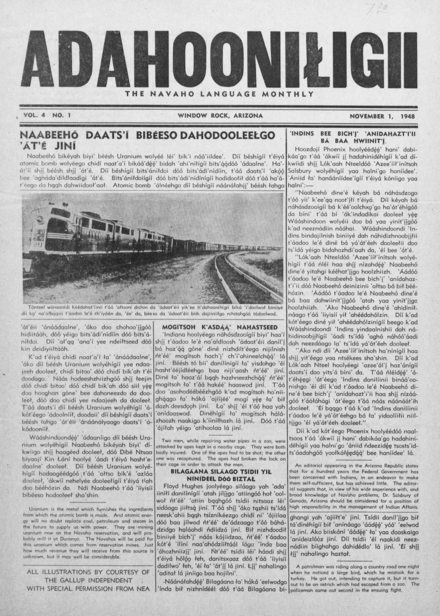
A newspaper published in the Navajo Language
The Navajo language, in a sense, came to the aid of the USA during World War II. Japan and Nazi Germany had a superior ability to quickly decipher enemy communications. The USA was, in a sense, helpless. It was at such a time that it was decided to use the Navajo language as a cipher and code. 29 Navajo Native Americans were assigned to this task. No mistakes were made throughout the war. The enemy could never decipher the Navajo code. Thanks to this, the USA gained superiority, especially in the Pacific Ocean battles.
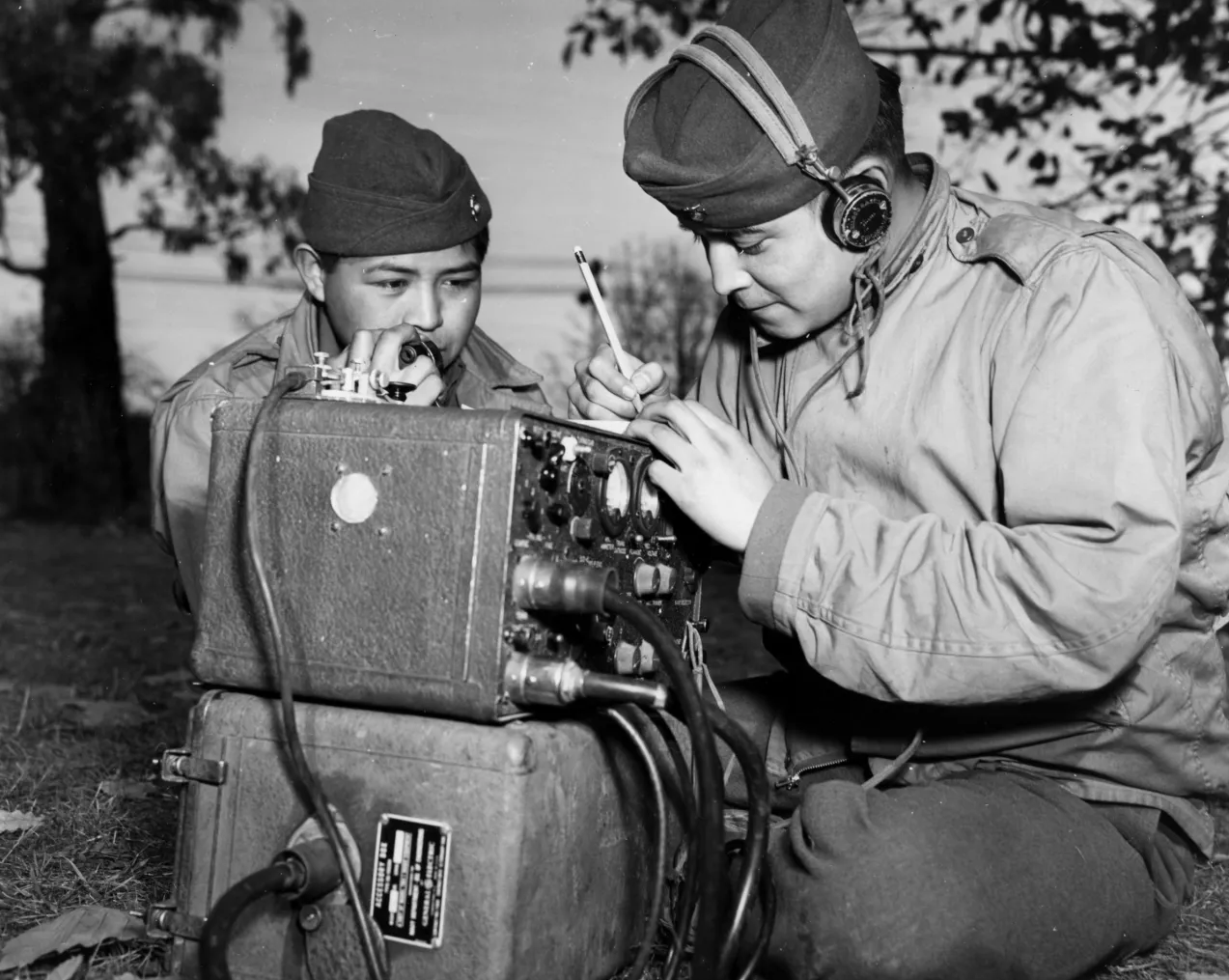

Navajo Native Americans in World War II (bottom) and Navajo Code Talkers (top)
***
I set off early in the morning. Six hours later, I arrived in Window Rock, the capital of the Navajo Nation. A special guide provided information about the Navajo Nation and showed me around the city center.
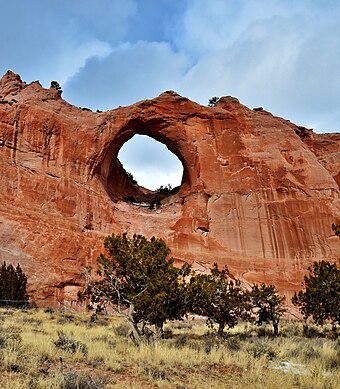
Window Rock, the capital of the Navajo Nation, takes its name from this rock
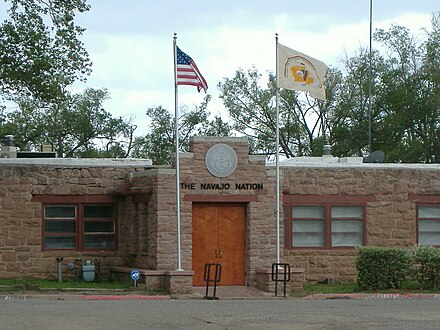
Navajo Nation Presidential Building
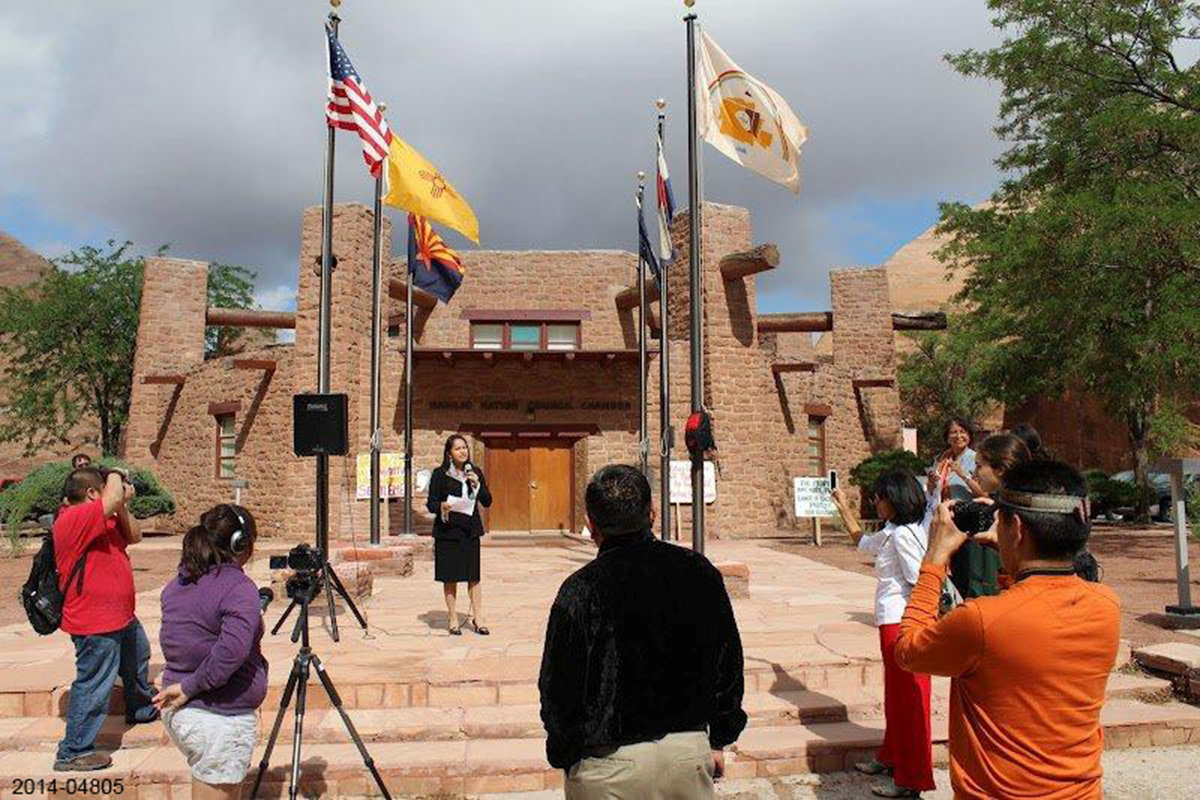
Navajo Nation Parliament Building
I spent the night at a hotel called Navajoland. I later learned that foreigners do not want to spend the night on reservations because if an undesirable incident occurs, the Native American Government intervenes, and if the foreign visitor is found guilty, they end up in the reservation's prison.
In the very center of the Navajo Nation lies the land of the Hopi Nation. The next day, I set off for Kykotsmovi, the administrative center of the Hopi Nation (Tribe). The Hopi Nation is known as the most peaceful Native American tribe. The capital was a small village. The poverty and the feeling of weariness among the people were depressing. I didn't stay long and continued my journey. My goal was now to return to Phoenix.
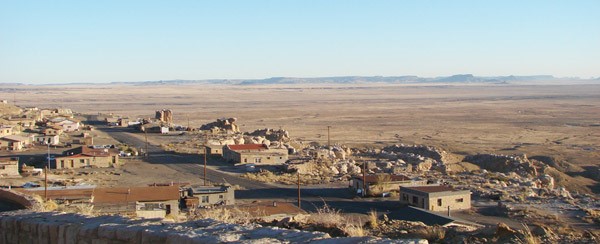
Kykotsmovi, the capital of the Hopi Nation
APACHE NATION AND NATIONAL HERO: GERONIMO
As I drove towards Phoenix, I saw a sign that read "Fort Apache Indian Reservation." Apache Native Americans are mentioned most often in comic books. It would be wrong not to visit the Apache Nation after coming all this way.
When I arrived in Whiteriver, the largest city in the Apache Nation, I was surprised. Its population was only about 3-4 thousand. The poverty and disarray were depressing.
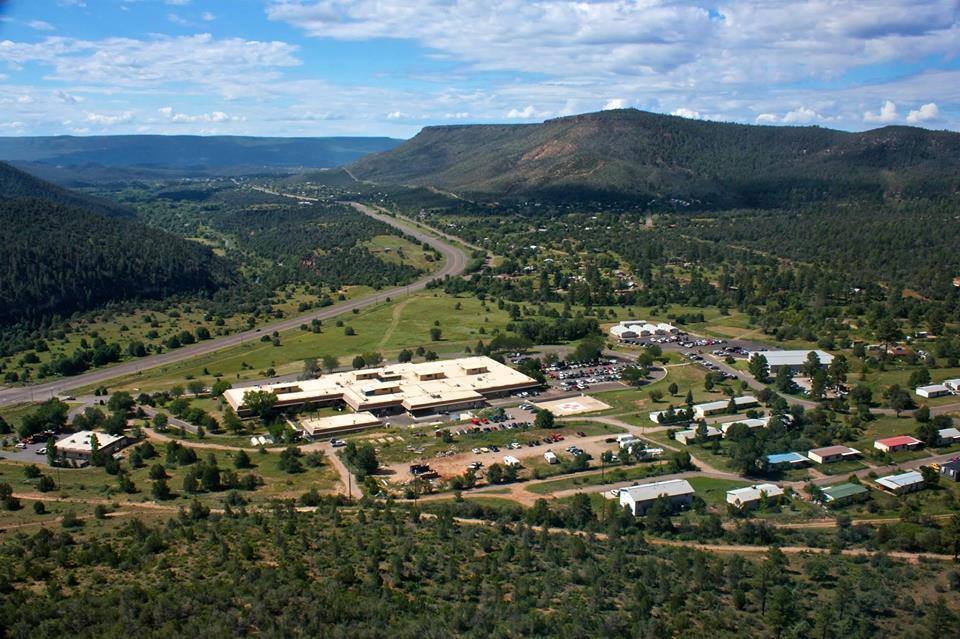
Whiteriver city
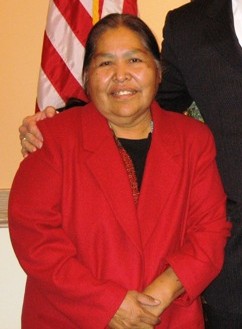
Apache President
The Apache Nation covers an area of 15,000 square kilometers. Within this area, there are 5 different tribes and five different administrations. Each tribe is recognized as a "Nation."
I took a short break in Whiteriver. The Apache business owner, realizing I was a foreigner, sat at my table. He gladly answered my questions. He talked about the history of the Apache Nation. The conversation eventually turned to the national hero Geronimo. There was a large Geronimo poster on the wall of his establishment. He proudly added:
"Geronimo is the honor not only of the Apache Nation but of all Native Americans."
I bombarded him with questions about Geronimo. He advised:
"Since you're touring the reservation anyway, there's a place called Skeleton Canyon 250 km away. Geronimo and his comrades waged guerrilla warfare against both the Mexican and US Governments simultaneously for many years. He was captured many times but managed to escape. Finally, on September 4, 1886, Geronimo and his comrades surrendered to US military forces at a place called Skeleton Canyon. There is now a monument there. I would like you to see it."
I set off for Skeleton Canyon. After a 3-4 hour journey, I reached the monument erected in Geronimo's name.
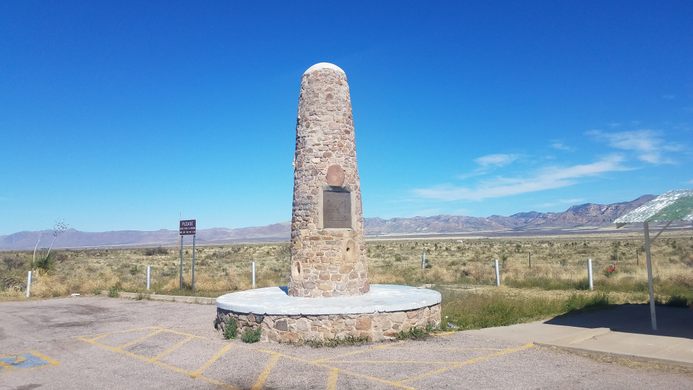
Monument erected at the site where Geronimo surrendered to the US General (1934)
GERONIMO
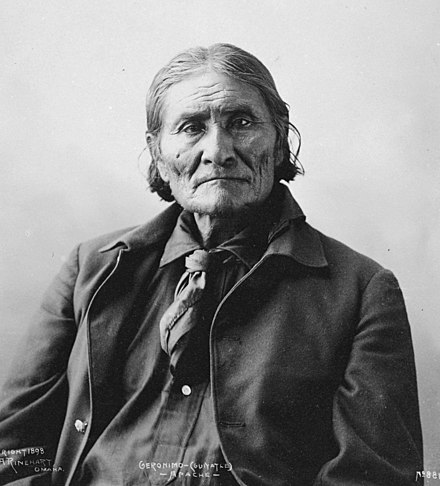
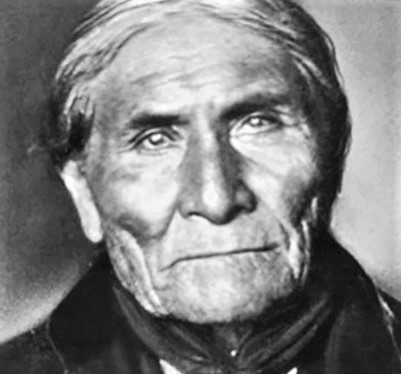
Geronimo (1898)
Geronimo was born in June 1829 in a place called Turkey Creek, which is now within the borders of New Mexico. He was a member of the Bedonkohe band of the great Apache nation. He served as the tribe's shaman, or doctor.
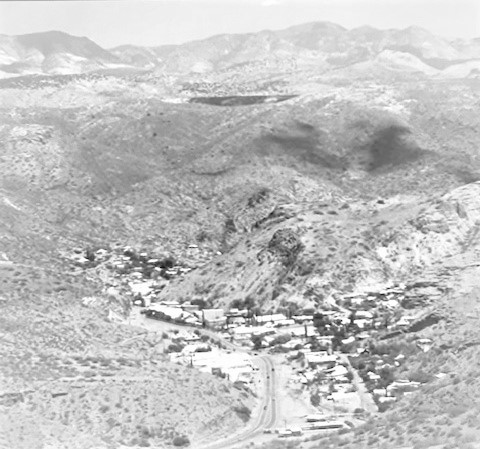
Geronimo's birthplace
When Geronimo was 28, one day Mexican soldiers attacked the Apache camp when the Apache men were absent. They massacred the children and women. Geronimo's wife, mother, and three children were among the dead. That day, Geronimo vowed revenge. He formed a guerrilla group. He fought mercilessly against the Mexicans and Mexican soldiers who tried to settle on Apache lands. It got to the point where Mexican soldiers, hearing the name "Geronimo," would drop their weapons and flee. Geronimo, with his guerrilla group of 30-35 men, would confront hundreds of Mexican soldiers and defeat them. The Mexican Government made extraordinary efforts to capture Geronimo, offering rewards, but each time Geronimo managed to escape. Geronimo's heroism quickly spread among Native Americans, and he gained fame as the "bulletproof immortal hero."
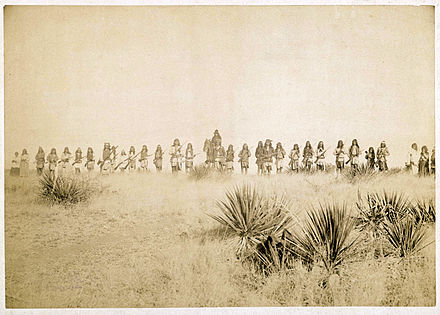
Geronimo and his warriors
Because Geronimo also invited other Native American tribes to resist the Whites, the USA also pursued Geronimo. On one occasion, US soldiers cornered Geronimo and his comrades in a massive cave and surrounded it. For days, they waited for Geronimo to come out and surrender. But there was no news from Geronimo. When they entered the cave, they were astonished to find that Geronimo and his comrades were not there. There was no other exit from the cave. This was enough to frighten the US soldiers.
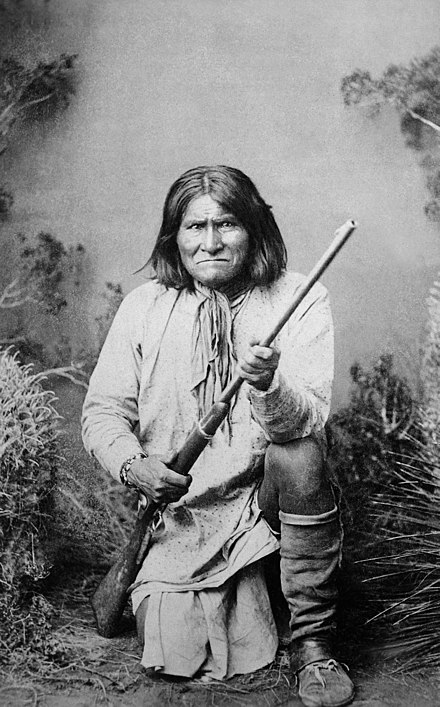
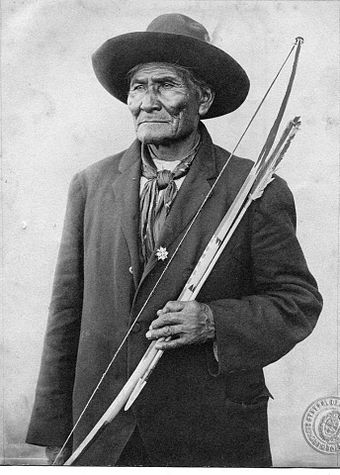
Geronimo, this time, declared war on the USA. He led three major rebellions. Against him were not only US and Mexican soldiers but also Navajo Native Americans who collaborated with them. Geronimo's last rebellion was in 1885. The war continued mercilessly. His supplies and ammunition ran out. It was on such a day that US Captain Lawton, who spoke the Apache language and respected Apache culture, went to Geronimo and persuaded him to surrender. Geronimo and his comrades set off with Captain Lawton and surrendered to General Miles, who was waiting for him at a place called Skeleton Canyon.
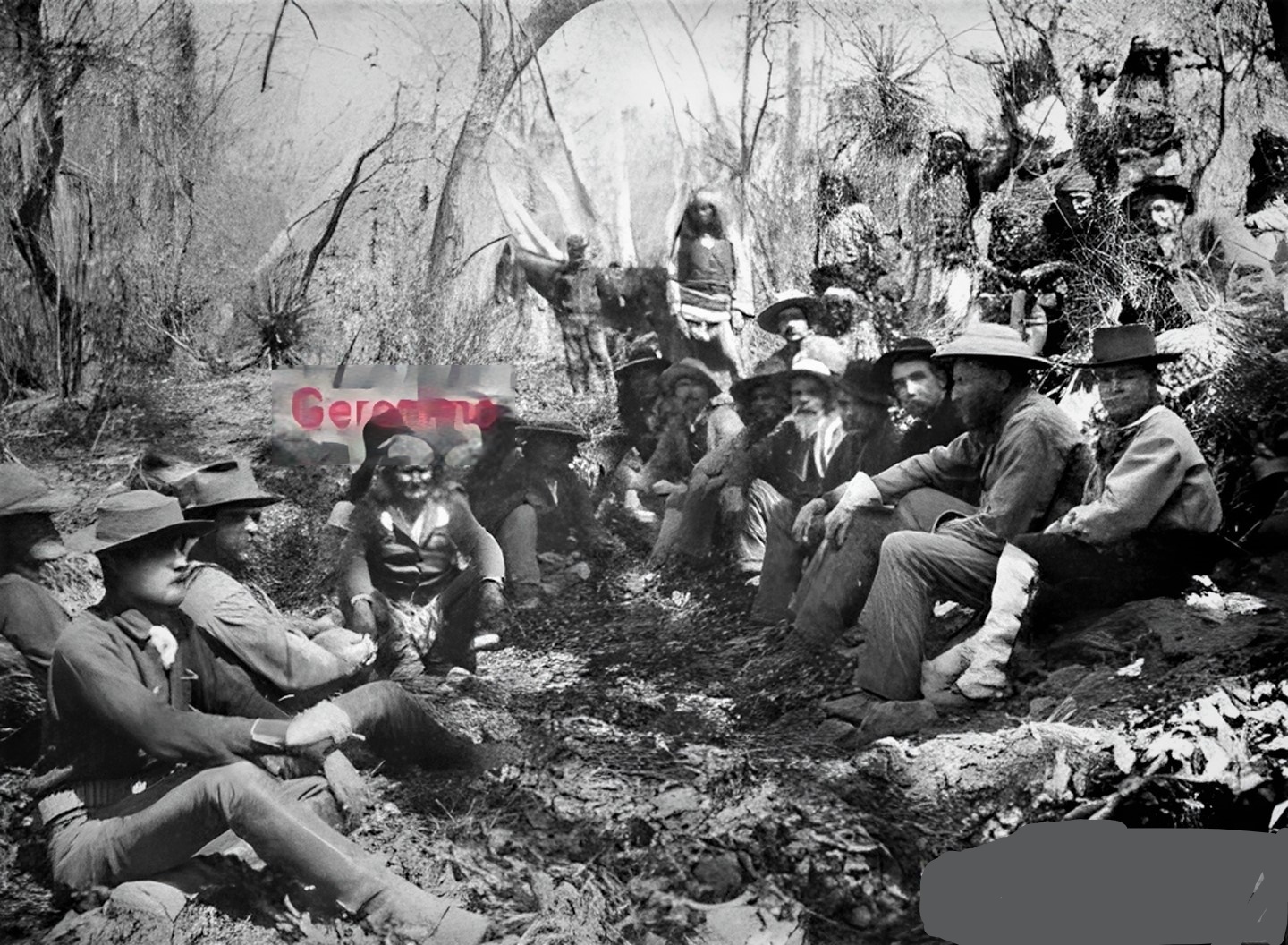
Geronimo surrendering to the US General (Geronimo in red text)
Geronimo remained a prisoner of war until his death. In 1894, he was transferred to Oklahoma, where a farm was allocated to him, but he was under constant surveillance. Tourists would come to the farm, wanting to see this invincible hero. Geronimo, like King Kong in the movie, was taken to exhibitions, and visitors flocked to the halls to see this strange creature (!). Geronimo's honor was broken, but there was nothing he could do.
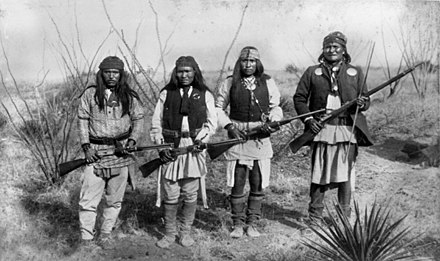
Geronimo (far right), with his warriors…
In 1905, when US President Theodore Roosevelt, re-elected for a second term, began his new term, he organized a parade in the capital. Geronimo also participated in this parade on horseback. With this, Theodore Roosevelt wanted to send a message to his nation: "There will be no more war between Whites and Native Americans; the war hatchets have been buried." Roosevelt was awarded the Nobel Peace Prize in 1906 for his similar efforts.
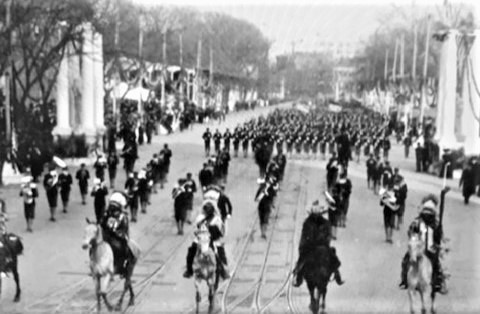
Geronimo at the Presidential parade (1905)
Roosevelt hosted Geronimo at the White House. Geronimo requested from the President that the Apache people held in camps in Florida be allowed to return to their lands. However, Roosevelt did not dare to do so.
One day, Geronimo contracted pneumonia. He died on February 17, 1909, in the camp where he was held as a prisoner of war (Fort Sill / Oklahoma). His last words on his deathbed were: "I wish I had not surrendered! I wish I had died fighting!" It is rumored that a group of Apache warriors from Arizona secretly opened Geronimo's grave and buried his bones in an unknown location in the Apache Nation in Arizona.

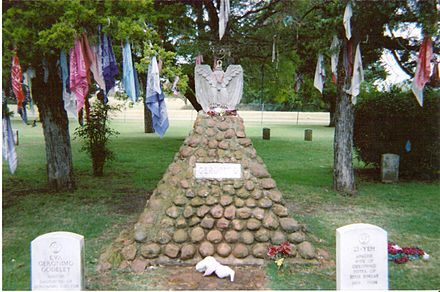
Geronimo's grave (Oklahoma State)
A NATIVE AMERICAN ANECDOTE
WHICH WOLF?
An old Native American takes his grandson aside and advises him:
"Inside us humans, two wolves constantly struggle. One is called evil: It is full of jealousy, anger, greed, arrogance, lies, and selfishness. The other is called good: It is full of happiness, peace, love, hope, tranquility, humility, generosity, compassion, and loyalty."
His grandson asks curiously:
"Grandfather, which one wins?"
"The one you feed wins."