The Triumph of Will: Yusuf Akgün – Part 4
Yusuf Akgün recounts his turbulent experiences in various orphanages, marked by bullying, creative acts of rebellion, and transfers between institutions.
EXILE FROM ONE HOME TO ANOTHER
Days at the Pursaklar Saray Children's Home passed uneventfully. To break the monotony of life, my friends and I would sometimes seek adventure and excitement.
One day, we trespassed into an apple orchard. When the owner saw us, he fired a shotgun at us. Hearing the gunshots, the gendarmerie quickly arrived at the scene. They fired into the air to calm things down. The gendarmerie gathered us and took us back to the orphanage.
The blame fell on me. The orphanage administrators decided to remove me. They hastily packed my belongings and transferred me to the Keçiören Child Protection Home. I was nine years old.
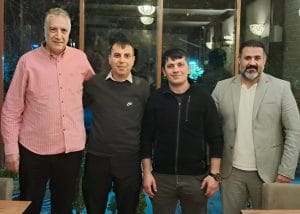
(From left to right) Mücahit Özden Hun, Yusuf Akgün, İzzet Akçin, and Yusuf Akgün's friend from the orphanage, Bahtı Budak
KEÇİÖREN CHILD PROTECTION HOME
Since Pursaklar was in a rural area, the children there didn't know their rights, didn't object, and followed orders as given. However, Keçiören was integrated with Ankara's urban culture. The children in this orphanage knew the system better, which made them spoiled and disobedient.
We had valuable teachers, but their loving approach was overshadowed by some caregivers with violent tendencies. For example, there was one female caregiver. She had adopted oppression, threats, and violence as her method. She gave us no breathing room.
They placed me in the section known as "Block E." I must admit that I suffered greatly for the first 6-7 months. I was beaten a lot. The ones who beat me were not the teachers, but my peers.
The female caregiver had found an interesting method: she wouldn't physically abuse a child who disobeyed her; instead, she would activate a group, a kind of "mafia" so to speak, that she had organized among the children in the orphanage. My older peers would surround me, threaten me, and not content with that, they would start a torture session.
The most popular form of torture was as follows:
A sheet would be brought, and I would be placed inside it. My peers would hold the four corners of the sheet, first gently bouncing me inside it, then gradually increasing the tempo, throwing me upwards. Whenever my body touched the ceiling, they would quickly pull the sheet from under me, and I would crash to the ground like a nail. The pain in my body would not subside for days.
I have always disliked cabbage and kapuska (a type of cabbage stew). To put it mildly, I would rather starve to death than spoon kapuska. On such days, my peers, organized by the caregiver, would surround me; some would forcibly open my mouth while others tried to force-feed me kapuska with a spoon.
I had a resilient and determined nature. Despite the torture, I never showed that I was crushed; each time, I looked for an opportunity to make them accept my independent personality.
I believed the time had come to take revenge on the caregiver. I put my head together with a friend who, like me, was constantly wronged, and we planned a trap. We found a bucket. We went down into the sewer and started looking for rats. We placed 5-10 rats in the bucket; we covered its mouth with aluminum foil.
It was time to lure the caregiver into the trap. One of our friends angered the woman. She grabbed a stick and chased after him. This was exactly what our plan called for. Seeing the caregiver approaching down the corridor with angry steps, we placed the bucket on top of the door. As soon as the woman opened the door, the bucket and the rats inside landed on her head. The caregiver went crazy with fear. She screamed and ran away.
The necessary investigations were carried out. When it was understood that this idea came from me, I received a good beating. I didn't care. They wouldn't send me to Iğdır anyway. In a way, I was proving myself by standing firm against their oppression and arbitrary rule.
***
There were black hoses. We would connect them end-to-end, hang them from the window to descend into the garden, escape from the orphanage, wander around, and return whenever I felt like it.
No one came or went from Iğdır. I had been abandoned to my fate. Although Mr. Adil Aşırım would send a friend named Musa Tezel to inquire about my situation.
Musa Tezel was a generous and open-handed person. He never came empty-handed. He would bring all kinds of food in packages, placing them in the middle, to please the children in the orphanage. I must admit that Mr. Musa Tezel contributed a lot to me. In later years, when I went to Iğdır, Mr. Musa Tezel's family would also embrace me, saying, "He is our grandson, we want to see him."
(I thank my esteemed fellow citizens Mr. Adil Aşırım and Mr. Musa Tezel for their humane behavior, on my own behalf. Mücahit)

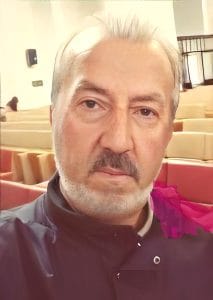
Iğdır Deputy Adil Aşırım and Musa Tezel, son of the beloved personality of Iğdır, the late Hasan Tezel
I carried feelings of boredom and rebellion intertwined. One day, we filled a bucket with rats and tied a fishing line to the handle of the bucket.
There were girls in Block C. They were receiving education. Various professions were taught to them so they could earn a living when they left the orphanage at 18. We lowered the bucket into Block C. A curious girl lifted the foil and screamed when she saw the rats in the bucket, causing chaos in Block C. They immediately identified the culprit, me, and gave me a good beating. To be honest, I didn't care about such beatings. What was important to me was to prove my existence, to make my voice heard in the struggle for life.
TIES FOR DOGS AND CATS
There were artists eager to turn the tragic lives of disabled and orphanage children into an opportunity to boost their ratings. One day, we received news that a famous female artist would visit the orphanage, accompanied by TV cameras.
The children were bathed and given clean clothes. The boys were asked to wear ties. If it were a fashionable tie, I might not object, but they wanted us to wear old-fashioned ties. I objected. However, since I couldn't convince my other friends, I had to wear one.
Soon after, the female artist arrived at the orphanage, bringing the street children with her. She was putting on a show in front of the cameras, trying to prove how much she cared about the problems of "disabled and orphanage" children. I organized my friends. Eggs were passed from hand to hand. As soon as I threw my egg, the other friends also pelted the female artist with eggs. The cameramen and the female artist barely managed to escape.
This situation was reported to the Ministry. Soon after, we learned that the Minister of State, Hasan Gemici, would visit the orphanage. Again, they washed us, dressed us in clean clothes, but again, they put outdated ties around our necks.
This time, I managed to convince my friends not to wear the ties. A group of about 5-10 friends went to the carpentry workshop. We took off the ties. There were street cats and dogs that never left the vicinity of the orphanage. We put the ties on them. Then, we secretly climbed onto Block D and watched what was happening.
The dogs made all sorts of movements to get rid of the ties around their necks, even rolling on the ground and tugging at the end of the tie. It was a comical sight.

At that moment, the flashing cars of the Governor in front and the Minister behind appeared. The orphanage administrators were in a panic. They started running around. The Governor and the Minister got out of the car, but the dogs, unable to get rid of the ties around their necks, attacked them as if taking revenge. It became utter chaos. No one understood what was happening. With great difficulty, they rescued the Governor and the Minister from the dogs and brought them into the orphanage.
In the evening, the assistant director gathered the children. He interrogated those he had singled out. When they unanimously declared, "This was Yusuf's idea," it was inevitable that I would be punished.
The assistant director called me to his office. I stood upright in front of his desk. With a sweet voice, he said, "Sit! Sit!" I sat down. There was tea and various biscuits on the coffee table. "Come on, Yusuf! Look, these are for you," he said. I was surprised. Without suspecting anything, I started munching on the biscuits with pleasure. Occasionally, he would compliment me, saying things like, "So, the idea of putting ties on dogs and cats was yours, was it? Honestly, I'm impressed! It was a clever idea. I admire it." I felt proud and munched on the biscuits with even more pleasure.
At the best moment of this kind (!) invitation, the assistant director, smiling, handed me a paper:
"Come on, Yusuf, sign this paper! Good things will happen for you. Everyone will be proud of you."
I held the pen with my mouth and signed the paper without reading it.
I didn't know what I was signing. After signing, I continued to eat the biscuits with appetite.
It turned out that the assistant director had made me sign a paper that read:
"I wish to be sent to another orphanage of my own free will. Yusuf Akgün"
They sent me to the Etimesgut Fatma Uçer Boys' Orphanage. They also sent a note after me: "This child is very dangerous!"
ETİMESGUT FATMA UÇER BOYS' ORPHANAGE
I was ten years old, but the children in the orphanage I went to ranged from 12 to 18 years old. They had invented something among themselves in the orphanage: "Welcome beating."
They surrounded me and started beating me. One of the older boys took a serrated bar of soap and slapped me hard across the face. My face was covered in cuts. I still feel the pain of the beating I received that day deep in my bones.
By rule, non-disabled orphanage children are forbidden from staying in the orphanage after the age of 18. Our older brothers, who had spent their lives in the orphanage and were expelled at 18 because they had no place to stay, continued their lives as street children near the orphanage. Those of us who stayed in the orphanage would somehow manage to steal bread and other provisions, make sandwiches, and give them to our older brothers.
***
I started attending Etimesgut Primary School. I went to school with my peers from the orphanage and returned together.
The new term began. I didn't know which class I was in. I went to the Assistant Director's office on the fourth floor of the school.
"Teacher, I'm looking for my class."
Since I was wearing a long-sleeved sweater, he didn't realize I was disabled. He thought I was one of the normal students:
"Where are your parents?"
"I live in an orphanage."
When the Assistant Director heard this, he angrily rose from his seat. He grabbed the stick next to the cabinet and chased me. He was shouting:
"So, you live in an orphanage, huh!"
I didn't understand what was happening. He caught me in the garden. He grabbed my ear and twisted it hard. He pushed me. He kicked me.
I would understand the real reason for the incident later. The Assistant Director's son was also a student at this school. One day, he brought a children's toy known as TASO from home to school. Another student, targeting my peers from the orphanage, said, "Bring me this TASO from this child, and I'll give you money." They both beat the child and forcibly took the TASO from him. That's why the Assistant Director acted with prejudice and hatred towards students from the orphanage.
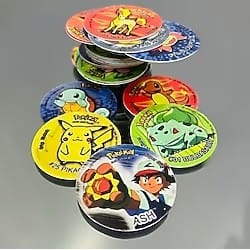
Taso Toy
My beating caused an uproar among my peers from the orphanage. We all left school together and returned to the orphanage. My peers went before the orphanage director and complained, "The assistant director beat our brother." However, the orphanage director was not interested. Thereupon, my peers and I raided Etimesgut Primary School. One group beat the Assistant Director while another group severely damaged his car.
When I returned to the orphanage, the director greeted me mockingly:
"Ooo! Our gang leader has graced the orphanage with his presence. Look at the map on the wall. You'll go wherever you like!"
My mind went back to when I was 4-5 years old. My father would sing Lazuri songs, talk to himself, and laugh while building walls.
So, I chose Trabzon on the map shown. The next day, all my belongings were quickly packed, and I was sent to the Trabzon Child Protection Home accompanied by a teacher.
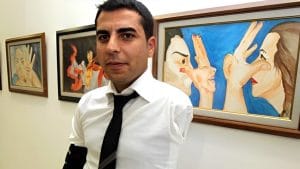
Yusuf Akgün, at a painting exhibition
END OF PART FOUR TO BE CONTINUED