The Triumph of Will: Yusuf Akgün (Sixth and Final Part)
Yusuf Akgün recounts his challenging return to his family in Iğdır, his subsequent struggles in the orphanage, and his eventual triumph over adversity through sports and education.
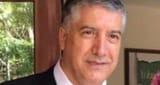
MY FAMILY STRUGGLING WITH LIFE'S DEPRESSION When the Yurtiçi Kargo official handed me over to the gendarmerie in Iğdır, my heart filled with anxiety and fear, wondering if they would send me back to the Children's Home in Ağrı. My health was not good. I had been in the cold for a long time, and my body was bruised. They admitted me to the hospital. When my father learned I was in the hospital, he rushed over. My father had also fallen from a construction site and broken his leg. His leg was bandaged and covered in wounds. As always, there was a deep sense of unhappiness and unease on his face. He sat silently beside me. He talked to himself, showing his weariness with the difficulties life had thrown at him, muttering in a resentful tone. We returned home together. This was a confrontation with my family's reality. Before, as a child, I had visited my father's house every two years with permission. But this was the first time I had come to my father's house in many years. I was now a young man and in a better position to assess my family's situation. I was wrestling with two thoughts: on one hand, Mount Ağrı, the first love of my childhood, the lands of my village, and the love of my parents; on the other hand, what kind of future awaited me in Iğdır as a disabled young man. Sometimes I succumbed to my emotions, and the thought of staying with my parents, no matter the cost, prevailed. However, my father's irritable state, his silence as if he had become estranged from life, disappointed me. Yes, I understood now that there was no place for me in my father's house. The longing for family and land that I had always carried in my mind and heart had lost its meaning. My family was barely sustaining its existence, struggling to survive in the battle of life. They had neither the strength nor the time to care for me. A few weeks passed like this. My father had a bicycle. We would go to Iğdır city center together. As we rode the bicycle, pain would stab my body, and I would suffer, but I wouldn't say a word so as not to upset my father. Throughout the journey, my father's talking to himself, cursing life and himself, darkened my soul and instilled in my mind that I had to get away from here as soon as possible. Yes, I had to accept the truth. My childhood love for my parents had become a feeling stuck in my heart as a memory, but it no longer had any meaning. Occasionally, thinking it might interest them, I would excitedly recount my experiences and what I had been through, but my stories didn't interest anyone. One day, my father placed 10 TL in front of me: "Son, take this money. Go or don't go. If you don't go, as you see, there's nothing a disabled child can do in a place like Iğdır. You'll be stuck relying on the family. After a while, you'll drown in our life and livelihood problems. If you go, even if difficulties await you, you can carve out a path for yourself by struggling. Make your own decision!" My father didn't know I had run away from the Children's Home in Ağrı. He wrote a note: "I am not strong enough to care for my son. I want him to stay in the dormitory and continue his life there." RETURN TO AĞRI CHILDREN'S HOME He folded the paper and put it in my pocket. We went to Ağrı together. As soon as we entered the dormitory, the staff surrounded me and started stroking my head. I knew what this meant. A punishment awaited me. I huddled close to my father in fear: "Father, they're going to beat me!" My father didn't believe me: "No, son. Look, they love you. Are you a traitor? Our state is looking after you." It was impossible to explain my problem to my father. My father said goodbye and left. It was then that a new feeling guided me for the first time: "Yusuf, forget your family, build your own future!" This, in a sense, meant the severing of my emotional ties with my family and my acceptance of the reality of life. It was a turning point in my life. After my father left, the teachers and staff gathered the students in the dormitory. They talked about what I had done and said that such behavior would not go unpunished. Punishment was now imminent. Since there was nowhere for me to escape, I accepted facing this punishment, but despite everything, I decided to keep my fighting spirit high. We were in the study room. The administration had confiscated the allowances the state had given us, saying the dormitory's windows and doors would be renovated, but everything was still broken and dilapidated. A cruel punishment awaited me anyway. At least I wanted to throw their mistakes in their faces. I sat by the window. I dangled my feet. I mockingly asked the approaching officer, "Didn't you say you were going to renovate the windows? What did you do with our money?" TORTURE As I mentioned before, as a matter of principle, those who turned 18 were disconnected from the dormitory. However, disabled individuals like me had the right to stay longer. In the Ağrı Children's Home, there were students we called "Abi" (older brother) who were over 18 but still living in the dormitory. The staff condoned their stay, collaborating with them to use them for certain dirty work while also trying to establish discipline among the children. It was getting dark. The "Abis" surrounded me. I understood that the time for punishment had come. One of them wrapped his arms around me and held me tightly. Another stuffed a piece of cloth into my mouth to prevent me from screaming. In this state, they took me down to the boiler room. There was a hammam room next to it. They locked me in there. They brought chains. They tied me to a radiator. The "Abis" surrounded me. They put soap in a towel and started hitting me indiscriminately. I couldn't scream because my mouth was gagged. They hit my face hard. My mouth was shattered. They left me semi-conscious. The staff came. As if they knew nothing of what had happened, they untied the chain and took me to the infirmary. When they realized they couldn't treat me, they rushed me to the hospital. I stayed in the hospital for a week. When I recovered, I took refuge in the Officers' Club. They brought me before the commander. I told him what had happened, the brutal torture I had endured. The commander was a sensitive person. He picked up the phone. Suddenly, chaos erupted. When high-ranking bureaucrats also got involved, some of the dormitory administrators were dismissed. The dormitory suddenly became the talk of Ağrı. The state extended a helping hand. Bicycles and computers were donated. A library was established. The administrators, concerned about keeping their positions, took me aside and said, "If you behave, we will take you to Ankara to get a prosthetic." I complied with their wishes for two months without causing any trouble. My goal was to escape at the first opportunity when they took me to Ankara. RETURN TO ANKARA I was placed in the Fatma Uçer Male Student Dormitory in Etimesgut, Ankara. Since I had stayed in this dormitory before, there were many familiar faces. I didn't get a prosthetic or anything. There were gazebos in the dormitory garden. My friends were sitting there chatting. At the first opportunity, I made a request to the official: "Teacher, I miss my friends. I'm going to see them." The teacher cautiously replied: "Okay, but don't go too far!" I had set my mind on escaping. I turned around the iron fence surrounding the dormitory and disappeared into the back streets. My days were mostly spent in the areas near Tunalı Hilmi Street and Sıhhiye Parking Lot. I accepted whatever job I could find. One such day, I received news that State Minister Hasan Gemici would visit the dormitory. The Minister was to attend the wedding ceremony of an older brother and sister, who were staying in the dormitory due to mental illness, at the Highways guesthouse. I decided to go to the wedding and inform the Minister about the injustices. My friends dressed neatly and went to the wedding hall. My clothes were filthy. Even if I wanted to, they wouldn't let me in. I had to find a way to get into the wedding hall. There was a back door where vegetable and food packages were brought in. I secretly entered through there. I pushed through the crowd and approached the Minister. I said bluntly and rudely, "You are a dirty man!" The Minister recognized me from the days I stayed in the Keçiören dormitory; he had visited the dormitory, and I had accidentally ended up under his official car while speeding on my skateboard, leaving my face bruised. When the Minister asked, "What happened?" I said, "They exiled me from that dormitory." The Minister called the director. He asked for an explanation. Of course, the director couldn't say, "We removed Yusuf from the dormitory because he tied ties to dogs and cats." He gave the Minister a different reason. I stepped forward and told the truth: "They exiled me because I tied ties to cats and dogs." The director was in a difficult situation. He stood before the Minister, subserviently, "Mr. Minister, there is no such thing as exile here!" The director bent and twisted, adding one fabricated explanation after another: "Mr. Minister, we transferred him to another dormitory because his family requested it. The child doesn't know what he's saying. He's slandering." I had my father's paper in my pocket. I turned to the Minister and expressed my request in a determined tone: "I have a paper in my pocket." The Minister, curious, asked: "What paper?" "A note written in my father's own handwriting. If you read it, you will understand that I did not leave at my family's request." I had been carrying the paper my father wrote in Iğdır in my velvet trousers pocket for 4-5 months. The Minister's bodyguard took the paper from my pocket and handed it to the Minister. The Minister, with difficulty, read my father's writing, called the director to his side, and spoke in a harsh tone: "If this child is not admitted to the dormitory, find yourself another place!" All these conversations were reflected in newspaper reports. Preparations began to send me back to the Keçiören Children's Home. However, the dormitory staff were filled with a vengeful feeling towards me. I feared that if I went, they would kill me and throw me aside. They were perfectly capable of doing this. So, I was placed in the 50th Year Children's Home. I had entered the dormitory and was slowly climbing the stairs. An official appeared before me. He shook his head and spoke in a spoiled tone: "I've seen many heroes like you. Don't worry, I'll kick you out in three days." "Three days" stretched into six months. I continued to stay at the 50th Year dormitory. For some reason, my friends in the dormitory approached life positively and looked to the future with hope. The same was not true for me. What I had experienced in the last two years had deeply affected me, and I looked at life with a pessimistic eye. Every direction was dark for me. There was no way out or hope. I decided to change myself and throw myself into the struggle for life. I participated in art, sports, and other activities. I had a special interest in swimming. It reminded me of my childhood years. My sister and I would go to the dam in the rural area of Karakuyu Village, my sister would hold the rope, and I would hold onto the rope and enter the canal water, swimming in my own way. Every day, I would resolutely go to the pool and swim for hours. I had developed my own technique. Since I had no arms, I used my legs well and propelled my body forward quickly. My coach was quite pleased with my success. At the same time, I was also interested in athletics and achieved successful results in this field. I participated in the World Disabled Swimming Championship in Finland. I came in third. This was the greatest achievement of my life. I also took Kick Boxing lessons. I participated in competitions in Casablanca, representing our country. When I knocked out the Moroccan King's athlete, the King invited me to dinner. This was a great honor for me.

Yusuf Akgün, competing in the Swimming Championship in Finland Another problem awaited me at the dormitory. Since I had turned 18, the dormitory management wanted to remove me. However, removing disabled people from the dormitory was against regulations. They wanted to persuade me to leave the dormitory voluntarily. I might have been willing to leave the dormitory, but I had no job I could do. I would tell my teachers, "Find me a job, and I'll leave the dormitory," and they would send me to the Provincial Director, who would make up impossible excuses to get rid of me. I had come in third in the world, but I wasn't getting the attention I deserved. This was during the period when Mr. Abdullah Gül was President and Mr. Recep Tayyip Erdoğan was Prime Minister (2004). May 19th Youth and Sports Day was approaching. The flag of honor was to be brought from Samsun to Anıtkabir in Ankara by a run. A team was prepared for this. I was part of this team. We were about 20 runners. Most of them had connections. Their aim was to take pictures and gain media attention. We carried the flag in turns. When it was my turn, they realized I was disabled: "This young man has no arms, how will he carry the flag?" they said. Then they hung the flag around my neck. As we approached Ankara, most of the runners had given up due to injury or fatigue. Only 3-4 runners remained. The most difficult part of the running track was the Gölbaşı hill. Holding the flag between my teeth, I arrived at Anıtkabir to applause.
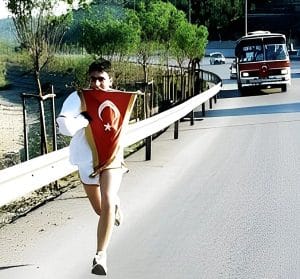
Yusuf Akgün running to Anıtkabir holding the flag of honor between his teeth The runners on the bus also came up to me and wanted to pose together under the flag. This bothered me. Furthermore, the officials decided to choose two people from among these privileged individuals to present to President Abdullah Gül. I rebelled: "We ran 180 km, proudly carrying the flag, and you are prioritizing those who sat comfortably on the bus. It is unacceptable that those with connections are chosen, while one of the friends who carried the flag should be presented to the President." They brought us before Prime Minister Recep Tayyip Erdoğan. We were 20 athletes. I was the only athlete without arms among them. The Prime Minister congratulated each athlete in turn and presented them with a wristwatch. When he saw me, he didn't know what to do. It was clear that he was uncomfortable having to give a wristwatch to an athlete without arms. This situation even made it into the press. It was written that giving a wristwatch to an athlete without arms was an insult. I returned to the dormitory. The management informed me in a hurry. A special vehicle would come and take me to an unknown address. There was a serious atmosphere in the dormitory. The teachers were in a panic. Cleaning was done. Soon, the expected vehicle arrived. One of our teachers accompanied me. The official car took us to the Keçiören district. We entered an apartment building. When the apartment door opened, an elderly aunt was in front of me. I didn't know who she was. The elderly aunt showed interest in me and apologized for what had happened during the gift distribution. I just listened. She approached me with a mother's affection: "You are my child. What do you want?" In those years, Spanish-style flared trousers were popular. I innocently said, "I want a Spanish-style flared suit." The teacher accompanying me nudged me and whispered in my ear: "What are you doing! This lady is Tenzile Hanım, the Prime Minister's mother. You can make more serious requests." However, I had no intention of changing my request.
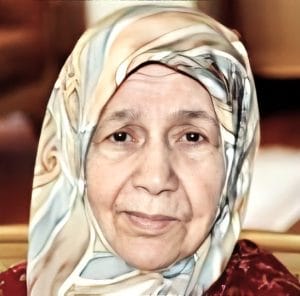
The late Tenzile Hanım, mother of President Recep Tayyip Erdoğan A week passed. They took me to Keçiören again. Tenzile Hanım gave me a Spanish-style flared suit and a gold pocket watch. At a meeting, our Prime Minister brought me to the podium and said, "I apologize to Yusuf." When this news also appeared in the newspapers, suddenly everyone knew me. Despite all these positive developments, the dormitory managers kept pressuring me to kick me out. Thankfully, Mr. Adil Aşırım was interested in my situation and tried to help. One early morning, I went to the General Directorate of the Children's Home in Anafartalar. I waited. When the General Director arrived, they let me in. A morning soup was placed in front of me. I voiced my complaint, but the General Director tried to persuade me with an interesting method: "Are you that famous Yusuf Akgün? Look, son, this General Directorate chair I'm sitting on, the tie around my neck, all of these things have no value. Don't crave such things. Let's send you to your family; let them take care of you now." These words were not an acceptable explanation. In fact, I considered them an insult. I spoke harshly: "If my family were going to take care of me, why did you keep me in dormitories for years? I've been away from my family since I was 6. We've become estranged from each other. I'm 18-19 years old. I want a job." "Then let's send you to a rehabilitation center. Let the state take care of you for life." "I don't accept that. I can work and earn my living. I want a job." "We can't please you with anything." My heart was filled with a sense of rebellion. I also had an impulsive and sensitive nature: "Mr. Director, I came to you with a file. But as I see it, you are not taking this file and what I say seriously. I will go up to the highest building in Kızılay and first throw the file, then myself, into the void." The General Director swallowed the soup with difficulty, put the spoon aside. He turned his angry eyes on me. He took out a business card from the drawer and handed it to me. "This is the business card of a psychologist friend. I want you to go to him. You need treatment." This made me even angrier. I stood up in anger and challenged him: "Get out of here, you bastard!" I left the General Directorate. Meanwhile, I was preparing for the university entrance exams. Despite my high scores, I kept getting rejection letters. Finally, I got into Kırıkkale University. I registered for the Marketing Department with 317 points. In the meantime, I wasn't idle and was sending my application file to private universities as well. Soon, I received an offer from Atılım University: "Come and take the exam." I went to Atılım University. In the Private Secretary's office, there was a stern-faced lady named Ayşe Hanım. She stated her opinion clearly: "Since you are disabled, we will not give you any priority. If you pass, you stay here, otherwise, goodbye..." I took three different exams. I earned a full scholarship by scoring 100 out of 100. Meanwhile, I continued to stay in the dormitory. The dormitory management was also trying to create an excuse to kick me out. I wasn't idle in the dormitory either; I opposed the management's wrong practices and tried to protect the children's rights. The management was looking for an opportunity to get rid of me. It was Friday. The duty teacher in the dormitory called me to his room. However, I couldn't go to him that day. I was able to go to his room on Monday. The duty teacher said, "There is an accusation of harassment against you." They had chosen the most despicable method to kick me out of the dormitory. Due to this unjust accusation, I suddenly lost my balance. I was filled with a sense of rebellion. I rubbed my foot against the table, trying to balance the deep wound that had opened in my heart. "I cannot accept this accusation. This is an injustice!" I left there. My heart was heavy, my mind was in turmoil. I didn't want to live. The first thing that came to my mind was suicide. I met with friends. They also tried not to leave me alone, thinking I might attempt suicide. I mixed rat poison into milk. Just as I was about to drink it, a friend realized it was a suicide attempt, took the glass of milk from my hand, and threw it away. I had a Polish friend whom I met at international disabled competitions. We were in contact. We were also active members of the European Voluntary Service program together. I left school and went to Poland. I wanted to cleanse my soul from the unjust accusation and pull myself together. Upon returning from Poland, I came to the dormitory and packed my bag. The manager came up to me: "Where are you going?" "To the street!" He knew that a national athlete being kicked out of the dormitory and living on the street would somehow get the dormitory managers into trouble. "May the effort we put into you be in vain!" I didn't care. There is a park between the 50th Year Children's Home and the Municipality. I settled there. At the same time, I was preparing for the Supreme Court exams. I achieved my goals through difficulties and reached where I am today. As my self-confidence grew stronger, new opportunities opened up for me. At the invitation of the AK Party, I became a candidate for parliamentary deputy from Ankara's 2nd Region.

AK Party Ankara 2nd Region Parliamentary Deputy Candidate Yusuf Akgün FINAL WORD I want my readers to know this: Nothing was given to me as a gift. I directed my life through struggle. Injustices always came my way. I overcame them with determination. I never despaired. Life is a struggle. Let's not forget, life rewards everyone who accepts this struggle in some way. My final word to my readers is this: Tear apart and cast away the feelings of unhappiness and despair in your heart and mind. Struggle. Even if you don't see your path clearly, continue to struggle. People may be unfaithful, but life itself is faithful. It will surely reward you. As a child with no arms and not knowing a single word of Turkish, I achieved today's successes by waging an extraordinary struggle in my short life. You are in a more advantageous position than me. The only thing you need to do is to throw yourself into the struggle of life without overthinking or over-analyzing, and walk the path that life opens for you. I send all of you my love and respect.
END
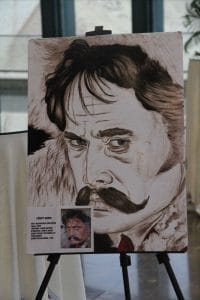
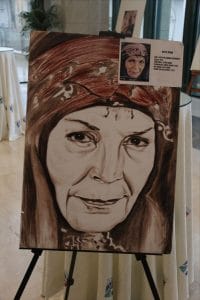
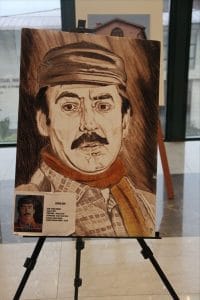
Greenwood's celebrities from the pen of Yusuf Akgün