The Second Round of Elections and Anecdotes
This article reflects on the upcoming second round of presidential elections in Turkey, emphasizing the importance of respecting the public's will, and shares several historical anecdotes to lighten the mood amidst pre-election tension.
Dear Readers:
The second round of the presidential election will be held on Sunday, May 28th. Whatever the outcome, we must embrace respecting the will of the people as a culture of democracy. I wish our newly elected President success in advance.
No one can deny that there has been an unpleasant tension across the country (and even abroad) before the election. I wanted to relax your mind and spirit with a few jokes and anecdotes.
“THE FLORIDA FRAUD”
Let's not forget a fact: undesirable situations such as fraud, cheating, errors, psychological pressure, manipulation, and interference by foreign countries have occurred in all elections worldwide. There are hundreds of examples of this. I would like to bring one of them to your attention:
In the USA, the president is not directly elected by popular vote. In other words, the presidential election is a two-stage process. Voters cast their ballots and elect 538 electors. Each state has a certain number of electors based on its population. The candidate (or party) who receives the most votes in a state wins all of that state's electors. In the second stage, the electors chosen from the states (electoral college) elect the president.
The 2000 US presidential election was between George W. Bush and Al Gore. It was a neck-and-neck battle. Never before in American history had the votes been so close. In states other than Florida, the election results were conclusive, leaving no room for debate or objection. George W. Bush was ahead by 10 electoral votes. All eyes turned to Florida. The votes in Florida were very close. Florida was allocated 25 electoral votes. Whoever won Florida would win the presidency. In the initial count, George W. Bush won. One reason for this was that Florida Governor Jeb Bush, the younger brother of presidential candidate George W. Bush, resorted to some fraudulent methods and rushed the process.
An objection was raised. A recount of the votes was decided. The Federal Supreme Court set a deadline for reporting the election results. If the votes were counted manually, it would not be possible to meet the deadline. Some counties in Florida counted votes manually, while others used electronic machines that read punch cards. In counties where electronic machines were used, Al Gore was clearly ahead. However, on some cards, the holes were not fully punched, and paper fragments remained attached to the card. In reality, Al Gore won the election, but the Supreme Court, using the excuse of the "Hanging Chad" (cards that were not fully punched), invalidated the machine-counted votes. George W. Bush was elected US President by a margin of 537 votes.
From that day on, Republicans (Bush supporters) would mockingly say:
“Poor Al Gore! He has a heart attack whenever he sees a punch card. Please keep punch cards away from Mr. Gore.”
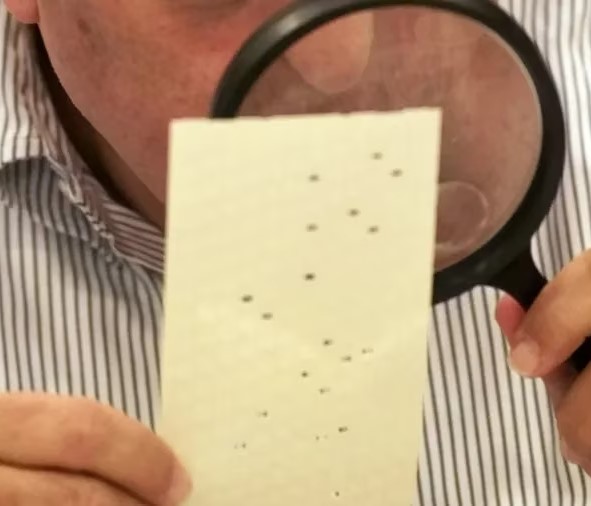
According to one rumor, Al Gore would look at punch cards with a magnifying glass every evening and sigh.
PREMATURE VICTORY CELEBRATION IN ELECTIONS
Declaring election victory before all votes are counted is another tragic example of democracy's struggles.
A good example of this is the 1948 US Presidential election. Republican Thomas E. Dewey faced Democrat Harry S. Truman. All polls showed Dewey ahead. Even the Chicago Daily Tribune, one of America's oldest newspapers, published a special edition before the results were finalized, with the headline "Dewey Defeats Truman." When the votes were counted, it turned out that Truman had won. Truman then took the Chicago Daily Tribune in his hand and posed for photographers in a mocking manner.
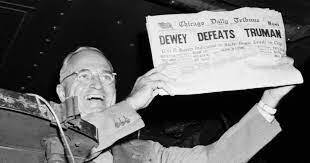
Truman, who won the election, mocks the newspaper headline "Dewey Defeats Truman" by holding it up.
LONDON IS BURNING
On the night of September 2, 1666, a great fire broke out in London. 14,000 houses burned to ashes. 70,000 of the total population of 80,000 were left homeless. According to eyewitnesses, the fire started in the bakery operated by a man named Thomas Farriner.
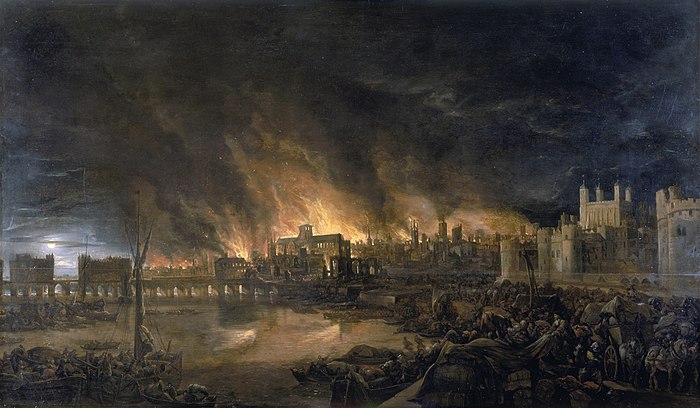
The Great Fire of London
According to legend, after the fire, Thomas Farriner was brought before the court. The judge accused him:
"You caused the fire!"
"No! I put out the oven when I went to bed. Your claim is not true. Prove that the fire started from my oven, and I am ready to pay all damages."
Like 14,000 houses, the bakery was also reduced to ashes. It was impossible to prove this claim, nor for the poor Thomas Farriner to cover the enormous damages incurred... The baker was set free. His first order of business was to reopen the bakery.
Today, a plaque is affixed to a wall at the intersection of Pudding Lane and Monument Street in London. It reads:
"Near this spot stood 'The King's Baker,' the bakery of Thomas Farriner, which caused the Great Fire of London in September 1666."
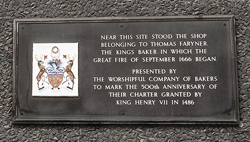
Burn London and become immortal with an honorary plaque! What luck! His children became millionaires in later years thanks to the bakery opened under the same name.
NAPOLEON AND THE GREAT SPHINX OF GIZA
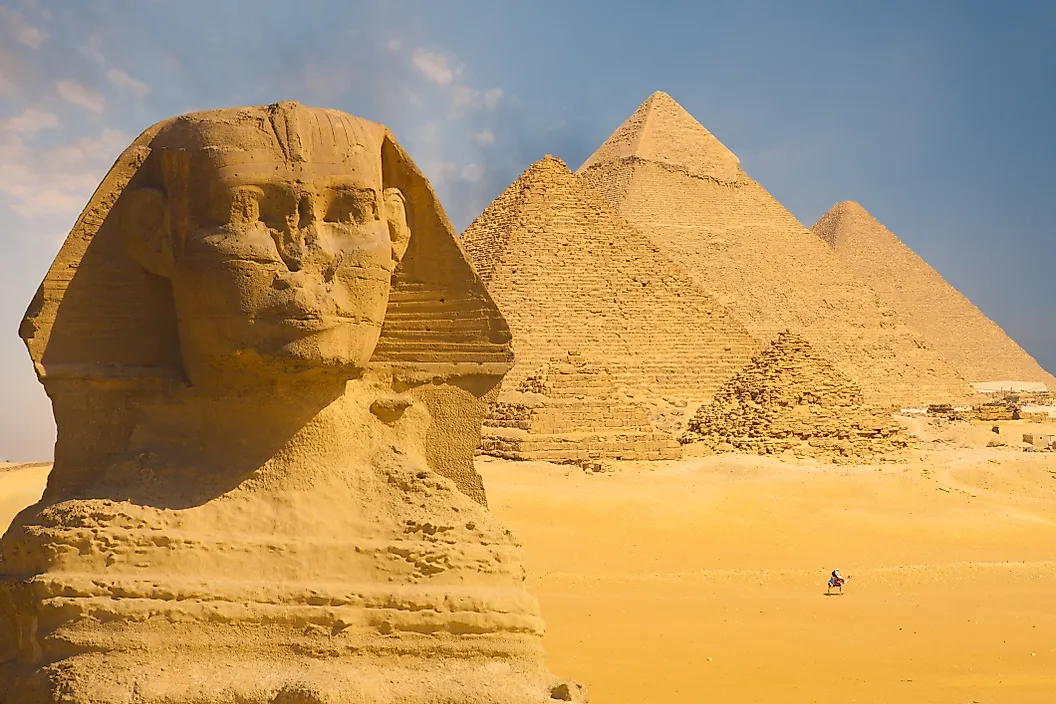
The Great Sphinx of Giza
The Great Sphinx of Giza, located 20 km west of Cairo, dates back to the 26th century BC. The Sphinx, with the body of a lion and the head of a human, is a monolithic sculpture, 73.5 meters long, 6 meters wide, and 20 meters high.
Napoleon was fond of archaeology. During his Egyptian campaign (1798-1801), he took famous archaeologists of the time with him. He supported their research and pioneered the establishment of the science of Egyptology.
These were the days after the Egyptian campaign when Napoleon returned to Paris. Newspapers that disliked Napoleon published news. Allegedly, during the Egyptian Campaign, Napoleon had used the Great Sphinx of Giza as a target for his soldiers to aim at, which is why the Sphinx's nose was destroyed. Reading the news, Napoleon went furious. He called his commanders:
"Did you make such a mistake? Did you use the Sphinx as a target?"
The commanders denied the accusation. Napoleon gave them a chance:
"Prove this within a week, or you will be shot."
The commanders left the room in fear. They were at a loss as to what to do. Days passed quickly. It was the sixth day. As one of the commanders walked thoughtfully along the Seine River, he passed a shop selling engravings. His eye caught a Sphinx engraving. He excitedly went inside. He questioned the shop owner:
"Which century is this engraving from?"
"The 16th century."
The commander shouted, "We're saved! We're saved!" and bought the engraving. The next day, he joyfully placed the engraving on Napoleon's desk:
"Your Imperial Majesty! As you can see, the Sphinx had no nose even in the 16th century!"
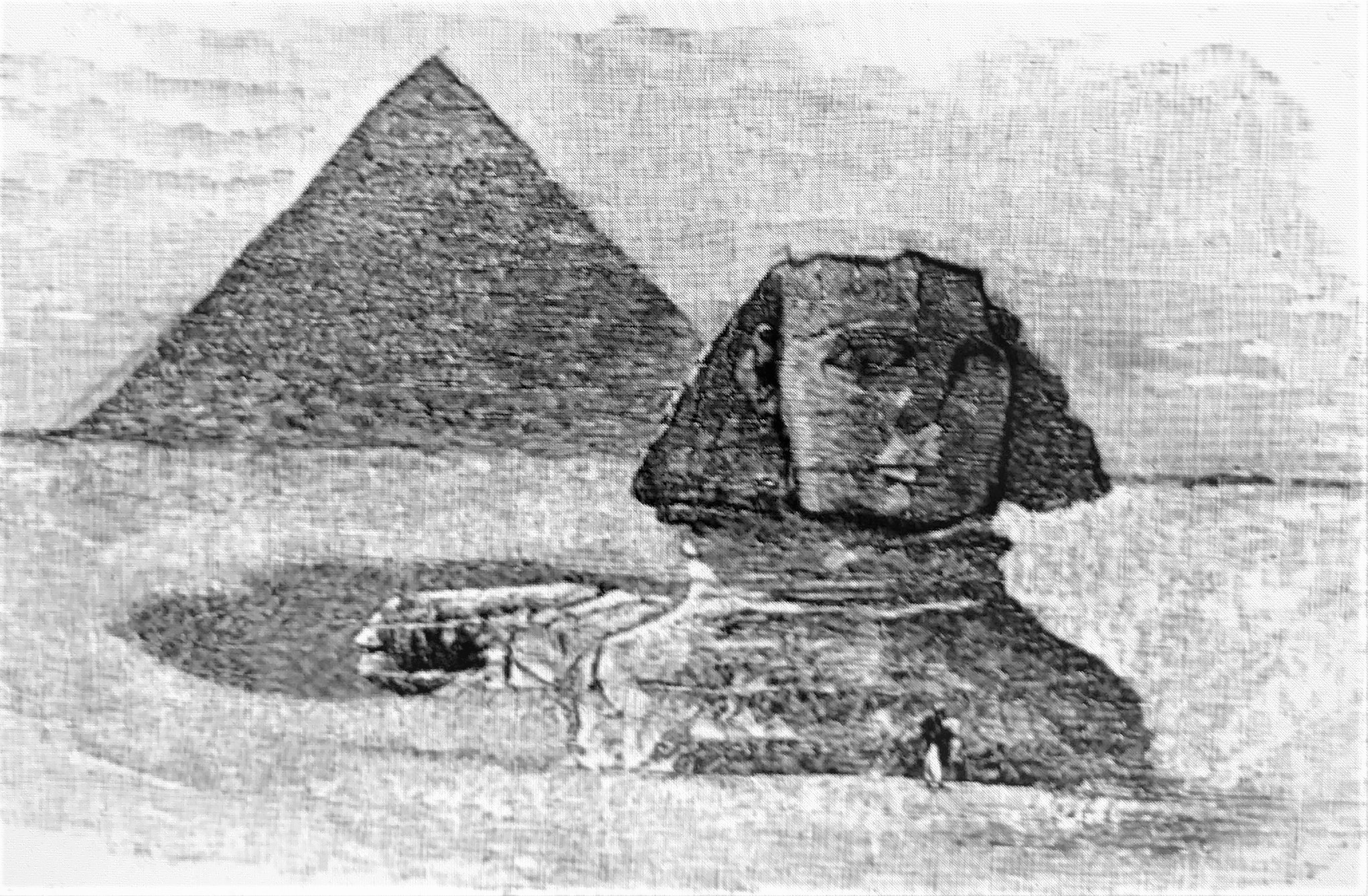
The engraving that saved the commanders from being shot
THAT'S NOT HOW YOU TELL IT!
A man is going on a business trip. He asks a trusted friend to look after his cat and his mother, who lives in the adjacent house. A few days later, the man calls his friend:
"How's my cat?"
"Your cat died!"
The man is shocked and very saddened by the news. He scolds his friend:
"You can't just blurt out such important news like that... The first time, you should have said, 'Your cat is on the roof and doesn't want to come down.' The next day when I called, you should have said, 'Your cat fell from the roof, I took it to the vet.' The day after that, when I called, you should have said, 'Despite all the vet's efforts, your cat died.'"
His friend merely replied, "Okay! Will do!"
A few days pass. The man on the business trip calls his friend:
"How is my mother?"
"Your mother is on the roof right now, and she doesn't want to come down."
THE MAGICIAN AND THE PARROT
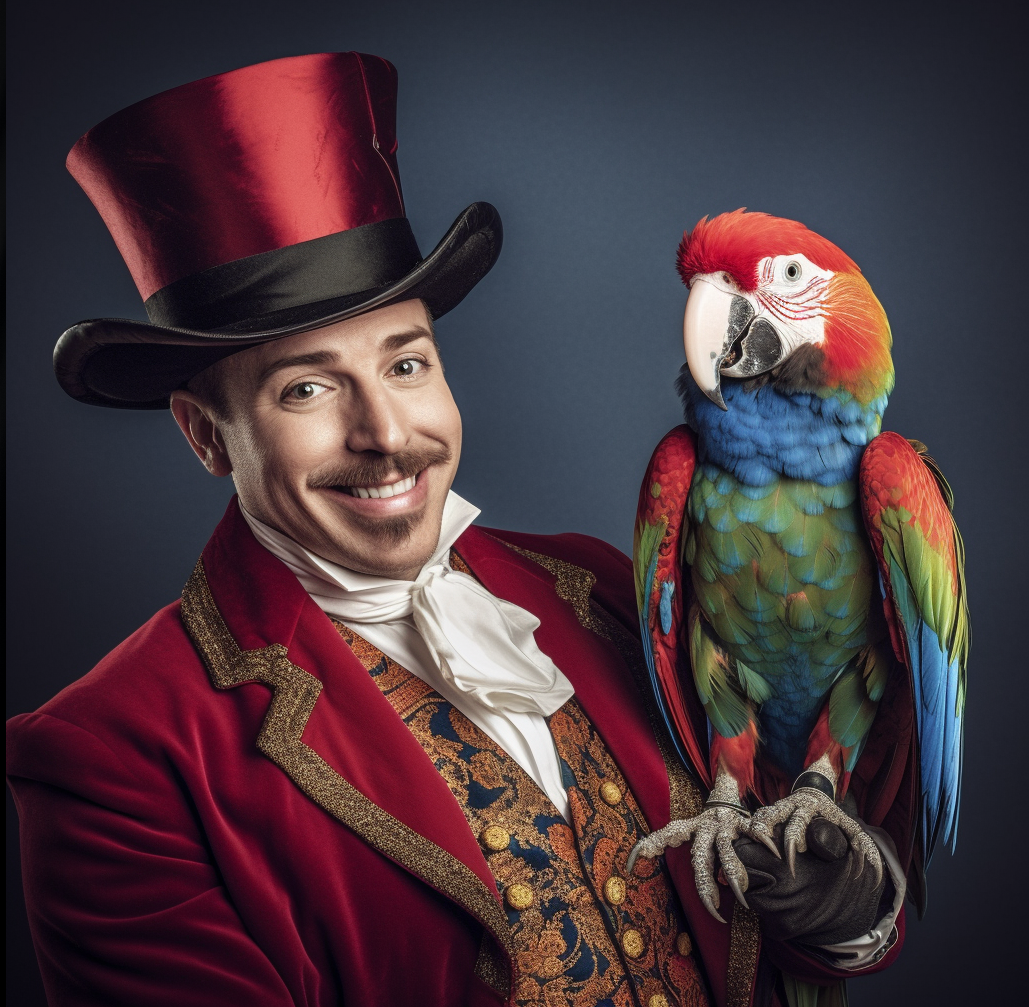
A magician used to earn his living by performing on a cruise ship. Since different passengers boarded the ship each time, the magician saw no harm in performing the same trick repeatedly. However, his parrot had memorized all of the magician's tricks. Whenever the magician started his show, the parrot would warn the audience:
"He's going to pretend to pull flowers out of his hat, but the flowers are currently under the table."
The magician would get angry at this, cancel his show, and confront the parrot, threatening him:
"If you say something like that again, I won't give you your favorite fruits."
The parrot remained silent for a few days, but then couldn't resist and exposed the magician's trick to the audience again. The magician gave the parrot a new punishment. This situation continued for some time.
One day, while the parrot was being punished, the ship sank. The magician and the parrot were desperately struggling to survive in the middle of the sea on a piece of wood salvaged from the ship.
The parrot perceived what had happened as a punishment for exposing the magician's trick. For several days, the parrot and the magician looked at each other with hatred, without speaking. The parrot was hungry and thirsty but resisted. Finally, he gave in:
"Okay! Okay! I promise! I won't say another word. Tell me, where is the ship?"
ALBERT EINSTEIN AND HIS DRIVER
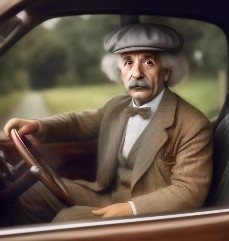
Albert Einstein, who taught at the famous Princeton University in the USA, had a private driver. Every day, the driver was responsible for taking Einstein from home to the university and back. On the way to the university, Einstein would audibly rehearse his lecture to himself. Since he repeated the same things every time, his private driver had memorized what was said, and at one point, they even decided to switch roles. Einstein put on the driver's hat and became the "driver," while the driver messed up his hair and became "Einstein."
As the driver delivered the memorized lecture, one of the guest professors raised his hand and asked a difficult question. The driver didn't bat an eye:
"You've asked such an easy question that even my driver could answer it."
When Einstein, called to the class as the "driver," gave a perfect answer to the question, the guest professor left the classroom in embarrassment.