The Poet of Two Peoples: Shahriar and Cîgerxwîn
This essay compares the lives, poetic styles, and political stances of Shahriar, a national poet for Azerbaijani Turks, and Cîgerxwîn, a national poet for the Kurdish people.
Dear Readers,
Shahriar has established himself as a "national poet" in the memory of Azerbaijani Turks, while Cîgerxwîn holds the same place for the Kurdish people. Although both grew up in different geographies in their childhoods, they are children of two peoples who faced similar historical traumas, with their identities and languages marginalized. Both demonstrated their devotion to their mother tongues, Azeri and Kurdish, through poetry; their works, written in the language of their people, were passed down by word of mouth for years despite prohibitions. In this article, I will comparatively examine the lives, poetic understandings, relations with the people, themes of exile and loneliness, and political stances of Shahriar and Cîgerxwîn, and present examples from their poems. CHILDHOOD AND EARLY EDUCATION Shahriar was born in Tabriz, Iran, in 1906. His father, Mirza Agha, was an educated man of his time and sent his son to a madrasa at an early age. In addition to Arabic and Persian education, he was introduced to classical Eastern literature. At a young age, he began to memorize poets such as Rumi, Hafez, and Fuzûlî. His education became modernized when he moved to Tehran; although he enrolled in medical school, he dropped out to pursue poetry.
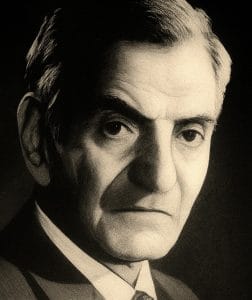
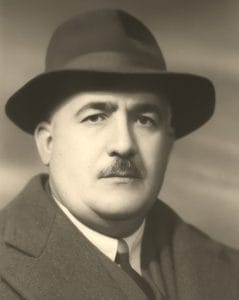
Shahriar It is said that when Shahriar was only five years old, sitting on his grandfather's lap at a village wedding, he loudly hummed a quatrain he had made up himself. Those present applauded the rhyming words coming from the child's mouth with astonishment. His family realized at that moment that he "spoke in poetry." Cîgerxwîn was born in 1903 in the village of Hesar, near Batman. He was orphaned at a young age. He received madrasa education. He learned Arabic, Persian, and Ottoman Turkish. He became familiar with Kurdish classics of the period at an early age. His greatest teacher, however, was the people themselves. The klam (folk songs) he heard from dengbêj (Kurdish bards) directed him both to poetry and to the language of the people.
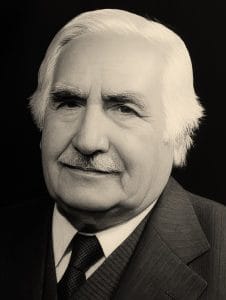
Cîgerxwîn EARLY POEMS AND THE EMERGENCE OF PEN NAMES Shahriar wrote his first poems in Persian. After writing under his real name for many years, he began to use the pen name "Shahriar." This pen name means "ruler" and was interpreted by the people as "the sultan of hearts." He made his first major breakthrough with the poem "Heyder Babaya Selam" (Greetings to Heyder Baba), which he wrote in Azeri. This work earned him not only a literary title but also a place in the hearts of the people. Cîgerxwîn, on the other hand, experimented with different pen names in his early poems. He became identified with "Cîgerxwîn," which means "one who swallows blood, a suffering heart." As he expressed the pain, destitution, and oppression of his people in his poems, this pen name became both a symbol and a lament. His early poems in the 1920s were products of madrasa education but written in the vernacular. In the 1940s, during a very poor period, Cîgerxwîn would recite poetry in small markets in Qamishli to get bread or a few kuruş from people. In those years, a saying spread among the people: "The literary equivalent of a kilo of flour is a stanza by Cîgerxwîn." THEMES OF EXILE AND LONELINESS The lives of both poets are woven with political pressures, exiles, and loneliness. Shahriar faced oppression, especially during the Pahlavi era. A romantic disappointment he experienced in Tehran pushed him into loneliness, and he withdrew into seclusion for a while. He wrote "Heyder Baba'ya Selam" during this period of solitude. The longing for years spent abroad and the yearning for his homeland were carried into his verses. His mother was the greatest guide of his childhood. It is said that when Shahriar was sent to Tehran to study, he cried while saying goodbye to his mother and did not eat for several days. The softness, sensitivity, and reproach in Shahriar's language are a direct inheritance from his mother. The following line from Heydər Babaya Salam describes this deep bond: "Ana, sən hardasan, mən sənsiz ölgün..." (Mother, where are you, without you I am dead...) Cîgerxwîn, on the other hand, was constantly pursued because of his Kurdish identity. He moved from Turkey to Syria, and from there to Lebanon. He never had a permanent home. The lines "Ev xwarinî bihîstin, ev mirinî bihîstin" (I heard this pain, I experienced this death) summarize his exile-themed poems. While his closest friends were imprisoned, he was deported many times. RELATION WITH THE PEOPLE: DENGBÊJ AND ASHIK TRADITIONS Shahriar was nourished by the "ashik literature" tradition in Azerbaijan. He wrote in a language close to folk poetry, incorporating local idioms and folk motifs into his poems, reaching illiterate masses. His poem "Heyder Baba" portrays the rural life of Azerbaijan, the emotions and way of life of the people, almost like a documentary. Cîgerxwîn, on the other hand, is truly a dengbêj poet. This structure, stemming from the oral traditions of Kurdish folk literature, lives on in his poetry. He did not write for his people, but sang with his people. His poems are both sung as klam and narrated like epics. In this respect, he is one of the most oral-to-written transitional poets in literary history. POLITICAL STANCE AND MESSAGES TO THEIR PEOPLES Although Shahriar did not directly participate in politics, he did not remain silent about the suffering of his people, poverty, and oppression in his poems. The poem "Heyder Baba" describes the lost innocence that comes with childhood, but at the same time, it expresses a political longing by asking the question, "Will those days ever come again?" Cîgerxwîn, on the other hand, was directly involved in political struggle. Membership in the Communist Party, participation in Kurdish intellectual movements, defending Kurdish despite oppression... all were parts of his political stance. Lines like "Em jî miletê ne, em jî gumanî ne" (We are also a nation, we exist without hesitation) are a direct call to his people. While Cîgerxwîn was living in exile in Syria, he once met a Kurdish villager near Aleppo. When the villager learned he was a poet, he asked: "Are you really Cîgerxwîn?" "Yes, I am," said the poet. The villager kissed his hands and said: "One of your quatrains feeds us like wheat, refreshes us like water. The state cut off our bread, but our stomachs are full with your poems." EXAMPLES FROM THEIR POEMS From Shahriar: Heydər baba, hər vaxt səni andırsam, Gözlərim dolur, ürəyim sızıldar… (Heyder Baba, whenever I remember you, my eyes fill with tears, my heart aches...) In these lines, there is a longing for the past, childhood, and the warmth of the homeland. Shahriar glorifies a national memory through personal nostalgia. At a literary evening in Tabriz in the 1950s, Shahriar read his handwritten Heydər Babaya Salam for the first time in front of a crowd. Many people who listened to the poem that night, especially elderly villagers, cried loudly, remembering their villages and their past. The poem had ceased to be personal and had become the shared emotion of a people. From Cîgerxwîn: Min zar bûm, dilê min tije bû, Ji dert û jiyan xwe re sîya bû… (When I was a child, my heart was full, trouble and life had darkened me...) Here, a language extending from individual pain to the pain of the people is seen. Cîgerxwîn's poetry is the pulse of the people. PRIVATE LIVES AND DEATHS Shahriar experienced two great loves throughout his life; however, neither relationship ended happily. During his lonely years in Tehran, he also lost his health, partially losing his sight. He passed away on September 18, 1988, in Tabriz. His grave is buried in a sacred area known as the "Cemetery of Poets" in Iran. Every year on September 18, "Shahriar Day" is commemorated in Iran.
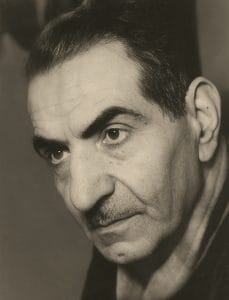
Shahriar Cîgerxwîn's private life was also full of exile and struggle. He lived in many countries and suffered poverty. In addition to being a poet, he was also known as a political figure. He passed away on October 22, 1984, in Stockholm. After his death, his poems were published more widely, and Kurdish youth rediscovered him.
Cîgerxwîn CONCLUSION Shahriar and Cîgerxwîn, though born in different geographies, are two great figures who succeeded in becoming the voice of their peoples. Both resisted through poetry during times when their mother tongues were suppressed and their peoples ignored. Their lives and works are not only literature but also a history of resistance. The joint study of these two great poets is also extremely valuable for Azeri-Kurdish brotherhood. SHAHRIAR – “Heydər Babaya Salam” (1954, Azeri) This poem is one of the most well-known folk poems in both Azerbaijani literature and the entire Turkic world. Shahriar idealizes and describes the village where he spent his childhood and its natural elements. “Heydər Baba” is the name of a mountain northeast of Tabriz. The poem is a greeting not only to a mountain but also to the past, innocence, and the warmth of language. Heydər baba, sənsiz qalmışıq biz indi, Dünya dəyib başımıza, biz indi. Sənsiz bizə dar olmuş cahan indi, Yağış yağmur, bərəkət yox, yaz yoxdur… (English: Heyder Baba, now we are left without you, The world has fallen on our heads, now we are like this. Without you, this world has become narrow for us, No rain, no blessing, no spring...) Note: This poem is considered the first great modern folk poem written in Azeri in Iran. It awakened national consciousness among Iranian Azerbaijani Turks. CÎGERXWÎN – “Ey Rêbaz” (Oh Struggle!) This poem most clearly reveals Cîgerxwîn's militant side. In this poem, which he addresses as "Ey Rêbaz," meaning "Oh Path" or "Oh Struggle," he sanctifies the Kurdish people's struggle for freedom, turning poetry into a call. Ey rêbaz, tu mirin û jiyanî, Tu çavê minî û ronahiyê, Tu axa minî û dermanî, Tu neteweyî, tu azadiyê! (English: Oh struggle, you are both death and life, You are my eye and my light, You are my land and my cure, You are the nation, you are freedom!) Note: Although this poem was banned in Syria in the 1960s, it circulated hand-to-hand and became one of the most memorized poems by Kurdish youth. SHAHRIAR – “Sevgili Vətənim” (Written in Persian; however, the content of the poem is based on Azerbaijan.) Sevgili vətənim, sənə can deyirəm, Səndə doğuldum, səndə qocalıram. Torpağın nə qədər torpaq olsa da, Səndə bir nur var, mənə yaralıyam. English: My dear homeland, I call you my soul, I was born in you, I grow old in you. However much land is land, There is a light in you, I am wounded for you. CÎGERXWÎN – “Zimanê Kurdî” (Kurdish Language) Zimanê Kurdî zimanê dayik e, Wê xweş e wek gulê xwînî şehîd e, Ez jî jîna xwe li ser vê zimanî, Bi rêya ax û axî bûm şehîd e. English: Kurdish is my mother tongue, It is beautiful like a flower watered with martyr's blood, I too lived my life for this language, And through earth and sigh, I became a martyr.