The Azerbaijani Spirit in Iğdır: Hüseyin Han Talınlı
This article recounts the life and contributions of Hüseyin Han Talınlı, a prominent figure in Iğdır's history, highlighting his role in the Kars National Council Government and his enduring legacy.
Dear Readers:
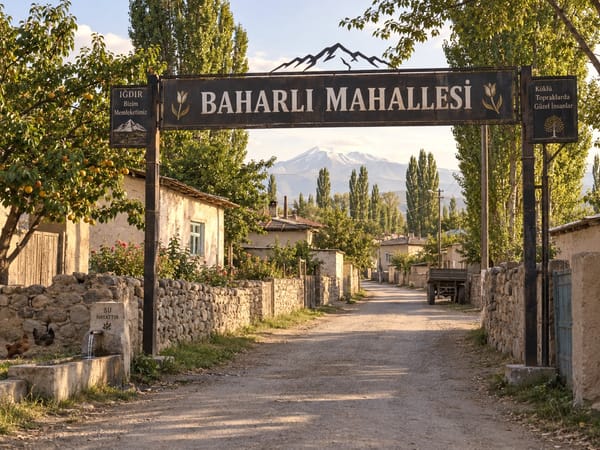
The land of Iğdır is noble. It loves hospitality. It has endured suffering, but even with a wounded heart, it has always generously opened its arms to newcomers, embracing them with love.
Iğdır lies on migration routes. Like storks coming from far away, countless people have arrived from unknown places, spent a few years in Iğdır, and then moved on to distant lands. Those who left Iğdır carried the love of Iğdır in their hearts. For these people, who smelled the soil of Iğdır, ate its fruits and vegetables, drank its tea, enjoyed conversations in its coffee houses, and observed the splendor of Mount Ararat from between rows of poplar trees as they walked its roads, this unique melody remained as an indelible trace: “Separation, separation, a harsh separation…”
During the Republican era, people from all walks of life and all tribes set foot on Iğdır's soil. Some made it their permanent home, while others, when their time came, left Iğdır with a bitter ache in their hearts. Among them were doctors, teachers, lawyers, journalists, merchants, and people of military background. One of the important figures who left a mark on Iğdır's history is Hüseyin Han Talınlı.
HÜSEYİN HAN TALINLI’S CHILDHOOD
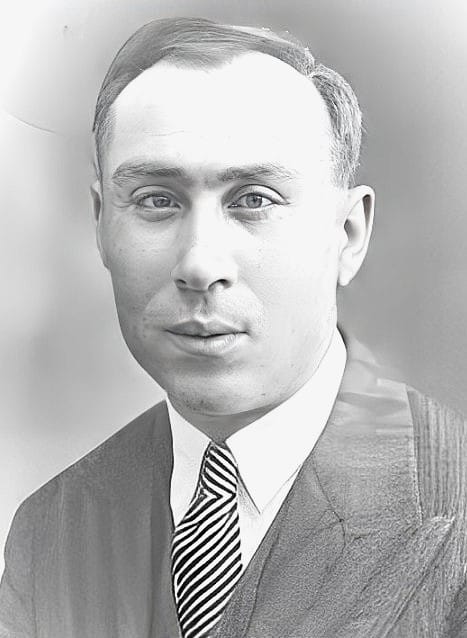
Hüseyin Han was born in 1899 in the Talın region near Erivan. His father's name was Ali Pasha Han and his mother's name was Tükezban Suna Hanım. Hüseyin Han attended high school at the Erivan Gymnasium. When the Republic of Armenia was established in the region during World War I, Ali Pasha Han's family, like many other Azerbaijanis, became a target for the Armenians. One day, Dashnak forces besieged the Talın region. The populace was massacred. Hüseyin Han was a child. He was left for dead. Azerbaijanis fleeing the region took young Hüseyin Han with them and went towards Baku.
YEARS OF STRUGGLE
In later years, Hüseyin Han found a way to come to Kars. He found himself in the midst of an intense struggle. His sole ideal, which kept him alive, was to create a safe homeland for Azerbaijanis who had lost their families in war and massacre. In those years, councils (şuralar, committees) were being established in almost every village and town in Kars and its surrounding regions. These national councils, formed in the region, later united with Kars as their center, and on November 5, 1918, the National Council Government was established by the decision of the 17-member Congress, of which Hüseyin Han was a member.
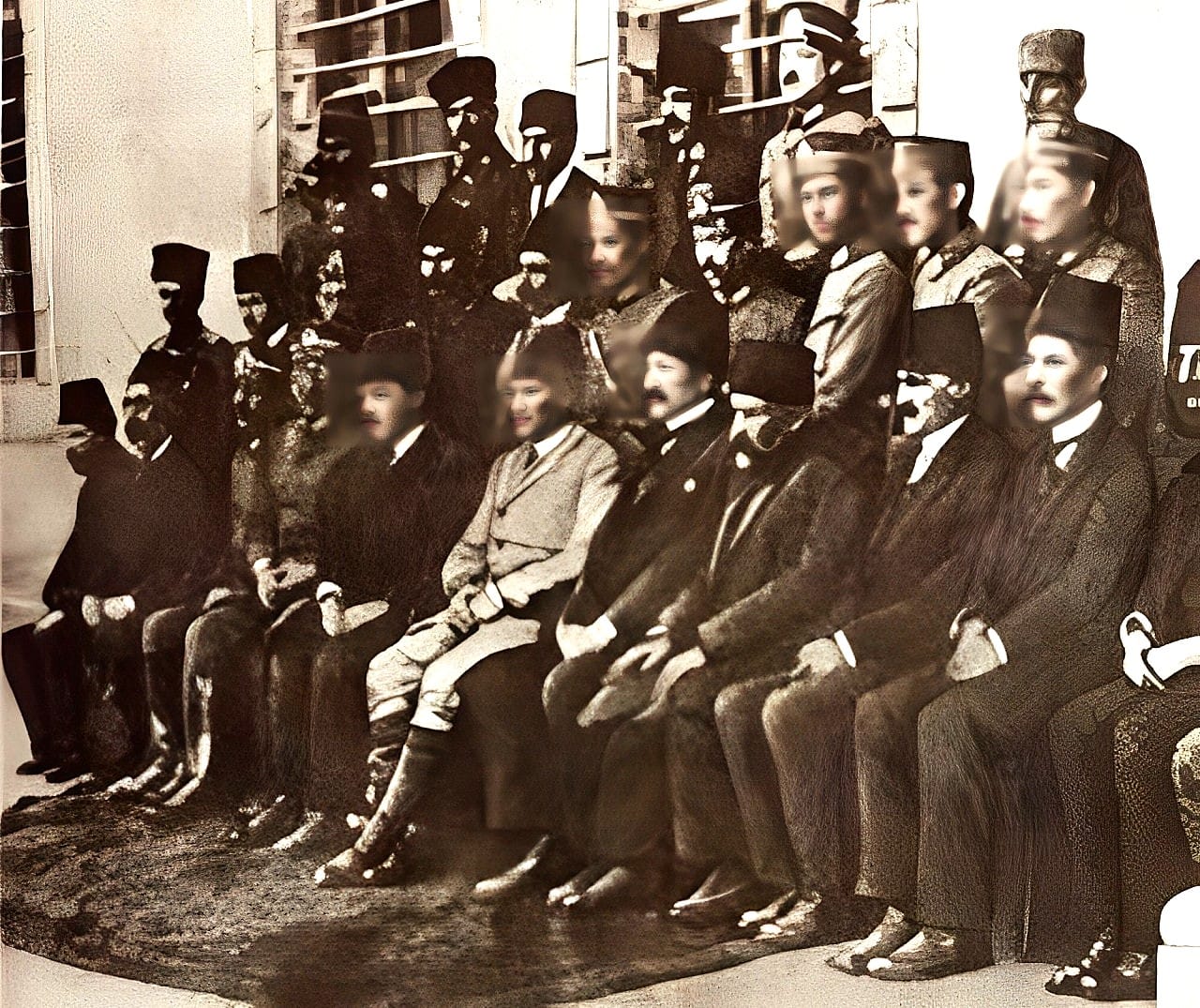
19-year-old Hüseyin Han was enthusiastic and diligent. He was a man of principle. He was appointed district governor (kaymakam) for the Kızılçakçak (Akyaka) region. As Border Commander, he succeeded in gathering the national forces there. In a short time, with his determination and resolute work, he fortified the Kızılçakçak Front, turning it into a secure area.
Hüseyin Han displayed great heroism in his border command. He organized militia forces in Akbaba and Şüregel. Not content with this, he sent a cavalry unit to Arpaçay, assisting in its defense. He particularly obtained weapons by raiding enemy depots, transferring some of these weapons to Kars.
When the Armenians wanted to go to Kars via Kızılçakçak in accordance with the Armistice of Mudros, Hüseyin Han prevented their entry into Kars. The Armenians informed the British Governor-General by phone: "The commander here is preventing us from entering Kars."
Despite losing his entire family to Armenian committees, Hüseyin Han treated Armenian soldiers and civilians who fell captive to him with utmost fairness and helpfulness. Carrying the value of Humanism in his heart during such a period of widespread wars and deaths is an indication of Hüseyin Han's exceptional character.
Soon after, on January 17, 1919, the National Council Government adopted the name Provisional Government of the Southwestern Caucasus (Cenubi Garbi Kafkas Geçici Hükümeti). It expanded its borders, extending to Kars, Ardahan, Batum, Gümrü, Sarıkamış, Nakhchivan, and Ordubat. On March 25, 1919, the Provisional Government was declared the Republic of the Southwestern Caucasus Government. Throughout this process, Hüseyin Han played an active role. For his heroism, he was awarded a medal by the National Council Government.
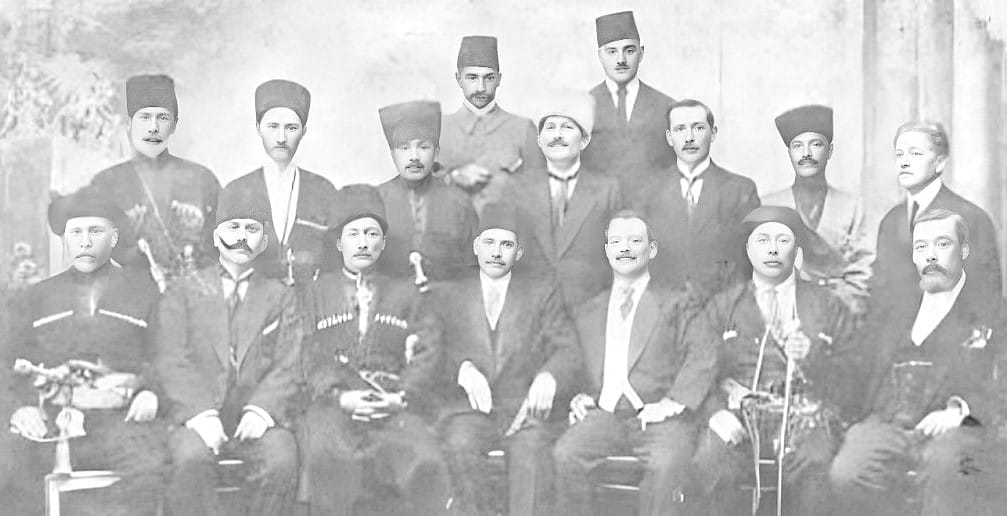
The British initially approached the work of this government with moderation. However, one day, on April 13, 1919, they abruptly ended this state with a sudden raid. The British prepared a conspiracy while doing this. They invited the government members to gather at the Government House, stating that they wanted to introduce them to generals arriving from England. While the government members were in a meeting, British forces raided the government house, arrested President İbrahim Cihangiroğlu and 11 members of the government, and exiled them to Malta via Batum.
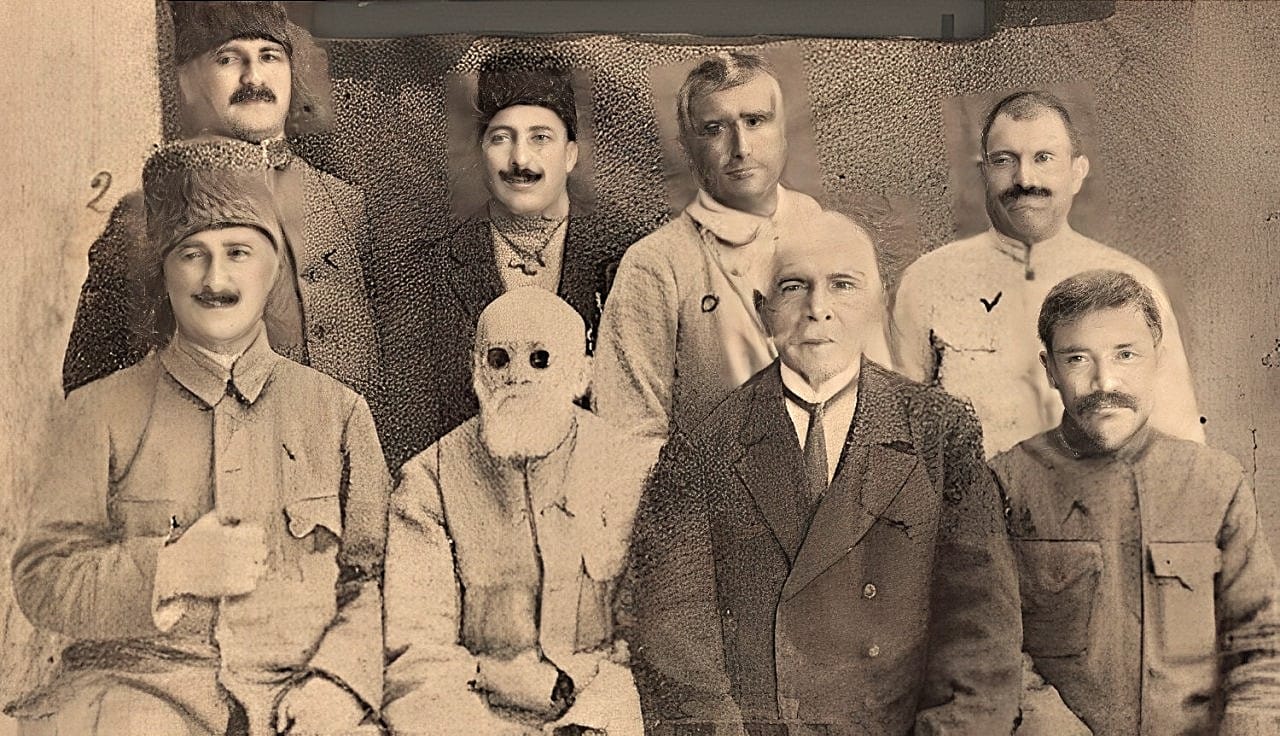
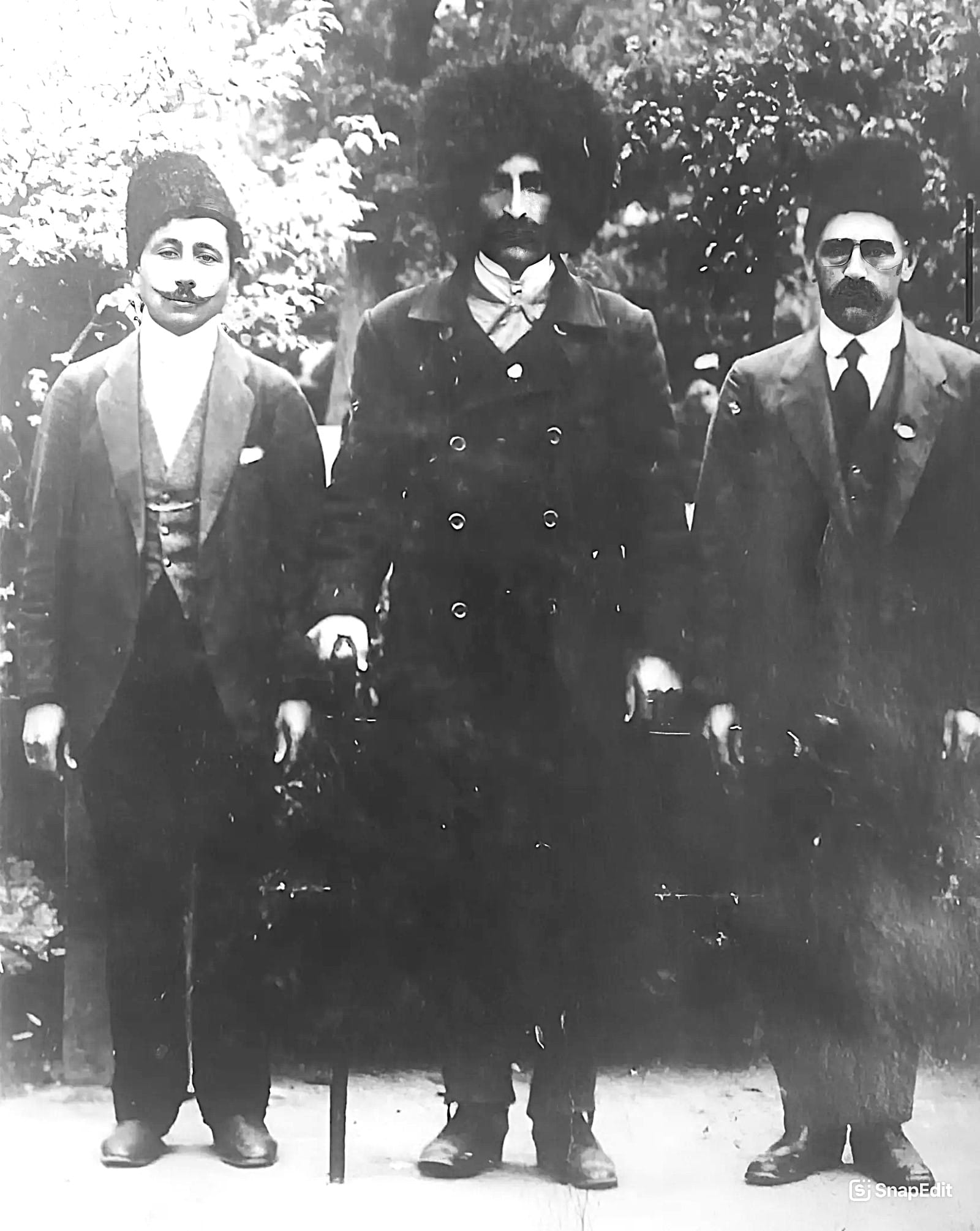
Malta Exiles: (Seated from left to right) Cihangiroğlu İbrahim (Aydın) Bey, Mamiloğlu from Orenburg, Tevhididdin Bey, Greek representative Stefan Bafyadis, Polish Matvey Raçinski
(Standing from left to right) Cihangiroğlu Hasanhan (Aydın) Bey, Kars PTT General Manager Atamanoğlu Muhlis Bey, Kars Governor Mehmed (Araslı) Bey from Iğdır, Kars Police Commissioner Salahoğlu Musa Bey from the Cemaldin Tribe of Digor
Two days after this raid, Hüseyin Han was also arrested and sent to Batum, but he managed to escape from there. He found a way to flee to Azerbaijan. He stayed in Azerbaijan for two years. He attended education and pedagogy courses in Ganja. After graduating, he served as head teacher and teacher.
In September 1921, hearing that Erivan immigrants were granted the right to settle in Kars according to the agreement signed between Russia and the Ottoman Empire, Hüseyin Han settled in Kars and continued his struggle there until the establishment of the Republic.
Since Hüseyin Han knew Russian, German, and French, he took part in important border negotiations, representing Turkey.
Hüseyin Han's first meeting with Mustafa Kemal Pasha became an unforgettable memory for him. He first met Mustafa Kemal Pasha on September 30, 1924, in Erzurum. On October 6, 1924, he was part of the committee that welcomed Mustafa Kemal Pasha in Kars.
Hüseyin Han became the Mayor of Kars in 1926 and held this position for four years (1926-1930). His most important service during his mayorship was bringing the lime-free and clean Borluk water to Kars. He served as a member of the Provincial General Assembly for many years.
Hüseyin Han married Bülbül Hanım in 1922 and worked as a grocer and photographer to make a living. He served on the administrative board of the Turkish Hearth (Türk Ocağı) branch. Additionally, he served continuously on the provincial executive board of the CHP (Republican People's Party) from its establishment in 1923 until 1942. Alongside this, he served as the president of the Kars Community Center (Halkevi) for 8 years (1934-1942). In 1934, when the Surname Law was enacted, he adopted the name of his birthplace (Talın) as his surname.
Hüseyin Han, who was loved by everyone in Kars, big and small, was affectionately called "Han Emi" (Uncle Han) by the public.
In the 1950 General Elections, he became a candidate for the CHP but failed to get the necessary votes in the primary election. The cruelty of life knocked on his door again. A period of unemployment began. He applied for jobs at many institutions but received no positive response.
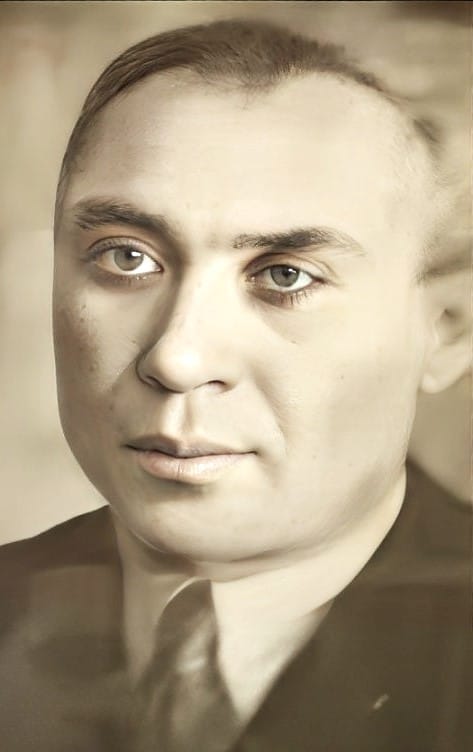
For a while, he worked as a correspondence chief and translator at the Kars Animal Export Union. In 1952, he took on the role of Inspector (Member of the Control Board) at the Iğdır Cotton Agricultural Sales Cooperatives Union. According to accounts, in those years, when he went to the border with his friends and watched Erivan from afar after many years, he would sigh and say to those next to him, "Look what I was there, and what I have become now."
At one point, the Governor of Kars, who came to Iğdır, offered him to return to Kars and apply for membership in the Provincial Permanent Council. However, in his last days in Iğdır, he suffered a heart attack. Doctor Rahmi Uluhan closely attended to his illness. But he passed away during a second crisis. The people of Iğdır sent off the funeral to Kars with heartfelt interest and tears.
HAMZA AYGÜN RECOUNTS:
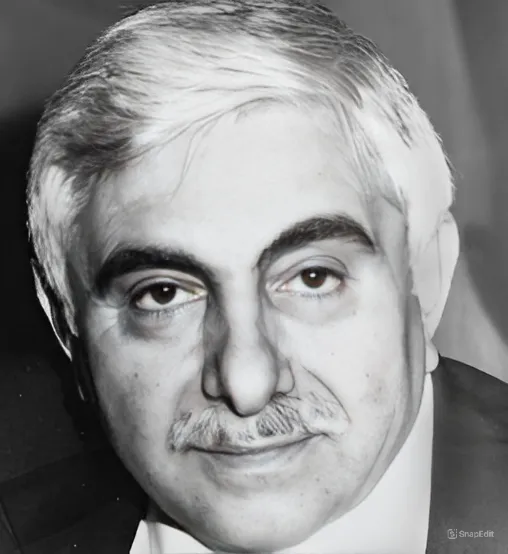
My acquaintance with Hüseyin Han Bey happened like this: It was 1953. I was working as a Cashier-Accountant at the Iğdır Agricultural Sales Cooperatives Union. That year, the Ministry of Commerce had appointed Hüseyin Han Bey as a consultant to the Agricultural Sales Cooperatives Union (TSKB).
My father, Rıza Aygün, and Hüseyin Bey had met and become friends earlier in Kars. For this reason, when my father heard that Hüseyin Bey was appointed to Iğdır, he called me and said, "My son, Hüseyin Bey is someone I love and respect very much. Help him settle in!"
Hüseyin Bey spent the first two nights at a hotel. The TSKB Board of Directors assigned Mr. Kerim Yanar (Kerim Ağa) to handle Hüseyin Bey's personal affairs. Kerim Ağa emptied one of the offices belonging to TSKB and gave it to Hüseyin Bey. When help was requested for a bed, I placed one of our guest beds from home in the room where Hüseyin Bey would stay.
Hüseyin Bey was very much loved by the people of Iğdır. That's why we took turns preparing meals at home and offering them to Hüseyin Bey.
Thus, over time, I had the chance to get to know this valuable person more closely. All the staff working at TSKB showed sincere and heartfelt respect for Hüseyin Bey. Hüseyin Bey, who was quite handsome and a true gentleman, was also extremely happy with the attention shown to him and tried to be worthy of their friendship by chatting with the employees.
Every morning, when he entered the office, I would turn to Hüseyin Bey and compliment him, "Good morning, Han Emmi, I see you're very stylish today!" And he, with a childlike shyness, would subtly smile, showing his happiness at my words.
EVERYTHING FOR THE HOMELAND!
The youth of Iğdır had launched a fundraising campaign for the Azerbaijan Cultural Association; as a continuation of these efforts, a theatrical performance was also organized.
One day, the young people entered the office with tickets in their hands. They gave me a ticket too. Hüseyin Bey was sitting at his desk a little further away. I took one of the tickets and went to Hüseyin Bey's desk.
"Han Emmi, these young people have started a fundraising campaign. These tickets don't have a fixed price. Whatever your heart desires!" I said. Hüseyin Bey took out his wallet and, without hesitation, placed a 200-lira banknote on the table. I looked at his face in surprise and asked, "Are you giving all this money?" Hüseyin Bey, with a determined tone, said, "Yes, if I had the power, I would give ten times this!"
I was very surprised at that moment. Because in those days when a civil servant's salary was 150 liras, Hüseyin Bey's behavior proved how nationalist and noble a person he was. Hüseyin Bey must have read my astonishment well, for he said,
"My child, remember, one should not regret sacrificing life and property for the homeland and nation!"
His words were etched into our hearts as a motto. From that day on, whenever there was a meeting, we would repeat these sacred words of Hüseyin Bey, full of spirituality, to encourage ourselves.
Hüseyin Bey attached great importance to his clothing and appearance. Every day he would shave carefully, put on his tie and suit, and then go out. When his meticulousness was combined with his tall stature and handsome face, Hüseyin Bey stood out as a person everyone looked up to.
Hüseyin Bey had served in the Kars Islamic National Council and rendered important services. In the DİL newspaper published by our esteemed compatriot, the late Mecit Hun, in 1952, a serial on the Kars National Council was published, and in one part of this series, the following words were included about Hüseyin Bey:
"On November 15, 1918, the Kars National Council Government, consisting of 8 people, was established in Kars. Under the temporary presidency of Fahrettin Bey, the government members were Hayrullah from Yedikilise village of Sarıkamış, Ahund oğlu Taki Karaçantalı from Erivan, Hacı oğlu Ahmet Ali Afzal, İsrafil Behçet, and Vafyadin on behalf of the Greeks. Within 15 days, a congress was opened with delegates from other places. The new government was established as follows:
- Head of Government: Cihangiroğlu İbrahim Bey
- Member of Government: Cihangiroğlu Hasan Bey
- Member of Government: Dr. Esat Bey
- Member of Government: Akbabalı Kelbayı Memed Bey
- Member of Government: Karaçantalı Ahmet Bey
- Member of Government: Kağızmanlı Ali Rıza Bey (Ataman)
- Member of Government: Erivanlı Taki Bey
- Member of Government: Sarıkamışlı Fahrettin Bey
- Member of Government: Iğdırlı Alibeyoğlu Mehmet
- Member of Government: Oltulu Molla Bilal
- Member of Government: Borçalı Emin
- Member of Government: Hasan Ağa, son of Maksut Ağa, one of the Cemaldinallı tribal chiefs
- Member of Government: Gümrülü Yusuf Bey
District Governors (Kaymakamlıklar):
- Paşa Han oğlu Hüseyin Han Talınlı
- Hemişoğlu Rasim Vakiroğlu Ahmet
- Kadıoğlu Aslan”
A Snake in the Garden
One day, Hüseyin Bey looked very unwell. "Sir, what's wrong?" I asked. "Hamza, don't even ask what happened to me! This morning I was going to the garden toilet. Suddenly, a snake raised its head from among the weeds and looked at me. I stopped dead in my tracks in fear. The snake didn't move either. As I slowly stepped back, the snake moved towards me as if chasing me. I stopped again. It stopped too. Apparently, it wasn't going to let me go to the toilet. As my fear increased even more, I panicked and ran away. When I looked back, the snake had disappeared. But I couldn't go to the toilet out of fear. What will become of me?" he complained.
We immediately hired a scythe-man and had the weeds leading to the toilet thoroughly cleared. In the evenings, to make the area bright, we put up an electric lamp in the middle of the garden. Despite all our efforts, it could not be said that Hüseyin Bey had overcome his fear. Apparently, this stubborn snake had instilled fear in Hüseyin Bey's heart, disturbing him completely.
THE DEATH OF HÜSEYİN HAN BEY
One evening, Kerim Ağa sent me a message, "Bring a doctor. Han Emmi is very ill." There was a government doctor named Rahmi Uluhan, an immigrant from the Uluhan town affiliated with Erivan. Without losing time, I took Dr. Rahmi Uluhan and went to Han Emmi.
Han Emmi said he was very distressed and his heart was tightening. Dr. Uluhan carefully examined Han Emmi, gave him an injection, and left.
Kerim Ağa and I sat on either side of Han Emmi's bed and stayed with him. Han Emmi knew he was going to die. At one point, he opened his eyes faintly and requested, "Turn my face towards the window." We barely managed to move the bed and turn it towards the window. Kerim Ağa, as if something suddenly came to his mind, said, "I think Han Emmi meant, 'Turn my face towards the qibla!'" This time, we turned his face towards the qibla. Han Emmi lived for another hour and then gave up his soul.
We recorded an inventory of the items found in Han Emmi's pockets and wallet. On one of the small note papers found in his wallet, there was a note that read:
Linen is good
To wear, linen is good
To wander, a foreign land
To die, the homeland is good
We brought a hoca (religious scholar) to perform Han Emmi's last rites. We prepared a compartment in a corner of the "Birlik" garden where the washing board was kept. I had gone to the shop to buy soap. The shop owner took a "Lux" brand soap from the shelf and handed it to me:
"May he be blessed, such a man! He should only be washed with such soap." He also refused the money I offered.
Han Emmi's friends in Kars, upon hearing the news of his death, came to Iğdır to take the body. The people of Iğdır carried this revered body on their shoulders for two kilometers, seeing it off from Kars Street. May God have mercy on him.
“MAY A TALIN ROCK FALL ON YOUR BACK!”
"Talın" is the name of a place near the Tovuz, Kazak, and Kesemen settlements in Azerbaijan. It is famous for its rocks. That's why when people in this region get angry with each other, they complain by saying, "May a Talın rock fall on your back!" This idiom is still used in daily life in Ganja province.
In 1998, I traveled to Georgia and Azerbaijan. We were guests in a house in Ganja, Azerbaijan. As is customary, when you visit from Turkey, neighbors learn where you came from, and those who want to ask about relatives and acquaintances they have been separated from for years would flock to the house and question you.
A neighbor lady came to visit. After exchanging pleasantries, she opened a carefully carried folder under her arm and took out an old, yellowed photograph. With tearful eyes and a heavy heart, she handed me the picture and said, "These are my relatives! All of them live in Kars now."
When I took the picture, I recognized Han Emmi at first glance. Half-surprised, I exclaimed, "Oh! This is Hüseyin Tanlı Bey!" When I said this name, the neighbor woman moved a little closer to me and, with a tearful voice, said, "So you saw Hüseyin Bey!" Thereupon, I summarized our friendship with Hüseyin Bey and what I knew about his experiences. The old woman was very pleased with my explanation.
"Do you happen to know his daughter, Ayhan Hanım?" she asked. "Of course, I know her," I said, "Ayhan Hanım is the wife of the former Kars Deputy Abdülkerim Doğru Bey, whom we love and respect very much. They live in Ankara."
The woman was extremely satisfied with all these explanations. She invited us to her house, but we didn't have time. She pressed a gift into my hand to deliver to Ayhan Hanım. We said goodbye to the old woman with a heavy heart and left.
ON THE OCCASION OF IĞDIR'S LIBERATION (NEWSPAPER ARTICLE)
DİL NEWSPAPER OWNER: MECİT HUN OCTOBER 30, 1952
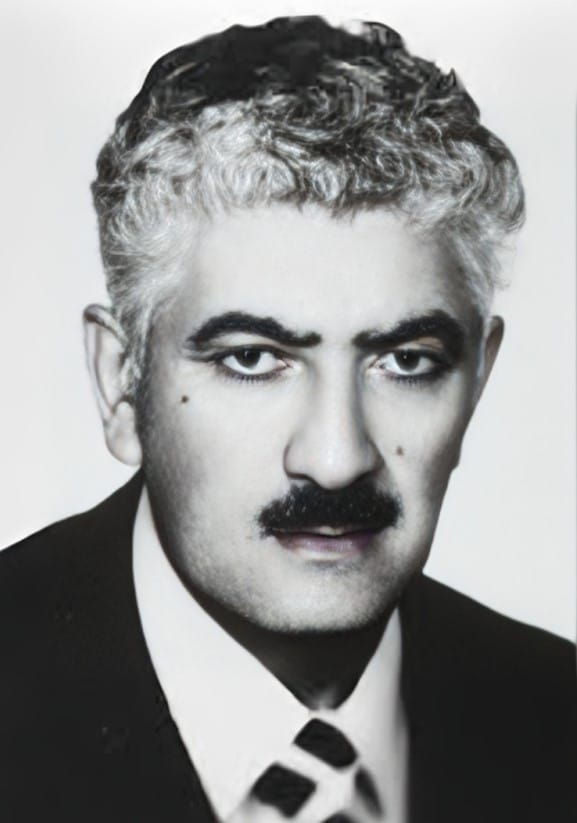
Through the initiative of Fahrettin (Erdoğan) Bey, the KARS NATIONAL COUNCIL GOVERNMENT, consisting of 8 people, was established in Kars on November 15, 1918. Under the temporary presidency of Fahrettin Bey, the government members were Hayrullah İravanlı from Yedikilise village of Sarıkamış, Ahund oğlu Taki Karaçantalı, Hacıoğlu Ahmet, Ali, Afzal İsrafil, Behçet, and Vafyadin on behalf of the Greeks.
Within 15 days, a congress was opened with delegates from other places.
The new government was established as follows:
Head of Government: Cihagiroğlu İbrahim
Government members: Cihangiroğlu Hasan Bey, Dr. Esat Bey, Akbabalı Kelbay Mehmet, Karaçantalı Ahmet Bey, Kağızmanlı Ali Rıza Bey (Ali Ataman), İravanlı Taki Bey, Sarıkamışlı Fahrettin Bey, Iğdırlı Ali Bey oğlu Mehmet Bey, Oltulu Molla Bilal, Borçalılı Emin, Hasan Ağa, son of Maksut Ağa, one of the Camaldinanlı tribal chiefs, and Gümrülü Yusuf Bey. The necessary financial aid was provided by Ahundoğlu.
The following were appointed as district governors (kaymakamlıklar): Paşa Han oğlu Hüseyin Han (Hüseyin Talınlı), Hemşioğlu Rasim, Şakir oğlu Ahmet, Kadı oğlu Aslan, and Bekir in Sarıkamış.
After the Kars National Islamic Council began its activities in this manner, activities also started in the Sürmeli basin. The tribal people began to arm themselves to defend themselves and fight against the Armenians. Previously, the attempts of Hasan Bey Vezirof, Ali Mirza, and Ali Ekber from Mazanoğulları of Melekli to bring weapons from Baku failed due to Vezirof's death on the way and confiscation by the Armenians. Sufficient weapons were obtained from Kars and its vicinity, and unofficial but organized gangs began to form. The Celâli tribe (about 1000 infantry and cavalry) began to gather under the command of Ali Mirza, and the Zilan tribe (800 infantry and cavalry) under the command of Hamit Bey from Şemsettin oğulları.
The Armenians completed their attack preparations and attacked the National Council region from the north. At that time, Talınlı Hüseyin Bey, who was very young but brave, not only prevented Armenian forces from entering Kızılçakçak but also defended Arpaçay with the cavalry forces he sent. However, the wrong policy of the National Council had united the Georgians and Armenians. Despite Talınlı Hüseyin Han's good assessment of the situation, the decision of many government officials, including the head of government, to go to war with the Georgians was considered the first failure. The soldiers from Akbaba and Şüregel under Hüseyin Han's command fought seriously. However, the ignorant actions of Hasan Han, who was acting as the Ministry of War, hampered Hüseyin Han's activities.
Hüseyin Han had completely armed his forces by stealing a significant amount of ammunition and weapons from the British. While the continuous attacks of the Armenians and Georgians on the National Council borders were thwarted by the resistance of the local armed people, on the other hand, the Turks launched an attack near Ardahan and cleared the Georgians from Ahıska by the end of 1918.
At this time, the British military representative insisted that there could not be a government called the National Council, and if it was a local government, it needed further reform. With this consideration, the National Council held a meeting on the evening of January 1, 1919, and changed its name to the PROVISIONAL NATIONAL GOVERNMENT OF THE SOUTHWESTERN CAUCASUS, including Nakhchivan and Batum, and İbrahim Bey Cihangiroğlu was again elected as the head of government. The internal affairs representation remained with İbrahim Bey; Fahrettin Bey for foreign affairs; Hasan Han Bey for war; Abbasali Bey for justice; Mikhail Andyanof from the Greeks for education; Mehmet Bey from Hududad for finance; Engineer Mahmut Bey for public works; Aliekber Bey for agriculture; and Arior from the Greeks for post and PTT representation were appointed.
These names were immediately reported to Colonel Tamperli, the British military representative in Kars. Later, Muhlis Bey was appointed instead of the Greek girl Arior, the PTT representative, and İbrahim Bey's internal affairs representation was entrusted to (Ali Rıza Bey).
At this time, General Thomson, acting with the well-known British policy, reneged on his word and declared that the 1914 border, up to the Aras River, was given to the Armenians, and thus Greater Armenia was officially formed. Finally, Armenian attacks began from all sides. The borders of Ardahan and Kızılçakçak were in a fortified state. The British decided to use other tactics instead of combat and, on April 19, applied to the government (National Council) with the desire to meet with government officials. The government members, who could not comprehend where this would lead, were both pleased and agreed to this action.
Finally, on the same day, a meeting ground was prepared in the parliament building, all government officials were summoned, and the arriving British representative was awaited. A little later, as the meeting began inside, the parliament was surrounded from outside, and thus all National Council officials were arrested, and this local administration was ended. The arrested government officials were exiled to Malta. Ali Rıza Bey from Kağızman, before going to Malta, found an opportunity to escape from Batum, came to Kağızman, and began fighting the Armenians again.
TALINLI HÜSEYİN HAN PASSED AWAY (NEWSPAPER ARTICLE)
(DİL NEWSPAPER OWNER: MECİT HUN NOVEMBER 21, 1952 ISSUE:48)
Hüseyin Han, son of Paşa Han Talınlı, inspector of the Iğdır Cotton Agricultural Sales Cooperatives Union, passed away last night after midnight from a heart attack.
The deceased was from a very noble and respectable family. He was one of the Talın khans whose lands are now outside national borders, and his entire life was spent in the national struggle. While still very young, he came to Kars as an immigrant and participated in the National Council movement that began in Kars at that time.
In the early days of its establishment, Hüseyin Han was sent to the Kızılçakçak region as a district governor. In a short period, he succeeded in gathering the national forces there and, with continuous efforts, fortified the Kızılçakçak front. Following the dissolution of the National Council by the British military command and the exile of its founders to Malta, Hüseyin Han was also arrested two days later and sent to Batum. Talınlı, who managed to escape from Batum after a while, returned to Kars and continued the struggle.
The late Talınlı was always loved and respected in Kars. After the establishment of the Republic, he seriously carried out the duties of Kars Community Center President, provincial general assembly member, and permanent commission member for a long time.
Due to the heart disease that had recently appeared, he preferred Iğdır and was appointed as an inspector of the Ministry of Commerce to the Iğdır Cotton Agricultural Sales Cooperatives Union. There is no doubt that Talınlı Hüseyin Han, who earned the respect of everyone, big and small, during his stay in Iğdır, will always remain in our hearts as Kars's most revered and valuable son.
May he rest in peace. Since his relatives and family in Kars were informed by telegram, the funeral will be held today at 3 PM with the participation of his relatives coming from Kars. It is natural that the people of Iğdır will duly perform their last duties to this revered deceased. On behalf of all Iğdır, we extend our condolences to the Talınlı family.
DİL NEWSPAPER OWNER: MECİT HUN (NEWSPAPER ARTICLE)
WRITTEN BY: TURGUT SUNGAR NOVEMBER 23, 1952
BEHIND YOU
(This article was penned by Turgut Sungar due to the death of Hüseyin Han Talınlı and published in the DİL newspaper.)
I address you in the language of the people of Iğdır. Your life; for those who understood life as a composition of many meaningless and base forces, what a definitive refutation it was. Your death, on the other hand, is a great witness to the eternity of the ideal.
A little while ago, as we lowered your revered body from our shoulders to transport it to Kars, all of us had tears in our eyes and sorrow in our hearts, grieving our physical separation from you.
As we carried your coffin, adorned with the ripe and colorless flowers of autumn, we understood once again how merciless and bitter death is.
May your soul never be tormented by the thought that you died in a foreign land. Rest in peace. All the people of Iğdır feel great anguish over your untimely death. All of us cried for you, and we are still crying.
I had the fortune to meet you as a result of a happy coincidence. With your personality that instilled trust, your maturity, and your culture, you quickly captivated and endeared yourself to Iğdır and its people.
You are a symbol of patriotism and conscientiousness. I cannot describe or explain you. I wish I had the literary power of the Indian philosopher Tagore, so that I could write down the feelings and thoughts I cannot express for you.
May your soul be joyful, and may your place be in heaven!
As Ziya Gökalp said, "Individuals are mortal, but nations are privy to the secret of eternity."
Beloved Departed! I now fall silent to perform my last duty of respect in your spiritual presence.
Mücahit Özden Hun August 25, 2024 Time: 20:00