Nado (Nadir) Agha, Leader of the Gelturan Tribe, a Heroic Commander
This article recounts the turbulent history of Iğdır (Surmalu Uyezd) between 1917 and 1920, focusing on the heroic resistance led by Nado Agha against Armenian Dashnak forces.

Dear Readers,
From 1917 to 1920, Surmalu Uyezd, today’s Iğdır province, experienced the most turbulent period in its history. The power vacuum created by the Bolshevik Revolution, the short life of the Transcaucasian Republic, and then the independence of the Republic of Armenia and its policies plunged the region into civil war. Thousands of people were forced to abandon their homes in the "Kaça-Kaç" (Flight) migration. However, the resistance led by Ali Mirze Bey, Ahmed Şemo, Hacı Tahir, and especially Nado Agha in the villages east of the Karasu Stream, was etched into the region's memory. In this article, I will briefly touch upon the life of Nado (Nadir) Agha, a great hero who has been forgotten or made to be forgotten. First, I would like to briefly mention the characteristics of the period: HISTORICAL TURMOIL IN SURMALU UYEZD (IĞDIR) BETWEEN 1917–1919 Surmalu Uyezd, located in the heart of the Caucasus and today known as Iğdır province, came under the domination of Tsarist Russia after the 1828 Treaty of Turkmenchay. During this period, the region existed as an administrative unit within the Erivan Governorate. This ancient geography, where different peoples – Azerbaijanis, Kurds, Armenians, and Yazidis – lived together for centuries, was deeply affected by the great upheavals of the early 20th century. THE BOLSHEVIK REVOLUTION AND THE POWER VACUUM In 1917, the Bolshevik Revolution took place in Russia. At Lenin's call, the Tsarist armies withdrew from the fronts. A great power vacuum emerged in the Caucasus. The Russian army, which until recently had rapidly crossed the Ottoman border and pressed on Erzurum, Erzincan, and even Sivas, suddenly disintegrated. This withdrawal created a chaotic situation not only in Surmalu Uyezd (Iğdır province) but throughout the entire Caucasus. Stateless towns, cities, and villages tried to manage their daily affairs by forming small committees among themselves. TRANSCAUCASIAN FEDERATION AND ARMENIAN INDEPENDENCE In this chaotic environment, the Transcaucasian Democratic Federative Republic was established on April 22, 1918, as a regional solution. Its capital was Tbilisi. The aim was to unite three nations (Georgians, Armenians, Azerbaijanis) under one roof. It was a search for balance against the Ottoman advance and the uncertainty in the region. However, this short-lived republic had major disagreements within it: Georgians wanted to be closer to Germany; Azerbaijanis to the Ottoman Empire; and Armenians mostly to Russia. The advance of the Ottoman army into the Caucasus also accelerated its dissolution. On May 26, 1918, Georgia declared its independence. On May 28, 1918, the Azerbaijan Democratic Republic and the Republic of Armenia were established. In short, this federation, which covered the territories of present-day Armenia, Azerbaijan, and Georgia, was short-lived. Surmalu Uyezd (today's Iğdır province) remained within the borders of the Republic of Armenia. 1919 ELECTIONS AND BOYCOTT The Republic of Armenia held elections in June and July 1919. The Muslim population living in the region – namely, Shiite Azerbaijanis and Sunni Kurds – boycotted these elections. In contrast, Yazidi Kurds went to the polls and voted. The boycott led the Armenian administration to perceive the Muslim population as a "threat" to its legitimacy. The Armenian government targeted Muslim villages in Surmalu Uyezd. Its aim was to establish an Armenia without a Muslim population. MASSACRES AND KAÇA-KAÇ First, the village of Kucak, inhabited by Muslim Kurds, was raided, and more than 250 civilians were massacred. Then, similar brutal massacres were carried out in the Azerbaijani villages of Oba, Küllük, and Hakmehmet. Thus, from August 1919 onwards, the Surmalu plain turned into a scene of bloody civil war: on one side, Armenian Dashnak forces and the Yazidi Kurds supporting them, and on the other side, Muslim Azerbaijanis and Kurds. The Armenian Dashnak forces consisted of well-organized, heavily armed, and disciplined units. Furthermore, Ottoman Armenians who survived the 1915 Ottoman Armenian Deportation, known as "Kaxtaxan," had sought refuge in the newly established Republic of Armenia and were acting with a sense of revenge. For the defenseless Azerbaijanis in the plain, there were two options: either take refuge in Melekli village and join the defense units there, or migrate to Iranian Azerbaijan due to their Shiite identity. Similarly, members of the Brukan and Redkan Kurdish tribes, who were defenseless in the plain, migrated to Ottoman territories and settled in Muş, Eleşkirt, and Erciş. In eastern Iğdır, only the Kurdish population in the villages east of the Karasu Stream remained. This process was called "Kaça-Kaç" (Flight) by the people; hundreds of villages were emptied, and thousands of people took to the migration routes. DRO'S SIEGE OF MELEKLI VILLAGE AND BRO HESKÎ TELLİ'S RESCUE OF MELEKLI Armenian general Drastamat Kanayan (Dro) had established his military headquarters in Taşburun. Soon after, he besieged over 3000 civilian Azerbaijanis gathered in Melekli village. The village elder, Ali Ekber Tufan, secretly left the village and went to Bayazıt Sanjak to ask for help from the Ottomans. However, the Ottoman army had no forces to send. Thereupon, İbrahim (Bayazıt) Bey of the Hamidiye Regiments in Bayazıt assigned Bro Heskî Telli, under his command, to rescue Melekli. Bro Heskî Telli broke through the Armenian siege, rescued more than 3000 Azerbaijanis, and first took them to Erhacı, and then to Iranian Azerbaijan. After this event, the Civil War in the Iğdır region intensified further. HEROIC RESISTANCE EAST OF THE KARASU STREAM
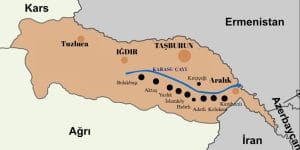
As seen in this picture, the Kurdish population living in the villages east of the Karasu Stream, starting from Bulakbaşı village and extending to Yukarı Topraklı (Alıkızıl), were closest to Taşburun, where the Armenian Dashnak militias were strongest. * East of the Karasu Stream, which originates from Bulakbaşı village, were the villages of Bulakbaşı, Aktaş, Yazlık, İslamköy (Kafirköy), Hıdırlı, Adetli, Kolukent, Karahacılı, and Yukarı Topraklı (Alıkızıl), in order. These villages were protected by the Karasu Stream against Armenian attacks from the plain, i.e., from Taşburun, and had their backs to the rocky slopes (Kıre) of Mount Ararat. The Azerbaijanis in Yukarı Topraklı (Alıkızıl) village had migrated, leaving only the Kurds belonging to the Redkan tribe. The Gelturan (Gelturî), Gêloî, Gıskan (Giskî), and Redkan (Redkî) tribes lived east of the Karasu Stream. The Redkan people in Kırçiçeği village had also crossed the Karasu and taken refuge in Adetli village. THE BIRTH OF THE VOLUNTEER KURDISH MILITIA FORCE In this environment, tribal leaders came together and formed volunteer militia forces.
- Ali Mirze Bey from the Gıskan tribe
- Ahmed Şemo Agha from the Geloi tribe
- Hacı Tahir Agha from the Redkan tribe
- Nadir (Nado) Agha from the Gelturan tribe
All these militias united under the command of Ali Mirze Bey, who had previously served as a glava (administrator of Kurdish tribes in a specific region on behalf of Tsarist Russia) during the Tsarist period. There was also a social reason for these forces to gather under Ali Mirze Bey's leadership. During the Tsarist Russian period, a feud arose between the Gelturan tribe and another tribe, resulting in a murder. The Tsarist gendarmerie arrested and took the respected and prominent members of the Gelturan tribe to Tbilisi (estimated 1902). Ali Mirze Bey, who was a glava, went to Tbilisi and stated that these individuals were respected figures and could not be held responsible for such an ordinary murder. He requested to be detained in Tbilisi himself in exchange for the release of these individuals until the incident was clarified. And so it happened. The respected members of the Gelturan tribe were released, and Ali Mirze Bey was held in custody. Soon after, the culprits were found, and Ali Mirze Bey was released and returned home. For this reason, the Gelturan tribe believed in Ali Mirze Bey's constructive and fair leadership. Furthermore, Ali Mirze Bey's daughter, Fatma Hanım, was the second wife of Ahmed Şemo, the leader of the Gêloî Tribe. Therefore, the Gêloî Tribe naturally accepted Ali Mirze Bey's leadership. Ali Mirze Bey's wife, Pero Hanım, was from the Redkan tribe. Thus, Hacı Tahir also had no difficulty recognizing Ali Mirze Bey as a leader. The militia forces united under Ali Mirze Bey's command crossed the Karasu Stream whenever they had the opportunity and raided Taşburun, the military base of the Armenian Dashnak forces.
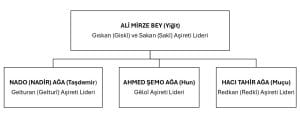
Organizational chart of the Kurdish population east of the Karasu Stream THE RISE OF NADO AGHA Among these figures, Nado Agha was one of the most striking. He was born in 1849 in Bulakbaşı village. When his father Sano died at a young age, he was orphaned as an only child. He made a living as a shepherd. In those years, Timur Agha was the leader of the Gelturan tribe. One day, when two brothers in the village fought to the death over a sheep, Nado stopped the fight by giving his own sheep. This fair behavior earned him the appreciation of the people.
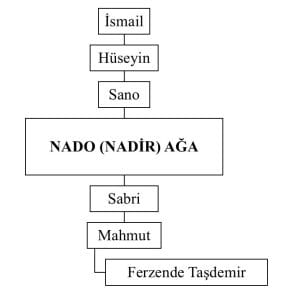
Nado (Nadir) Agha's family tree
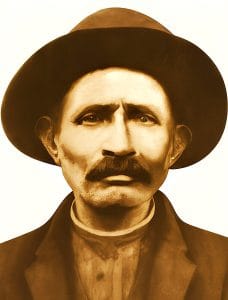
Leader of the Gelturan (Gelturî) Tribe and great hero Nado Agha When the tribe migrated to the Elegez (Alagöz) mountains in the spring, as was tradition, the villagers expressed their dissatisfaction with Timur Agha. They chose Nado as their leader, saying, "Nado is a fair man." From that day on, Nado Agha became a respected leader within the tribe. During the Civil War years of 1919-1920, Emerê Newo (Ömer, son of Nebi), a prominent member of the Gelturan tribe, approved his command, saying, "Nadir Agha is a braver and better commander, he should lead the militia forces." Thus, Nado Agha formed his own volunteer militia force and played an important role in the resistance along the Karasu Stream line. Emerê Newo's son, Hacı İsa Turan, also supported Nado Agha and contributed to the formation of the militia force. Nado Agha's son, Hacı Sabri Taşdemir, also played a significant role in the formation of the Gelturî Militia Force.
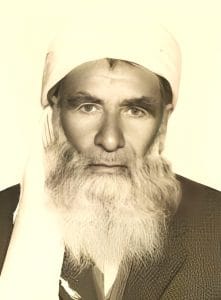
Hacı İsa Turan
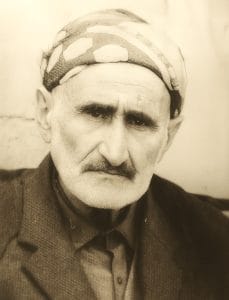
Hacı Sabri Taşdemir
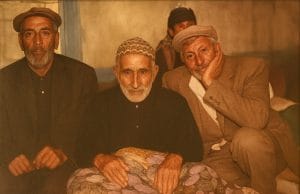
Nado Agha’s three sons: (from left to right) Musa, Sabri, and İsa THE BRAVE MEN OF KARASU STREAM In those years, the Kurds of Eastern Iğdır were organized under the command of Ali Mirze Bey. The Kurds of Central Iğdır, on the other hand, gathered around Hamit Bey and his sons Kerem Bey and Fettah Bey, establishing their center in Orgof village. Kurdish militia forces in both regions occasionally raided Taşburun, the center of the Armenian Dashnak forces. Hacı Musa Çam from Hoşbahar village shared an anecdote that has been in the people's memory for over a century: "One day, the militias under Kerem Bey silently marched on Taşburun. With the sunrise, gunshots were heard, and smoke rose from the mountain slopes. The Armenians put up a fierce resistance. The clashes intensified, bullets rained down. Kerem Bey's men managed to retreat without heavy losses.
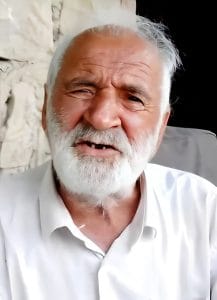
Hacı Musa Çam from Hoşhaber Town As they were returning, tired and worn out, Nado Agha appeared before them. He was coming from Bulakbaşı with his rifle in hand and armed militia around him. He was also going to attack the same target, Taşburun. Kerem Bey blocked Nado's path: “Nadir Agha, don't go in vain. The Armenians are very well organized. We tried, we suffered heavy losses. They will harm you.” Nado Agha's eyes shone with determination. He looked from under his furrowed brows. Nado Agha stood tall like a mountain. “Kerem Bey,” he said, “Armenian bullets cannot harm me. I am going to attack Taşburun.” There was a brief silence. Kerem Bey looked at Nado's conviction with astonishment. Whispers circulated among the militias. Some thought he was crazy, while others admired his courage. Nado Agha spurred his horse forward, signaling his men. The militia force advanced resolutely towards Taşburun. As the wind of Karasu blew behind him, it was as if nature was accompanying him. The clash began. Gunshots echoed in the plain and mountains, the smell of gunpowder permeated everywhere. Nado Agha and his militia force descended like lightning on the Armenian positions. After hours of fighting, the militias forced Taşburun's defenses and inflicted heavy losses on the enemy. And finally, in the evening darkness, Nado Agha gathered his men safely and retreated. Nado Agha's courage began to spread like a legend among the people. He was no longer just a tribal leader, but the brave man of Karasu, a hero who gave confidence to his people in desperate times."
HACI BEKİR ER RECOUNTS THOSE DAYS IN HIS MEMOIRS (as told by his grandson Mehmet Er):
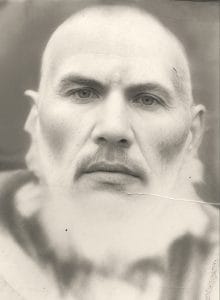
Hacı Bekir Er from the Gelturan tribe (1899-1970)
"Under the command of Nado Agha, we set out from Bulakbaşı as a militia force and attacked the Taşburun front, where Armenian Dashnak units were entrenched, from two flanks. However, the enemy had prepared an ambush for us. They had created the impression that fires were lit in the streets of Taşburun and soldiers were resting. We, thinking that the Armenians were resting at the points where the fires were burning and that we would catch them unprepared, launched an assault. However, everything was a trap. They opened fire on us from their hiding places. That day, five of our brave comrades were martyred. We had to retreat with our wounded.”
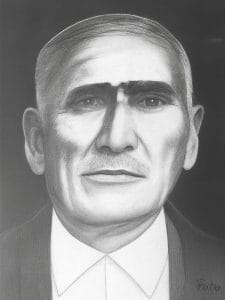
Şahzade Aras (a significant figure in Nado Agha's unit) (01.07.1895-07.05.1986)
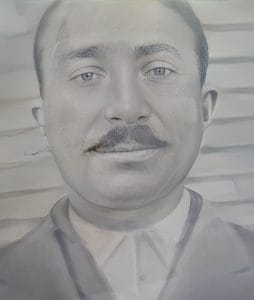
Hıdır Çam (a significant figure in Nado Agha's unit) (01.07.1900-11.02.1970)
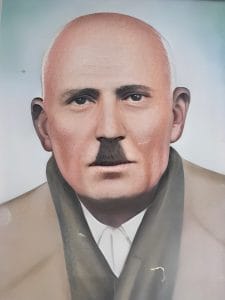
Esat Akyıldırım (son of Celil) (a significant figure in Nado Agha's unit) (1901-1961)
THE RESISTANCE LINE ON THE KARASU STREAM Those days, which began with the scorching August heat of 1919 and lasted until the biting cold of November 1920… The Iğdır plain was filled with the smell of blood and gunpowder. As Armenian Dashnak forces burned and destroyed Iğdır's villages one by one, a new epic was being written on the banks of the Karasu Stream. The Karasu Stream stretched like a natural border. Beyond it was danger; Dro's headquarters in Taşburun, with its heavily armed forces. But on this side of the Karasu Stream, in Bulakbaşı, Nado Agha and his militia force were ready for resistance. The Armenians tried repeatedly. They wanted to cross the surging waters of the Karasu, but they failed. With every attempt to cross, bullets from the Kurdish militias ambushed among the rocks rained down on them. The Karasu, as if it were not one but a thousand armies before them, became an obstacle. Dro sought another solution. "We cannot cross the Karasu," he told his commanders, "We must take Bulakbaşı. That is the heart of the resistance." And the attacks began. One day at dawn, another day in the darkness of night… But each time it ended with the same result: Nado Agha's militias fought hand-to-hand, repelling the enemy. Nado Agha's name had become a source of fear and hope in those days. Among the Armenian soldiers, he was whispered about as "the wolf of Bulakbaşı." The people referred to him as "the shadow of Karasu." Because he seemed to emerge from the water, strike the enemy like lightning, and then disappear again. By November, everyone knew: the Karasu line would not fall. Because there were not only rocks, stones, and waters; there was the will of a people and the courage of Nado Agha. And so, in the bloody months of 1919 and 1920, Bulakbaşı village and the banks of the Karasu Stream became a symbol not only of resistance but also of a people's struggle for existence.
SACRED FRIENDSHIP
In 1919, an unbreakable friendship was forged between Hacı Tahir Muçu and Nado (Nadir Taşdemir) Agha, who fought shoulder to shoulder against the Armenian Dashnak forces. This friendship was not merely camaraderie on the front; it was a bond so deep, so sacred, that it would intertwine their lives.
The two friends made a great promise to each other: if one had a son and the other a daughter, these children would one day marry, and the two families would be forever bound.
On June 29, 1918, Nado Agha's wife, Bediha Hanım, gave birth to a daughter whom they named Fatma. Three years passed. On July 1, 1921, this time Hacı Tahir Muçu's wife, Bahar Hanım, gave birth to a son whom they named Hasan.
Years later, the promise of friendship was fulfilled. Hasan Muçu and Fatma Taşdemir married. Thus, a covenant born of wartime friendship was immortalized through marriage.
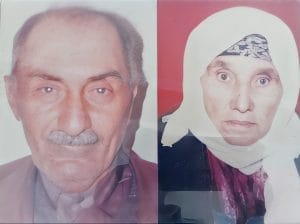
Hasan Muçu and Fatma Taşdemir Muçu
NADO AGHA'S YEARS OF EXILE AND HIS LAST BREATH In the early years of the Republic, balances were being re-established. After the Sheikh Said Rebellion broke out in 1925, Ankara decided to break the influence of aghas, beys, and sheikhs in the region. For this purpose, the "Law on the Exile of Aghas and Beys" was enacted in 1926, targeting leaders who lived closely with their people and tribes. It was in those days that Nado Agha, once a symbol of resistance against Armenian Dashnak forces on the banks of the Karasu, and his son-in-law Cafer Agha, were arrested and exiled to Çorum. The people watched his departure helplessly. A hero, a leader, was now "undesirable" in the eyes of the state.
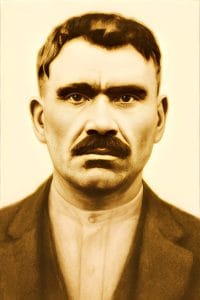
Nado (Nadir) Agha’s son-in-law Cafer Agha The exile lasted two long years. Thanks to the Amnesty Law enacted in 1928, Nado Agha was able to return to Iğdır. However, there was no trace of the enthusiasm of the old days. He was now carrying the burden of his age and feeling the shadow of the new state order. In the spring of 1930, another storm brewed. By order of Salih Pasha, the villages east of the Karasu Stream – Bulakbaşı, Aktaş, Yazlık, and many others – which had once not allowed Armenian Dashnak forces to pass, were declared a forbidden zone. The people living there were driven out of their villages. The Gelturan tribe found a solution by settling in Hoşhaber. And there, in the silence of Hoşhaber, Nado Agha passed away in 1930. His death symbolized not only the end of a heroic tribal leader but also the closing of an era in Iğdır's memory of resistance. The bitter words remained on the lips of the people: "Nado Agha, who once made the Karasu impassable, now passed away in Hoşhaber without even being able to return to his own village." THE LIBERATION OF IĞDIR AND THE FORGOTTEN NAME OF NADO AGHA On the morning of November 12, 1920, the fate of Iğdır changed. Armenian Dashnak forces and the Yazidi Kurds who acted with them were forced to leave Iğdır. From then on, these lands would remain within the authority of the Grand National Assembly in Ankara, and then within the borders of the Republic of Türkiye. Years passed. Every year, "Iğdır Liberation Ceremonies" were held in the district then called Başköy, now Aralık. In those ceremonies, the people spoke with tears, prayers, and gratitude of one name: Nado Agha. Because he had become one of the most important symbols of the resistance extending from Bulakbaşı to Yukarı Topraklı. The people recounted his courage like an epic. But times changed. After the 1950s, a new wave rose in Iğdır: chauvinism. This understanding tried to erase the heroes living in the people's memory, to make their names forgotten. The names of the true leaders of the resistance, like "Nado Agha," were removed from ceremonies and no longer appeared even between the lines of official history. Yet, the memory of the people is not easily erased. In the villages of Iğdır, on the lips of the elderly, there is a truth told like a fairy tale: If Nado Agha had not been on the banks of the Karasu Stream, the liberation of Iğdır might never have been possible.
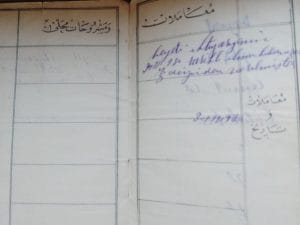
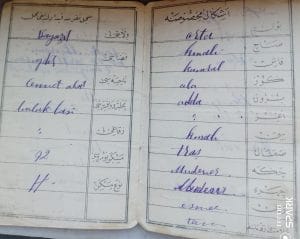
Nado Agha’s Ottoman-script Population Record
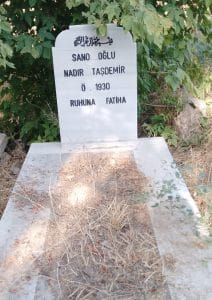
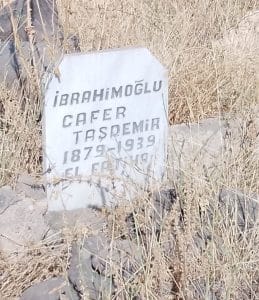
The graves of Nado (Nadir) Agha and his son-in-law Cafer Agha, who was exiled with him in 1926, in Hoşhaber Town A CALL FOR MONUMENTAL TOMBS FOR OUR FORGOTTEN HEROES In the difficult years of Iğdır, during the 1919 Civil War, there were many heroes who risked their lives to protect the existence, honor, and land of the people. But sadly, families who did not play a role on the stage of history were given medals of honor, and their names were kept alive by being commemorated in ceremonies every year. Monumental tombs were built for Kerem Bey, Şamil Bey, and Hacı Ali Ekber Tufan by the state, and they were rightly honored. However, today there are other brave men whose graves still stand in silence, kept alive as spiritual tokens in hearts: Ali Mirze Bey, Ahmed Şemo, Nado Agha, and Hacı Tahir Agha. These are names of those who fearlessly attacked Dro's headquarters in Taşburun; who heroically repelled the fiercest assaults of the Armenian Dashnak forces. They made the waters of Karasu impassable, and they wrote the history of Iğdır's resistance. Today, their families are content with placing only spiritual tokens on existing graves, hoping that "one day the state will also honor our values." But the names of these heroes should be the honor not only of their families but of all Iğdır, and indeed of our entire nation. Therefore, I call upon our state: Monumental tombs should also be built for Ali Mirze Bey, Ahmed Şemo, Nado Agha, and Hacı Tahir Agha; their memory should be immortalized with the approval of the state. Because history writes not of those who forget, but of those who remember and cherish their heroes. THANKS TO FERZENDE TAŞDEMİR
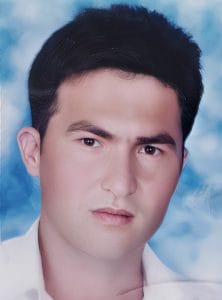
Ferzende Taşdemir
In my work on Nado (Nadir) Agha and the prominent figures of the Gelturan (Gelturî) tribe, I received great spiritual support from my esteemed fellow townsman, Ferzende Taşdemir. Born on December 5, 1980, in Hoşhaber Town to Mahmut and Şükran Taşdemir, Ferzende Taşdemir is married to Makbule Hanım and is the father of three children named Hüseyin, Hasan, and Ömer. Ferzende Taşdemir, who earns his living as a driver at the Hoşhaber Municipality, is deeply committed not only to his family but also to the spiritual heritage of his tribe. Thanks to his sensitivity, he meticulously collected valuable information necessary for the preparation of this article and provided me with archival photographs. I sincerely congratulate him for his devoted effort and noble conduct, and I extend my heartfelt thanks for his assistance.
Mücahit Özden Hun August 19, 2025