Cohabitation
This article discusses the concept of cohabitation in politics, particularly in the context of France's semi-presidential system, and explores its potential implications for Turkey's presidential system.

(Dear readers, the article you are about to read was published on this page on 12/08/2021. As it remains relevant, I am presenting it to your attention again as is. The purpose of the article is not to support a political party, but to open up for discussion the reality of Cohabitation, which has the potential to emerge for the first time in Turkey's political history. Sincerely, Mücahit Özden Hun)
Dear Readers;
First, allow me to present the explanation of the word in the title: The Latin-derived word "Cohabitation" emerged from the combined use of two words. The prefix "Co" means "Together." The word "Habitation" means "Living." Thus, the word "Cohabitation" can be translated into Turkish as "LIVING TOGETHER."
The word "Cohabitation" was initially used for couples who lived together and formed a family without being officially married. With the Fifth Republic in France, the word "Cohabitation" entered political terminology for the first time.
As you know, France has a semi-presidential system. Normally, the President and the Prime Minister are expected to be from the same party. However, in some cases, when the President is elected from a party that is in the minority in parliament, a strange situation arises. If the President, elected by popular vote, chooses the Prime Minister candidate from their own party, which is in the minority in parliament, this is seen as contrary to political ethics and general practice. Therefore, the President is forced to choose the Prime Minister candidate from the party that represents the majority in parliament, i.e., the opposition party with the most votes. The French call this situation, where the President and Prime Minister are from different parties, "Cohabitation," or "Living Together."
Here, I would like to warn my readers about the two different pronunciations of the word "Cohabitation." The word "Cohabitation" is pronounced "ko-hab-i-TAY-shun" in English and "ko-a-bi-ta-SYON" in French. Although it means "Living Together" in Turkish, the term "Kohabitasyon" has taken its place in political literature. (The French do not pronounce the letter H.)
COHABITATION GOVERNMENTS IN FRANCE
To ensure a better understanding of my article, I would like to briefly review the Semi-Presidential system in France and the Presidential system in the USA, and then discuss the form of government in Turkey.
The main features of the Semi-Presidential system in France are as follows:
- The President is elected by popular vote.
- There is a Prime Minister and a cabinet.
- The government must receive a vote of confidence from parliament.
- The President can appoint a Prime Minister from among members of parliament or from outside, at their discretion.
- The President also exercises legislative power through decrees.
- Parliament can issue a vote of no confidence in the government.
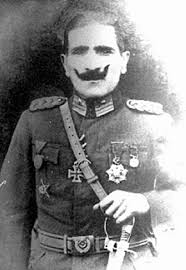
French President Mitterrand (The French statesman who first signed off on the cohabitation form of government)
However, in the 1986 elections, an interesting situation arose. Mitterrand was re-elected President by popular vote, but the Socialist Party lost its majority. Mitterrand was forced to appoint Jacques Chirac (jak shirak), the leader of the UMP (Union for a Popular Movement), which had received the most votes in the opposition, as Prime Minister (1986-88). French voters watched with astonishment the power struggle between Socialist President Mitterrand and Chirac, the leader of the conservative UMP. Mitterrand often vetoed laws proposed by Chirac.
A similar situation occurred in the 1993 elections. Mitterrand was elected President by popular vote, but the opposition gained an 80% majority in parliament. Mitterrand was forced, this time, to appoint the conservative politician of Armenian origin, Édouard Balladur, as Prime Minister (1993–1995).
Years later, this time the conservative Chirac was elected President by popular vote, but since the Socialist Party had secured a majority in parliament, he appointed Socialist Party leader Lionel Jospin as Prime Minister, and thus France was governed under the cohabitation system between 1997 and 2002.
Meanwhile, let's look at the main features of the Presidential system in the USA:
- The President is indirectly elected by the people (two-stage).
- The President chooses cabinet members from their own circle.
- Ministers must be individually approved by the Senate. The Cabinet as a whole is not subject to a vote of confidence.
- The President also exercises legislative power through decrees.
- There is no vote of no confidence or confidence, but there is a House of Representatives and a Senate that tightly control the President. They can remove the President from office with a vote in both chambers.
The Presidential Government System is a presidential-type government system adopted with the referendum on April 16, 2017, and implemented as of July 9, 2018. With the transition to this system, the powers of the Grand National Assembly of Turkey (TBMM) were restricted, and the President's powers were increased, making them the head of the executive branch.
We can list the features of the new system as follows:
- The President is directly elected by popular vote. (France)
- The President can be a member of a political party. (France / USA)
- The President can appoint cabinet members from outside parliament. (USA)
- Cabinet members consist of the President, the Vice President, and 17 ministers. The President can, in a sense, also use legislative power through the authority to issue decrees. (A situation contrary to the principle of separation of powers - legislative, executive, and judicial!!)
- If a member of parliament is appointed to the cabinet, their parliamentary membership is revoked.
- There is no Prime Minister. The President is the head of the government and the state. (USA)
- The government is not obliged to receive a vote of confidence from parliament. (USA)
- There is no strong mechanism to supervise the government or to which the government is accountable. There is no chance to issue a vote of no confidence in the government.
- There is no mechanism to control or limit the President's power.
- Parliament and members of parliament have been rendered insignificant. (There is an understanding that the country can be governed even without them.)
President Recep Tayyip Erdoğan AK Party General Chairman
Vice President Fuat Oktay AK Party Member
Minister of Justice Abdulhamit Gül Gaziantep Member of Parliament
Minister of Family and Social Services Derya Yanık AK Party MYK Member
Minister of Labor and Social Security Vedat Bilgi AK Party Member of Parliament
Minister of Environment and Urbanization Murat Kurum From outside
Minister of Foreign Affairs Mevlüt Çavuşoğlu AK Party Founding Member
Minister of Energy and Natural Resources Fatih Dönmez From outside
Minister of Youth and Sports Mehmet M. Kasapoğlu From outside
Minister of Treasury and Finance Lütfi Elvan AK Party Karaman Member of Parliament
Minister of Interior Süleyman Soylu AK Party Trabzon Member of Parliament
Minister of Culture and Tourism Mehmet Nuri Ersoy From outside
Minister of National Education Mahmut Özer From outside
Minister of National Defense Hulusi Akar From outside
Minister of Health Fahrettin Koca From outside
Minister of Industry and Technology Mustafa Varank From outside
Minister of Agriculture and Forestry Bekir Pakdemirli From outside
Minister of Trade Mehmet Muş AK Party Istanbul Member of Parliament
Minister of Transport and Infrastructure Adil Karaismailoğlu From outside
In the political history of the Republic of Turkey, every Prime Minister and now the President has a cabinet preference. For example, Mr. Demirel and Mr. Ecevit preferred governments dominated by bureaucrats (former civil servants), while Mr. Özal preferred technocratic governments (engineers and scientists). Mr. Erdoğan, when forming his cabinet, bases his choice on the candidates' experience in business life, thus forming a cabinet with a business-oriented inclination.
I would like to give an example. Although Minister of Health Fahrettin Koca is a doctor, it would be more accurate to describe him as a businessperson-doctor. Mr. Koca is the founder of the Education and Health Research Foundation, Medipol Hospital, and Istanbul Medipol University. Mr. Koca was appointed as a minister due to this entrepreneurial spirit and experience in business life. For this reason, Mr. Erdoğan prefers to form his cabinets with individuals who have "business or commercial acumen."
Which type of cabinet is more successful is a matter of debate. In my opinion, to create synergy, I believe it would be appropriate to prefer a cabinet composed of individuals from all three segments mentioned above.
When Donald Trump, one of America's biggest entrepreneurs and businesspeople, was elected President, it was thought that business life would gain momentum, but he could not do better than Bill Clinton or Obama, who had no business experience. Sometimes ordinary individuals without business acumen or who have not managed large corporate businesses can be much more successful ministers and pave the way for important decisions. Unfortunately, it is not possible to think of and manage the state like a "business." If it were, the late Mr. Sabancı or Koç would have had to be made Prime Minister continuously.
THE COHABITATION DILEMMA IN TURKEY'S NEXT ELECTION
The previous elections in Turkey were held on June 24, 2018. Since elections are held every five years, the normal time for the next election is June 18, 2023. Whether it is an early election or a normal election, it seems inevitable that a scenario that will lead Turkey's political life into chaos will occur.
As you know, when the legal obstacles to parties forming alliances in Turkey were removed, two main alliance blocs emerged: the People's Alliance (Cumhur İttifakı) and the Nation Alliance (Millet İttifakı). In the 2018 elections, the parties belonging to the two alliances and the number of deputies they elected are as follows:
People's Alliance: (344 Deputies / 53.6% of the votes)
AK Party: 295
MHP: 49
BBP: 0
Nation Alliance: (189 Deputies / 33.8% of the votes)
CHP: 146
İYİ Party: 43
Parties that ran independently:
HDP: 67 (11.7% of the votes)
HÜDA-PAR: 0
TOTAL: 600 Deputies
In the upcoming early or normal elections, the following scenario is gaining traction:

Mr. Recep Tayyip Erdoğan will be elected President in the second round. On the other hand, the number of deputies of the Nation Alliance + HDP will exceed 300, meaning the opposition will gain a majority in parliament. In this situation, since the President's cabinet is not required to receive a vote of confidence from parliament, the President will form his cabinet with trusted individuals and immediately begin implementation. Since there is no Prime Minister, a situation that we can call "Partial Cohabitation" will arise.
That is, the President will use his authority to issue decrees, while the opposition, holding the majority, will object to these decrees and pass laws on the same issue from parliament. According to the Constitution, laws passed by the Assembly have priority and superiority over decrees issued by the President. Often, there will be a conflict between presidential decrees and laws passed by the Assembly, and the Constitutional Court will constantly convene to resolve the objections as the final decision-making body.
In this situation, the system will enter a deadlock, and Turkey will experience a tense political period. Even new elections may come onto the agenda to overcome this chaos. Since it seems difficult for the opposition parties (Nation Alliance + HDP) to reach a total of 360 deputies, regardless of how successful they are, the decision to hold early elections will be solely at the President's discretion, which will trigger political crises. This is because to lead the country to early elections, either the President can use his authority alone, or it can happen with the votes of 3/5 of the deputies in the Assembly, i.e., 360 deputies.
Currently, the only way for the country to go to early elections requires the President to use his authority alone. However, even if such a proposal were to come to the Assembly, the number 360 would easily be exceeded.