Song Binbin: The Imperialist Daughter of the Chinese Revolution
This essay explores the life of Song Binbin, a prominent figure in China's Cultural Revolution, whose journey from Mao's "favorite princess" to an American citizen highlights the unexpected changes individuals can undergo.

Dear Readers:
Life is in a constant state of flux and dynamism. But is it only life? Our thoughts, political views, and prejudices cannot escape this change either. Looking back, we are surprised to see how everything has changed with the passage of time. Perhaps some of you still think, "I will never change." Do not believe them. Their only fault is their unnecessary stubbornness in failing to notice the changes they have undergone.
From ITU to the USA
I would like to start by giving an example from my own life of what it means to break down ingrained prejudice:
In Turkey, the left-wing youth is divided into two distinct periods: the "68 Generation" and the "78 Generation." I belong to the 78 Generation, which was active from the mid-1970s until the September 12th Military Coup.
Those were the years when I was a student at ITU (Istanbul Technical University). We had all sorts of left-wing publications, magazines, brochures, and manifestos. A list of left-wing books to be read before our textbooks, in a sense, put heavy pressure on us as a moral responsibility. We would ask each other: "Have you read that new book? You absolutely must!"
In our conversations, discussions, street demonstrations, and on our banners, there was a phrase we constantly used: "Down with American Imperialism!"
This slogan was etched into my mind until I graduated from university and went to Europe. I was filled with deep anger and hatred towards the USA.
In 1986, I started working as an engineer in a French company in Paris. My biggest dream was to go to the Soviet Union and pursue a doctorate at Moscow State University. While working, I was also intensely learning Russian. In those years, there were no special schools for learning Russian. It was even impossible to find books for learning Russian in the market.
There was only one way: to enroll in public Russian language courses offered by the Soviet Union Embassy in Paris. So I did. I went to Russian class twice a week. Almost all of my classmates were children of aristocratic and wealthy Russian families who had fled to Paris because of the 1917 Revolution. Some could speak Russian fluently but could not read or write it. Since there was only one teacher, students of different levels were gathered in a single class.
Our textbooks were printed in Moscow. They were books used to teach Russian to non-Russian peoples within the Soviet Union. To be honest, we weren't making much progress in learning Russian. My classmates would speak French, recounting the memories of their noble and aristocratic families from Tsarist Russia, and the lesson would thus get sidetracked. There was a huge electric samovar in the classroom. Participants would bring homemade pastries (pirozhki), and we would have our lesson (!) while drinking tea.
One day, I went to the Russian Consulate building to go to Moscow. My aim was to learn the conditions required to study at Moscow State University. The consulate building was in a separate location from the embassy building. When I arrived at the consulate, I saw a long queue with no discernible beginning or end. They were all black African immigrants. Like me, they wanted to get an education visa and go to Moscow. They had come with their entire families, including children.
I joined the queue and started waiting. Hours passed, but the queue did not move an inch. In front of me was a Senegalese couple. We chatted in French. When they told me that they had been coming early in the morning for 2-3 months, but the Soviet officials only kept the counter open for a few hours, and when they complained, they were harshly reprimanded, I left the queue. I had, to some extent, noticed the ugly face of socialism in practice. As I rode the metro, for the first time, I seriously questioned the concept of Holy Socialism in my heart and mind.
In April 1986, a major explosion occurred at the nuclear power plant in Chernobyl, Soviet Union (in present-day Ukraine). Soviet authorities tried to conceal the extent of the tragedy for months. However, it was a serious explosion; nuclear radiation was leaking into neighboring countries. In a sense, the cat was out of the bag. I remember experiencing a deep disappointment with the ideal of Socialism for the second time when Western newspapers extensively covered the horrific tragedy in Chernobyl in the autumn of 1986.
It was December 1990. I had a circle of American friends. When I told them that I was experiencing discrimination as a "Muslim" in France, that obstacles were constantly being placed in the way of my career, and that I was being prevented from getting promotions, one of them said, "If you ask me, you should try your luck in the USA." It was then that the idea of going to "Imperialist" America matured in my mind.
At the beginning of the year, we had a two-week holiday. I went to New York for a week. I toured the buildings of New York University (NYU) and the Columbia University campus. The dynamism of New York and the self-confidence of its people surprised me. The USA was a solution-oriented society. They had a philosophy of life that perfectly aligned with my own. When I returned to Paris, I made plans to go to the USA.
A few years later, I was a student at Wharton, one of the world's most prestigious MBA schools. I was married to a Chinese woman who was born and raised in the USA, whose family came from the Canton region in southern China.
My ex-father-in-law had come to San Francisco in the 1940s and worked as a chef in Chinatown. In later years, he moved to Salt Lake City, the capital of Utah, where there were no Chinese restaurants, and opened a magnificent Chinese restaurant. Since it was the only Chinese restaurant in the state, he often appeared in local newspapers and gave interviews.
In the 1990s, there were two "Chinatowns" in the USA: San Francisco and New York. My ex-father-in-law had a wide and respected circle in both Chinatowns.
It was June 1995. We had graduated from Wharton and were preparing to go to Dallas. We had been invited to my wife's cousin's place in New York for a few days. As was customary, they hosted us with all the family members in a lavish Chinese restaurant in Chinatown.
Four or five tables were joined together, and we were having dinner in a large family setting. At one point, the conversations and chatter stopped, and whispers and glances towards a distant table began. My wife leaned into my ear: "That woman in the green dress you see, her name is Song Binbin. According to what they say, she was once Mao Zedong's favorite and princess. Now I think she lives in Boston."
To be honest, I wasn't very interested. I even didn't want to believe it. How could Mao Zedong's "favorite princess," who saw the USA as the biggest enemy, live in the USA? In later years, my interest in Song Binbin's life increased when my wife showed me a picture of Mao Zedong and Song Binbin together. I remember eagerly reading articles about her.
Recently, when I read the news of Song Binbin's death in the New York Times, my memories took me back. The lives of socialist Mücahit, who once shouted "Down with the USA" in Turkey, and Song Binbin, the symbolic figure of the Chinese Cultural Revolution launched by Mao Zedong in 1966, who said "the USA is a paper tiger," strangely ended in the USA.
In this article, I wanted to briefly convey Song Binbin's life to you, showing how quickly and unexpectedly human beings can change, and that the word "Never!" has an empty value:
SONG BINBIN
Song Binbin was the daughter of General Song Renqiong, a famous Chinese soldier and statesman. General Song Renqiong served as the secretary of Hunan Province for the Chinese Communist Party, founded in 1949. In later years, he rapidly rose within the Communist Party. Today, General Song Renqiong is considered one of the eight most important figures of the Chinese Revolution, alongside Mao Zedong.
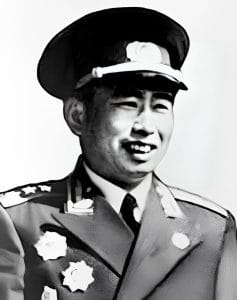
Song Binbin's father and the iconic figure of the Chinese Revolution: Song Renqiong
Song Binbin was born in 1947 as the daughter of such a father. In 1966, Song Binbin was a 19-year-old high school student. Mao Zedong launched the Cultural Revolution to destroy the "remnants of imperialist culture" rooted in society, which he saw as an obstacle to the Chinese Revolution. Song Binbin joined the youth wing of the Chinese Communist Party and became one of the front-runners in purging so-called reactionary elements who were "elitist and unable to adapt to change."
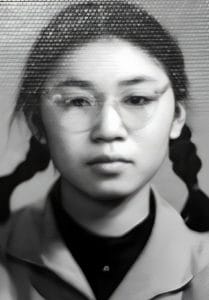
Song Binbin in the 1960s
Song Binbin and her friends targeted their high school vice-principal, Ms. Bian Zhongyun, whom they considered a "reactionary element." On August 5, 1966, they beat Bian Zhongyun with her friends until she fainted. Bian Zhongyun was taken to the hospital but could not be saved. This news spread rapidly and, in a sense, became a model for the Cultural Revolution.
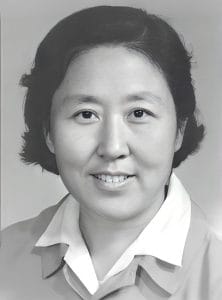
High School Vice-Principal Bian Zhongyun, lynched and killed by Song Binbin
On August 18, 1966, young people sympathetic to the Chinese Communist Party, calling themselves "Red Guards," organized a massive demonstration attended by one million people in Beijing's Tiananmen Square. Mao Zedong was also present at this rally. Song Binbin, who beat her vice-principal to death for the Chinese Revolution (recorded as the first death of the Cultural Revolution), was the most prominent figure at this enormous rally. She held Mao Zedong's Little Red Book. A picture of her with Mao Zedong was taken and published in newspapers. Song Binbin was declared China's most heroic daughter overnight. Everyone knew her name.
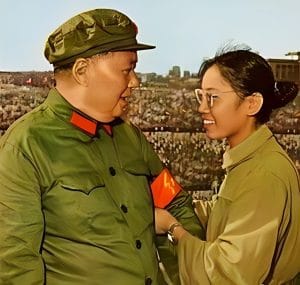
Mao Zedong and Song Binbin together in Tiananmen Square. This picture was hung as a large portrait on walls across China during the Cultural Revolution.
The word "Binbin" means "gentle, refined" in Chinese. Mao Zedong said, "This surname does not suit you. From today on, your name will be Song Yaowu." "Yaowu" means "militant." Two days later, an article signed "Song Yaowu" was published in Guang Ming Daily, the most important publication of the Chinese Communist Party. Thus, Song Binbin became the symbolic figure of the Cultural Revolution. Young members of the "Red Guards" from other regions of China flocked to Beijing. Their only goal was to see Song Binbin and shake her hand.
A few years later, the Cultural Revolution spiraled out of control. In 1968, unexpectedly, Song Binbin's father, General, became a target of the Cultural Revolution. The family was placed under house arrest. Time passed, and in 1972, Song Binbin enrolled in the Institute of Geology. For unknown reasons, she went to the USA in 1980. She completed her Master's in Geology at Boston University. Later, she earned her Ph.D. in Geochemistry at the world-renowned MIT University. She worked as a consultant in environmental and urban planning in the USA. She became a US citizen. From 2003 onwards, she traveled back and forth to China intermittently. She expressed regret for her actions during the "Cultural Revolution" and apologized.
Song Binbin, the symbolic figure of the Chinese Cultural Revolution, passed away from cancer at the age of 77 in New York on September 16, 2024, as a US citizen, leaving behind a past that needs to be learned from and questioned, with the title of "the imperialist daughter of the Chinese Revolution."
Whatever you do, never say, "Never!"