Iğdır Once Upon a Time: Right-Left Tensions in the Summer of 1980
This article translates a 1980 Milliyet newspaper report on the political and ethnic tensions in Iğdır, Turkey, just before the 1980 military coup, highlighting the perspectives of local leaders.

Dear Readers,
Nihat Öner, one of Iğdır's young and ambitious research writers, recently sent me an important clipping published in the Milliyet newspaper on July 15, 1980. The moment I read the first lines, I realized this was no ordinary newspaper report. This text was a historical testimony carrying the spirit of an era. Therefore, I decided it would be more appropriate to publish the text in its original form as much as possible, without obscuring it with unnecessary commentary. Dear Readers, Some texts are not just news. Some newspaper clippings are not just words printed on paper. Time passes, ink fades, names age, but those lines continue to carry the fear, voice, anger, and silence of an era. The text you hold is like this. This news, published in the Milliyet newspaper on July 15, 1980, under the title "Anarchy Report," does not only describe Iğdır of that day; it also shows how the provinces lived on the dark threshold of Turkey before the coup. Entering the summer of 1980, Turkey was experiencing more than a political crisis. Streets were divided, neighborhoods were separated, and people were polarized according to their identities and political affiliations. Bullets had replaced debate. The state was considered invisible in some places, inadequate in others, and biased in still others. The September 12 military coup would soon follow. But coups do not emerge suddenly one morning. Before them, a long period of fear, distrust, and disintegration accumulates. Iğdır, in those days, was one of the reflections of this storm on the border line. It was not yet a province; it was a district of Kars. But its geography was small, its burden large. On one side, the border; on the other, trade; on one side, old enmities; on the other, ethnic tensions, ideological polarization, and a sense of state vacuum... Land disputes mixed with politics, politics with neighborhoods, neighborhoods with fear. People were not only concerned with making a living but also with the anxiety of returning home safely in the evening. On this occasion, I wish God's mercy upon all our fellow citizens who lost their lives in the conflicts, tensions, and fratricidal strife of those years. The years that have passed have shown that every life lost, regardless of which side it was on, is a common loss for this country. The reason I am publishing this text today is not to bring the conflicts of the past into the present. On the contrary, it is to present an authentic document from the lived years to new generations who know nothing of Iğdır of that period. Because cities that lose their memory leave their future to the narrative of others. Young people should know that the city they walk in today did not come to be through easy days. The names mentioned in this text are not just political actors. Influential figures of the period such as Vahap Akar, Mecit Hun, Hüseyin Akbulut, Sheikh Hüseyin Balamir, and Atalay Sever, despite all their differences, became representatives of common sense, dialogue, and the search for social balance. Each spoke from their own circle, voiced their own neighborhood's language, but the restraining effect of these names in preventing Iğdır from being completely engulfed in fire cannot be underestimated. If there had been no such opinion leaders in those years, Iğdır could have experienced much heavier suffering, and fraternal ties could have been much more deeply wounded. Recent history is often told as the story of big cities. However, the true history of Turkey has also been written in border districts, small squares, coffee houses, village roads, and forgotten towns. Iğdır is one of the silent but important pages of that history. The text you are about to read is a pre-coup mirror of a district. It is harsh, contradictory, full of biased sentences, and at times angry. But precisely because of this, it is real. Because people speak as they spoke in their own time. Years have passed. Some have returned to the earth, some have become memories. But cities should not forget. Because remembering is not only commemorating the past but also protecting the future.
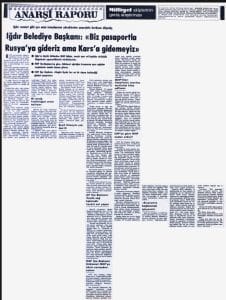
Article published in Milliyet Newspaper on July 15, 1980 MILLIYET NEWSPAPER ANARCHY REPORT 15 JULY 1980 (Extensive research by Milliyet teams)
- MHP dominates most of Iğdır, but extreme left organizations maintain their dominance in small areas
- According to the MSP District Chairman, if the Government does not assert its authority, extreme rightists will not go to the polls
- CHP District Chairman: “Today, we are living in days when an incident is expected at any moment in the district”
IĞDIR IS LIKE HEAVEN, BUT THE FEAR OF ANARCHY HAS FALLEN INTO THE HEARTS OF ITS PEOPLE Iğdır Mayor: “We go to Russia with a passport, but we cannot go to Kars” After many treeless, green-deprived districts and villages around Kars, Iğdır was truly a heavenly place, an agricultural region where almost all kinds of vegetables, fruits, and grains could be grown. However, instead of seeing happy people who had solved their economic problems on such fertile lands, one encountered people whose hearts were again gripped by the fear of anarchy, divided into camps according to the ethnic structure of the district. And Iğdır was the only district among Kars's 14 districts where the vast majority voted for the MHP and other right-wing parties. According to observers, the reason for the high number of right-wing votes stemmed from the ethnic division in the district. In the district center, 55 percent of the population consisted of Azerbaijanis, and 45 percent of ethnic tribes. When proportioned with the villages of the district, Azerbaijanis predominated even more; 75 percent consisted of Azerbaijanis, and 25 percent of ethnic tribes.
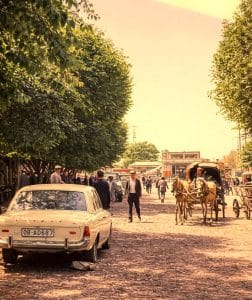
A view of Iğdır city center in the 1970s 75 percent of Azerbaijani votes in the district went to the MHP, while the remaining 25 percent were distributed between the AP and CHP… It was observed that the extreme right dominated in two large neighborhoods of the district, such as Söğütlü and Iğdırmava, while illegal left-wing groups and tribes were in the majority in Baharlı Neighborhood (today 14 Kasım Neighborhood. Mücahit) and some parts of Doğu Beyazıt Street. According to the CHP and the left outside it, "the MHP's obtaining the vast majority of votes in the district stemmed from the structure of the MHP Mayor of the district, Hüseyin Akbulut." It was stated that the mayor, who was from the Azerbaijani majority in the district, was also one of the religious leaders of this community, called "Seydi." Hüseyin Akbulut was elected mayor in 1965 by running for the AP, then moved to the Democratic Party, and in 1973 to the MHP. Whichever party the mayor joined, Azerbaijani votes shifted to that party. THE TWO ETHNIC COMMUNITIES ARE DRIVEN APART The estrangement between the two ethnic communities in Iğdır coincided with 1978... After the killing of the extreme right-wing Ali Aras in June 1978, the first tension began between Azerbaijanis and Ethnic Tribes. After this incident, rumors such as "Ethnic tribes will raid our homes" and "Azerbaijanis will attack our neighborhood" circulated between the two communities, further fueling the tension. August 5, 1978, was the day when those who sowed the seeds of enmity in Iğdır reaped their fruits. The incident, which followed days of tension, erupted like a storm in the district. Azerbaijanis and some groups from ethnic tribes engaged in a fierce armed conflict on NATO Road. Result: 3 dead… (Note: Şahin Akar also lost his life in this unfortunate incident that day. Mücahit)
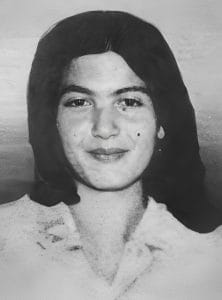
Idealist martyr Fatma Tuncer
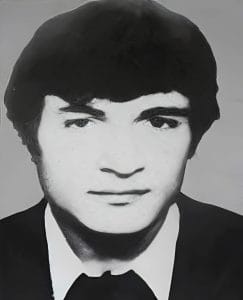
Idealist martyr Rahmi Akbulut
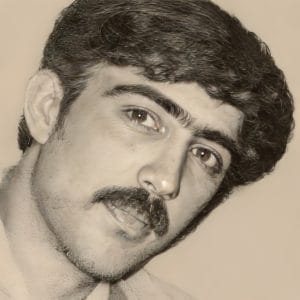
Revolutionary martyr Şahin Akar This bloody incident, which resulted in the deaths of right-wing Fatma Tuncer and Rahmi Akbulut, and left-wing Köroğlu Keser, further widened the gap between the two ethnic communities. After the incident, right-wing individuals named Mehmet Aras, Ahmet Aras, Gaffar Aras, Nizamettin Alagöz, and Zafer Öcal were apprehended and arrested. Three of those arrested were relatives of Ali Aras, an idealist who was killed in June… This incident opened a wound between the two communities, giving rise to resentment, and thus those who wanted to create incidents by exploiting the ethnic structure achieved their goals. From then on, killings continued with the "one from you," "one from us" method. SHEIKH HÜSEYİN (BALAMİR) IS VERY TROUBLED Among the ethnic tribes in Iğdır, the Zilan, Burukan, and Celali tribes were the most important in terms of number and political influence. What was the approach of the ethnic tribes to the incidents, how did they evaluate what was happening in Iğdır?... We spoke with Sheikh Hüseyin Balamir about the problems of the tribes…
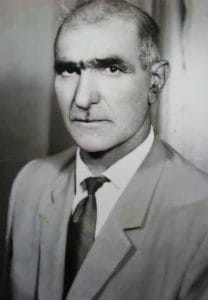
Sheikh Hüseyin Balamir, a well-known and beloved figure of Iğdır Sheikh Hüseyin Balamir, 67 years old, was one of the sheikhs of the Celali tribe. In his own words, he was "a CHP member by birth." He had married an Azerbaijani woman. Sheikh Hüseyin Balamir had 10 children and 5 grandchildren… In his speech, Sheikh Hüseyin emphasized "the pressure mostly exerted on the tribes" and said: "What is ethnic discrimination? As Turks, we have faced the infidel's bullets for exactly 700 years. They create division to intimidate and oppress us. Now they accuse us of being communists, traitors. If there were a war, my life would fall alongside yours. One of my sons is an electronics engineer in Germany. When I saw him off to Germany, I told him, 'Look, my son, you will not lose anything of your Turkishness in foreign lands, you will live as a Turk.' Here there are 9 villages named Elmagün, Karagüneş Caf, Aşağı Gevru, Yukarı Gevru, Korhan, Kavaktepe, Avdaluk, Şeyh Mirza. The distances between these villages vary between 20 and 30 kilometers. None of them have schools, water, or electricity. A 60-year-old woman carries water from 30 kilometers away. How sad it is that in the 20th century, drinking water is borrowed and lent in these villages. The youth of these villages learn Turkish when they go to the army. Water is supplied to the animal breeding farm on Mount Ağrı, which causes 30-40 million liras of damage to the country every year, but water is not given to the villages. Our people are not even as valuable as animals in the eyes of the state. And then they call us Kurds, they call us Communists, they intimidate us, they create division… Although all these 9 villages are separate villages, to make it seem as if the water and electricity issues have been resolved, they were turned into neighborhoods and connected to Suveren village. This is the understanding of service shown to our village." This ethnic division in the district was also reflected in political parties, which took their places within the communities according to their own understandings. The political parties' view of the incidents was no different from our impressions in other provinces… AP DISTRICT CHAIRMAN: THE RIGHT DOMINATES THE DISTRICT, THE LEFT CAUSES TERROR According to Atalay Sever, the AP District Chairman, who owned the Hudut Posta Newspaper published in Iğdır, "the people of Iğdır could not enter Doğubayazıt or Kars, and despite the dominance of the extreme right in the district, the left-wing was causing terror."
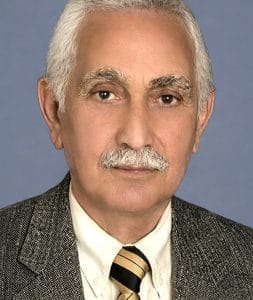
Justice Party (AP) District Chairman Atalay Sever Atalay Sever described Iğdır as follows: "The right dominates here, we do not make ethnic distinctions. But there are also some separatists. In the district, MHP youth force their fathers and mothers to vote for the MHP, their influence comes from this. Not long ago, 5-10 years ago, there was no ethnic division in Iğdır. But today, many people from Iğdır migrate to big cities. People do not want incidents; it's as if there is a curfew, people go home after 5-6 PM and do not go out. Iğdır has been without a doctor for years. A general practitioner came from Aralık district, but he couldn't stand seeing 100-200 patients every day and resigned. Since we cannot go to Kars, we should be connected to Erzurum; we cannot get anything done in Kars." MSP DISTRICT CHAIRMAN: THE GOVERNMENT SHOULD REMAIN WITHOUT MAKING CONCESSIONS TO THE MHP According to MSP District Chairman Vahap Akar, "MHP police officers were protected in the district, idealists were collecting money and getting involved in incidents."
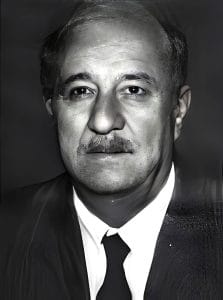
National Salvation Party (MSP) District Chairman Vahap Akar Vahap Akar stated that there were authority vacuums of the state in the district and spoke as follows: "We are pleased that the current government remains, but it should remain without making too many concessions to the MHP. The MHP has a weight in the district based on racist zeal. They are arming and organizing. If the government does not assert its authority in Iğdır, no one will go to the polls because of the extreme rightists. Since there is martial law, incidents are usually individual. The left also has ruthless activities to destroy the regime. The MSP is not involved in incidents. The people are saddened by the state's authority vacuums and its failure to act neutrally in incidents. If there are neutral administrators and laws are applied fairly, everything will be resolved." MHP MEMBERS: HAPPINESS CANNOT BE BUILT ON CORPSES Since the mayor was out of the district, we discussed the situation in Iğdır with MHP members and "idealist" youth in the MHP district organization. MHP members and extreme right-wing youth claimed that "the left wants to start a civil war in Turkey" and spoke as follows: "We, as MHP members, have never supported anarchy. In our opinion, happiness cannot be built on corpses. In Turkey, some people from the right also get involved in killings. We can explain this with the saying, 'A cornered cat scratches.' Idealists are also drawn into anarchy due to the resentment and self-defense caused by the attacks of extreme left organizations on the MHP. We see what the left does as the destruction of the state. For this reason, we do not support anarchy." WHY IS THE MHP EFFECTIVE ACCORDING TO THE CHP? CHP District Chairman Mecit Hun explained the political structure in the district and the reasons for the MHP's effectiveness as follows:
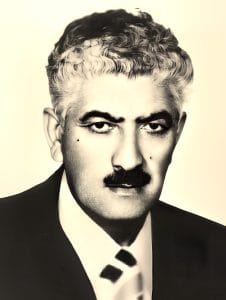
CHP District Chairman Mecit Hun "There is an economic conflict between Azerbaijanis and ethnic tribes in the district. Small industry and trade in the district center are in the hands of Azerbaijanis. Ethnic tribes, on the other hand, generally live in mountain villages and engage in animal husbandry. Given this situation, the Azerbaijani segment has shown great social and cultural development. The tribes, however, are deprived of all state services. When economic power is combined with the state, a conflict naturally arises. Those who hold political power pursue votes by creating an atmosphere of hostility, whipping up the chauvinistic feelings of the people. The MHP is the most suitable party for them in terms of chauvinism. The illegal left is very weak in the district. The CHP can establish dialogue with illegal organizations through democratic means within the framework of its own program. Idealists have liberated zones. Iğdırmava Neighborhood is one of them. I, as the CHP District Chairman, cannot enter here, let alone the illegal left. This also constitutes half of the district. In our opinion, governments taking sides and pursuing incidents further increase problems and drag the country into a civil war. In our view, the solution is a government formed by the CHP and AP, provided that state cadres are purged of extreme right-wing activists. Today, we are living in days when an incident is expected at any moment in the district. Whether the CHP comes or the AP comes, the fate of the easterner does not change. The state's attitude towards the east is very different. Everything is given a floor price, but animals are not given a real floor price. A new disaster, along with drought, awaits these regions. If animal husbandry in the east is not addressed, social explosions are normal." “WE WANT TO BE CONNECTED TO ERZURUM” The approach of Mayor Hüseyin Akbulut, one of the influential figures of Azerbaijanis and the MHP in Iğdır, was different.
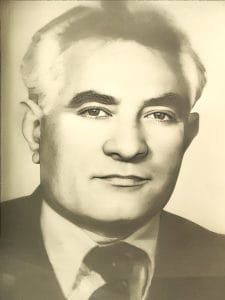
Iğdır Mayor Hüseyin Akbulut Akbulut said, "The people of Iğdır wish to be a district of Erzurum," and continued: "The MHP dominates in Iğdır; this is vote dominance. However, left-wing militants dominate in some neighborhoods and streets. Those who create division in the district are those who want to exploit this structure of society. The MHP does not engage in racism. There are many families from ethnic tribes within the MHP; our party has crowned them. Those who want to divide the nation cannot be nationalists. Today, there are no incidents in our district, nor is there state terror. Incidents here happen in a hit-and-run manner. Mobile left-wing militants come from Kars, Karaköse (Ağrı), Tunceli, Diyarbakır, and Diyadin, hit, and run. These are games played with the support of international communism. The target is the regime, the state. There is no such thing as a right-wing militant here; there is a nationalist sentiment. When left-wing militants withdraw, right-wingers do not cause incidents. Slogans like 'Rizi peshmerga (the correct form is Bîjî Peşmerge, meaning Long Live Peshmerga. Mücahit), meaning Kurdish fighters are coming,' are written on walls. The people do not participate in the militants' incidents; it would be unfair to accuse all of them. Today, propaganda of communist countries is being carried out here. Social and economic difficulties and Atatürk are being exploited to the fullest. They distributed a leaflet here, with a poetic text on it: 'If I have a son, Give him a life-filled Mauser Let him write the letters of freedom with bullets.' Can a weapon be life-filled, how will they write freedom with bullets, one needs to think about these things… We go to Russia with a passport, but we cannot go to Kars."