Baku in 1918: The Republic and the Commune
This article explores the dual political projects of 1918 Baku: the Azerbaijani Democratic Republic and the Baku Commune, highlighting their contrasting ideologies and historical significance.

Dear Readers,
May 28, 2026, marked the anniversary of the founding of the Azerbaijani Democratic Republic. Exactly 108 years ago, on May 28, 1918, the Azerbaijani National Council, meeting in Tiflis (Tbilisi), adopted the Declaration of Independence, one of the most important political documents in the history of the South Caucasus, and declared Azerbaijan's independence.
This declaration was not merely the birth of a new state. It was also a historical answer to the question of which political direction the South Caucasus would take in the great power vacuum that emerged with the collapse of Tsarist Russia. On one side, there was post-imperial uncertainty, war, migration, ethnic conflict, and oil competition; on the other, there was the quest to establish a modern, parliamentary, secular, and national state.
The establishment of the Azerbaijani Democratic Republic therefore holds a special place not only in the history of Azerbaijan but also in the history of the entire Caucasus, the post-Ottoman world, the Russian Revolution, and Muslim societies. This is because the republic founded in 1918 became one of the first major political experiments to implement the idea of parliamentary democracy in the Muslim East.
However, when this republic was declared in Tiflis, Baku, the most important city in Azerbaijan, was not under its control. Baku was then under the control of a completely different political experiment, the Baku Commune. Thus, 1918 became a pivotal year in Azerbaijani history, where two distinct projects simultaneously emerged: the national-parliamentary republic declared in Tiflis and organized in Ganja, and the revolutionary commune that arose in Baku under the shadow of oil workers, Bolsheviks, socialists, and Armenian-Dashnak military elements.
These two structures did not merely represent two different forms of governance. They also represented two different historical visions for the future of the South Caucasus. One was based on the idea of nation, parliament, independence, and state; the other emerged with claims of class, soviet, revolution, and internationalism. To understand Baku in 1918 and the founding of the Azerbaijani Republic, one must see how these two projects confronted each other within the same historical vacuum.
The collapse of Tsarist Russia with the 1917 Revolution created a large administrative and military vacuum in the South Caucasus. Tiflis was one of the most important political centers in the Caucasus at that time. Georgian, Armenian, and Muslim-Turk representatives initially tried to act together under the umbrella of the Transcaucasian Democratic Federative Republic. However, the burden of war, the Ottoman advance, the Bolshevik power in Russia, ethnic tensions, and regional conflicts of interest did not allow this federative structure to survive for long.
On May 26, 1918, Georgia declared its independence. The Transcaucasian Federation effectively dissolved. A day later, on May 27, Muslim representatives in Tiflis formed the Azerbaijani National Council. On May 28, 1918, Azerbaijan's independence was declared. Therefore, the birthplace of the Azerbaijani Democratic Republic is Tiflis, not Baku.
This situation may seem surprising at first glance. Because when modern Azerbaijan is mentioned, the first city that comes to mind is Baku. However, in the spring of 1918, Baku was not the center of the Azerbaijani national movement, but an oil metropolis controlled by the Bolsheviks and forces acting in de facto alliance with them. The newly established republic did not possess Baku, which it considered its historical capital. Therefore, the early period of the Azerbaijani Republic is, in a way, the struggle of a state born without a capital to reach its center.
On June 16, 1918, the Azerbaijani National Council and government moved from Tiflis to Ganja. Ganja became the temporary center of the republic during this period. Here, state institutions began to be established, an army was formed, administrative structures were built, and political-military preparations were made for the capture of Baku. The independence declared in Tiflis transformed into state-building in Ganja.
The Ganja period was an extremely critical time for the Azerbaijani Republic. Because the new state still had a limited regular army, established bureaucracy, international recognition, and financial resources. Despite this, the founding cadres did not abandon the idea of a modern state. Mehmed Emin Rasulzade, Fatali Khan Khoyski, Nasib Bey Yusifbeyli, Alimardan Bey Topchubashov, and other intellectual-politicians did not merely try to form a crisis government; they also tried to build a new political identity.
At the center of this political identity were independence, law, representation, parliamentary order, and modernization. In its declaration of establishment, the Azerbaijani Democratic Republic declared that all citizens had equal rights regardless of religion, sect, class, gender, or nationality. This was an extremely progressive approach considering the conditions of 1918.
However, at the same time, a completely different political process was unfolding in Baku.
At the beginning of the 20th century, Baku was not just a city; it was the heart of the oil age in the Caucasus. Baku oil was a strategic resource that attracted the attention of the Russian Empire, European financial circles, the Ottoman Empire, Britain, the Bolsheviks, and local political movements. Oil, while enriching the city, also turned it into an arena of competition for great powers.
In 1918, the political balance of power in Baku was extremely complex. The city was home to Russian workers, an Armenian population, Muslim-Turk people, Jews, Iranian workers, Bolsheviks, Mensheviks, Socialist Revolutionaries, Dashnaks, and Musavatists. This multi-layered structure quickly became explosive under the conditions of war and revolution.
The Baku Commune emerged in this environment. The Bolshevik-dominated administration, led by Stepan Shaumyan, tried to establish Soviet power in Baku. The name of the Commune evoked the revolutionary legacy of the 1871 Paris Commune. However, it is not accurate to see the Baku Commune as a simple repetition of the Paris Commune.
The Paris Commune was the experience of a defeated France, a besieged Paris, and an urban populace rebelling against the central state. The Baku Commune, on the other hand, was born within the Russian Revolution, the nationalities question in the Caucasus, the oil economy, and wartime conditions. While in Paris, urban autonomy, republicanism, and class rebellion came to the fore; in Baku, the Bolshevik power strategy, the oil industry, Armenian-Dashnak military support, and the security concerns of the Muslim-Turk population were intertwined.
Therefore, the Baku Commune was both a revolutionary city administration and a war government at the center of ethnic-political tensions. Soviet historiography glorified it as a heroic experience of the working class. In the Azerbaijani national memory, however, the Baku Commune became the name of a deep trauma, especially due to the events of March 1918.
The March Days, which occurred between March 30 and April 2, 1918, are the most important event defining the historical image of the Baku Commune. During these days, Bolshevik forces and Armenian-Dashnak armed elements engaged in bloody clashes with Musavat circles and the Muslim-Turk population. The clashes quickly went beyond a political reckoning, leading to widespread massacres targeting the Muslim-Turk population. Different sources provide different figures for the death toll; however, it is undisputed that the events caused great devastation for the Muslim-Turk community in Baku.
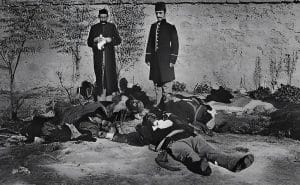
The March Days cannot be seen merely as a local conflict. This event was a turning point in the South Caucasus where class struggle, revolution, nationalism, and ethnic security fears became inseparable. While the Bolsheviks interpreted the events as a struggle against the counter-revolutionary Musavat threat; the Azerbaijani national narrative remembered this process as a great massacre committed against Azerbaijani Turks. Historical truth can be grasped not by simply choosing one of these two narratives, but by understanding the multi-layered environment of violence of the period.
The existence of the Baku Commune was an existential problem for the Azerbaijani Democratic Republic. Because the republic could not be conceived without Baku. Baku was indispensable not only because of its oil wealth but also because of its political and symbolic significance. An Azerbaijani Republic without Baku meant a state alienated from its own heart.
The Azerbaijani government in Ganja therefore made the capture of Baku one of its primary objectives. The support of the Ottoman Empire was decisive in this process. The Caucasian Army of Islam, commanded by Nuri Pasha, advanced towards Baku together with Azerbaijani forces. This advance was not merely a military operation; it also meant the end of the Baku Commune and Bolshevik-Dashnak dominance.
The Baku Commune, on the other hand, faced increasing difficulties in the face of this advance. Serious divisions emerged in the city between the Bolsheviks and other socialist and Armenian political elements over the issue of British aid. The Bolsheviks were against cooperation with the British, whom they considered imperialists. The Mensheviks, Dashnaks, and some right-wing socialist elements, however, considered British support necessary against the Ottoman-Azerbaijani advance.
This division led to the end of the Baku Commune. On July 26, 1918, the Baku Commune was overthrown. A new administration, called the Centrocaspian Dictatorship, which was more open to British support, took its place. Thus, the Bolshevik Commune experiment in Baku effectively ended. But the struggle over the city did not.
On September 15, 1918, the Caucasian Army of Islam and Azerbaijani forces entered Baku. This date is extremely important for the Azerbaijani Republic. Because with this date, Baku came under the de facto control of the new republic. On September 17, 1918, the Azerbaijani government moved from Ganja to Baku. Thus, the republic declared in Tiflis and organized in Ganja finally gained its true capital identity in Baku.
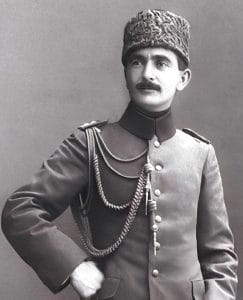
The most accurate sentence summarizing this process is: The Azerbaijani Republic was born in Tiflis, learned to stand on its feet in Ganja, and finally reached its historical center in Baku.
However, the capture of Baku did not completely end the tensions in the city. War, revenge, ethnic fear, and political reckonings continued. The change of hands in Baku also led to new waves of violence in the opposite direction of the trauma created by the March Days. Therefore, reading Baku in 1918 with a one-sided narrative of heroism or one-sided victimhood narrows historical reality. Baku, that year, was a city of both revolution and counter-revolution, of both national state and post-imperial chaos, of both oil wealth and mass violence.
One of the most remembered events in history after the collapse of the Baku Commune is the fate of the 26 Baku Commissars. This event was glorified in Soviet historiography as a symbol of revolutionary sacrifice and martyrdom; in Azerbaijani national memory, it was considered part of the controversial legacy of the Baku Commune linked to the events of March 1918.
The 26 Baku Commissars consisted of Bolshevik and Left Socialist Revolutionary cadres of the Baku Commune. This cadre did not belong to a single ethnic group. Among them were Armenians, Azerbaijani Turks, Georgians, Russians, Jews, Latvians, and revolutionaries from other nations. This multi-ethnic structure shows that Baku at that time was a crossroads not only for Azerbaijan but for the entire Caucasus, the legacy of the Russian Empire, and the oil age.
The most well-known name among the commissars was Stepan Shaumyan. Shaumyan, an ethnic Armenian Bolshevik, was the most powerful political figure of the Baku Commune. Alongside him were names like Azerbaijani Turk Mashadi Azizbeyov and Mir Hasan Vezirov. Also in this cadre were Prokopi Japaridze, Ivan Fioletov, Grigori Korganov, Yakov Zevin, Arsen Amiryan, Bagdasar Avakyan, and other revolutionaries. This list reflects the internationalist claim of the Baku Commune and the complex social structure of Baku.
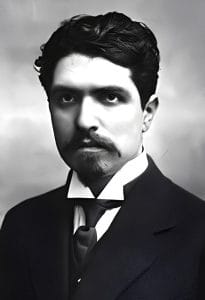
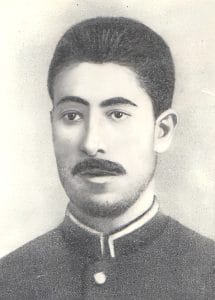
However, this multi-ethnic revolutionary cadre was not enough to resolve the nationalities question in Baku. On the contrary, the Commune's military foundations, especially its de facto alliance with Armenian-Dashnak armed elements during the March 1918 events, left a deep distrust and trauma in the memory of the Muslim-Turk population. For this reason, while the 26 Baku Commissars were glorified as revolutionary martyrs in Soviet historiography, they held a much more controversial place in Azerbaijani national memory.
On July 26, 1918, the Baku Commune was overthrown. In its place, the Centrocaspian Dictatorship, influenced by Menshevik, Right Socialist Revolutionary, and Dashnak elements, was established. The Commune cadres initially tried to leave Baku but were caught and imprisoned. In September 1918, as Ottoman-Azerbaijani forces approached Baku, the balance of power in the city shifted again. The commissars, released from prison with the intervention of Red Army units, wanted to go to Astrakhan via the Caspian Sea. However, the ship they boarded headed for Krasnovodsk.
In Krasnovodsk, they were re-arrested by Trans-Caspian authorities. On the night of September 20, 1918, they were executed by firing squad in present-day Turkmenistan, near Krasnovodsk, between the Pereval and Akhcha-Kuyma stations. The role of British intelligence and the Trans-Caspian administration in this execution has long been debated. The Soviet narrative presented this event as a murder committed by imperialists and counter-revolutionaries against revolutionary cadres. Throughout the Soviet Union, the 26 Baku Commissars were made symbols of revolutionary sacrifice with monuments, paintings, books, and ceremonies.
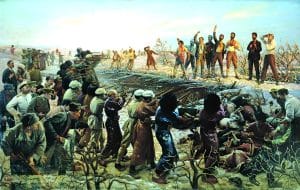
However, after the collapse of the Soviet Union, this memory changed significantly. In Azerbaijan, the 26 Baku Commissars began to be seen not only as revolutionary martyrs but also as controversial figures debated in connection with the bloody events of March 1918 and the oppressive legacy of the Baku Commune on the Muslim-Turk population. Thus, the same individuals acquired two different meanings in two separate historical memories: victims of the revolution in Soviet memory, and representatives of a controversial commune power in Azerbaijani national memory.
Therefore, the issue of the 26 Baku Commissars is not just a story of an execution. It shows how Baku in 1918 became an arena for a war of memory. On one side, the idea of internationalist revolution, on the other, the quest for a national state; on one side, class politics, on the other, ethnic security concerns; on one side, the Soviet narrative of martyrdom, on the other, Azerbaijan's trauma of March 1918. The historical significance of the 26 Baku Commissars lies precisely here.
After moving to Baku, the Azerbaijani Democratic Republic accelerated its efforts to establish modern state institutions. On December 7, 1918, the Azerbaijani Parliament was opened. This parliament was based on the idea of multi-party and multi-ethnic representation. In addition to Azerbaijani Turks, Armenians, Russians, Jews, Germans, and other communities were also intended to be represented. In this respect, the republic was not only a national state but also an attempt to establish a constitutional and parliamentary order in a multi-ethnic geography.
One of the most striking features of the republic was its granting of political rights to women. The Azerbaijani Democratic Republic became one of the early examples to grant women the right to vote and be elected. This decision was a major step not only for Azerbaijani history but also for the history of Muslim societies. The acceptance of women's political citizenship rights in the conditions of 1918 clearly demonstrated the modernizing character of the new republic.
Another important aspect of the republic was its secular understanding of the state. Azerbaijani society was largely a Muslim society; however, the founding cadres of the new state did not make religious identity the sole determinant of the political regime. Law, education, parliament, and state administration were attempted to be built through modern institutions. Therefore, the Azerbaijani Democratic Republic can be considered one of the early examples of a secular-parliamentary state model in a Muslim-majority society.
The language issue also held an important place in the republic's identity construction. The term used for the state language at that time was not today's "Azerbaijani language" but "Turkish language" in most documents. This was directly linked to the political and cultural atmosphere of the period. Azerbaijani intellectuals saw themselves connected to the broader Turkic world, while also trying to establish a local Azerbaijani identity under the umbrella of a modern state. Later, during the Soviet era, the language designation would change, and the concept of "Azerbaijani language" would become more prominent.
Significant steps were also taken in the field of education. The establishment of Baku State University became one of the most lasting legacies of the republic. The young state did not only want to establish a military and administrative apparatus; it also aimed to raise a modern generation of intellectuals. This shows that despite its short life, the republic carried a long-term civilization project.
However, despite all these progressive features, the Azerbaijani Democratic Republic lived under very difficult conditions. There were serious conflicts with Armenia over regions such as Karabakh, Zangezur, and Nakhchivan. Border issues with Georgia, historical ties with Iran, the defeat of the Ottoman Empire, the arrival of the British in Baku, the civil war in Russia, and the renewed focus of the Bolsheviks on the Caucasus narrowed the young republic's room for maneuver.
The greatest weakness of the republic was that it did not have time to complete its institutionalization. The state was established, parliament was opened, governments were formed, an army was attempted to be built, and diplomacy was conducted; but all this was done amidst war and great power competition. While the new republic was making modernization moves, it was also struggling to preserve its existence.
At this point, it is necessary to look specifically at Mehmed Emin Rasulzade, one of the founding leaders of the Azerbaijani Democratic Republic. Because Rasulzade's life is the story not only of the republic founded in 1918 but also of the idea of Azerbaijani independence kept alive in exile after the collapse of this republic.
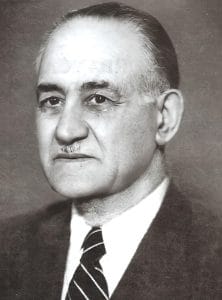
Mehmed Emin Rasulzade was the chairman of the Azerbaijani National Council and one of the most powerful thinkers of the Azerbaijani national idea. With his identity as a journalist, intellectual, politician, and organizer, he was at the center of 20th-century Azerbaijani history. The saying attributed to him, "The flag once raised will never fall," became not just a political slogan but the most intense expression of the idea of Azerbaijani independence.
Rasulzade's life carries all the great ruptures of the Caucasus. In his youth, he grew up in the revolutionary and intellectual atmosphere of Baku. He came into contact with Russian social democratic circles, the Hummat movement, the Iranian Constitutional Revolution, and Turkist-modernist ideas. He also met young Stalin during these periods. Later accounts state that Rasulzade saved Stalin from danger several times in his youth. This old acquaintance would be the most important factor in saving Rasulzade's life in 1920.
In April 1920, the Red Army entered Baku, and the Azerbaijani Democratic Republic came to an end. Rasulzade hid for a while; but in August 1920, he was caught and brought to Baku. Under normal circumstances, as the founding leader of the old republic, it was highly probable that he would be executed by the new Soviet government. However, when Stalin came to Baku, he intervened for Rasulzade's release. Rasulzade was released from prison and taken to Moscow.
During his years in Moscow, Rasulzade was associated with some duties around the People's Commissariat for Nationalities. He also taught Turkish and Persian at oriental studies institutions in Moscow. Although some accounts mistakenly refer to the institution as Leningrad or the University of the Peoples of the East, reliable biographical sources state that he taught at the Moscow Institute of Oriental Studies. This detail is important because it shows that Rasulzade did not truly reconcile with the Soviet regime but went through a compulsory interim period to survive and bide his time.
He then traveled to Finland via Petrograd and from there reached Turkey. His arrival in Turkey marked the beginning of a new period of exile in Rasulzade's life. In Istanbul, he published works explaining the cause of Azerbaijani independence, tried to organize the Azerbaijani political emigration, and kept the foreign center of the Musavat movement alive. The publications he produced in Istanbul in the 1920s became the most important propaganda tools of the anti-Soviet Azerbaijani national movement.
However, Turkish-Soviet relations gradually narrowed Rasulzade's scope of activity in Turkey. In the early 1930s, secret agreements were formed between the Soviet Union and Turkey to limit mutual propaganda activities. In this atmosphere, Rasulzade was forced to leave Turkey in 1931.
Explaining this removal solely by the Ağrı (Ararat) Rebellion would be incomplete; however, during the years of the Ağrı Rebellion, the Soviet Union's support to Turkey on security and border issues contributed to Ankara's more distant approach to anti-Soviet Caucasian emigrant organizations. Therefore, Rasulzade's departure from Turkey should be evaluated within the context of Turkish-Soviet rapprochement, border security, anti-Soviet propaganda, Caucasian emigration, and the regional security calculations of the Ağrı Rebellion years.
Rasulzade later lived in Poland, Germany, and other European countries. In the 1930s, he was involved in the Prometheus movement. This movement was a political emigration network that tried to bring the independence causes of non-Russian nations within the Soviet Union to the attention of European public opinion. During this period, Rasulzade addressed the Azerbaijani issue not only as a local independence problem but as a common issue of the captive nations within the Soviet empire.
During World War II, Rasulzade's life entered an even more complex period. Nazi Germany sought to form various legions from Muslim, Turkic, and Caucasian soldiers captured in the war against the Soviet Union. The Azerbaijani Legion emerged within this framework. German authorities contacted the anti-Soviet Azerbaijani political emigration and Rasulzade's circle.
However, Rasulzade's fundamental condition was the recognition of Azerbaijan's independence. Nazi Germany, however, was unwilling to accept these demands as a genuine independence program. Therefore, Rasulzade's relations with Germany cannot be described as a simple story of cooperation. He advocated for an independent Azerbaijan freed from Soviet yoke; Nazi Germany, on the other hand, wanted to use the Caucasian peoples more as military and propaganda elements against the Soviet Union.
Some accounts state that Hitler personally met with Rasulzade, that Rasulzade's speech to the legionaries composed of Azerbaijani Turks disturbed the German administration, and that he was subsequently forced to leave Germany. A more robust statement is this: Rasulzade did not compromise with Nazi Germany's stance of not openly recognizing Azerbaijan's independence and, during the war years, left Germany to live in countries like Romania for a period.
After World War II, Rasulzade returned to Turkey. From 1947 onwards, he carried out activities around the Azerbaijani national center in Ankara. In 1949, he spearheaded the establishment of the Azerbaijani Cultural Association. In 1952, he began publishing the magazine "Azerbaijan." His last years in Turkey were those of an exiled intellectual, a bearer of memory, and a thinker who tried to pass on the cause of independence to future generations, rather than a statesman.
Mehmed Emin Rasulzade passed away in Ankara on March 6, 1955. His grave is in Ankara. His life is the story of a republic declared in Tiflis, an independence lost in Baku, and a national memory kept alive in exile. Rasulzade is not only the founder of the Azerbaijani Democratic Republic but also one of the most important figures who kept the idea of independent Azerbaijan alive in the Soviet era.
With the entry of the Red Army into Baku in April 1920, the Azerbaijani Democratic Republic came to an end. On April 28, 1920, the Azerbaijani Soviet Socialist Republic was declared. Thus, the independence experiment that began in Tiflis on May 28, 1918, was interrupted by Soviet rule approximately 23 months later.
However, this short lifespan does not diminish the historical importance of the Azerbaijani Democratic Republic. On the contrary, it enhances its value. Because the steps taken in the fields of parliamentary democracy, women's rights, secular state, multi-ethnic representation, modern education, and diplomacy in such a short period of 23 months show that the republic was not merely a temporary wartime government. It was a strong expression of the idea of a modern state in the South Caucasus.
Looking back from today, the year 1918 tells us not only the history of Azerbaijan's independence. It also shows how societies tried to rebuild themselves under what political forms in an era when empires collapsed. The declaration in Tiflis, the organization in Ganja, the rise and fall of the Baku Commune, the execution of the 26 Baku Commissars, Baku becoming the capital, Rasulzade's life in exile, and finally the end of the republic by the Soviets are interconnected scenes of the same great historical drama.
This is the main point to remember on the 108th anniversary of the founding of the Azerbaijani Democratic Republic: This republic is not merely a short-lived state that remained in the past. It is an early and courageous experiment of modern political reason, parliamentary will, women's rights, the idea of a secular state, and the ideal of national independence in the South Caucasus.
Therefore, May 28 is not just a founding day. It is also a symbol of a will to statehood extending from Tiflis to Ganja, and from Ganja to Baku, and an effort to build a new future on the ruins of an empire. Mehmed Emin Rasulzade's life completes another dimension of this symbol: The state can be destroyed, the capital can be lost, leaders can go into exile; but the idea of independence embedded in the memory of a nation can revive when the opportune historical moment arrives.
Sincerely, Mücahit Özden Hun