Ayşe Şan, Where Are You?
This article recounts the life and struggles of the renowned Kurdish singer Ayşe Şan through personal anecdotes from those who knew her, highlighting her artistic journey and the challenges she faced.
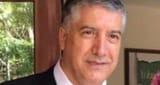
DEAR READERS:
Today (December 21), three friends and I met at Elizinn Patisserie on Tunalı Hilmi Street. I had met my brother Asım Keser at the International Symposium on the Archaeological Traces of Noah's Flood on Mount Ararat, held in Doğubayazıt on May 5-7, 2022. I had the chance to meet Brother Şafak Seyfettin Karakoç at the wedding of my brother Asım Keser's son, Sezer Numan, on December 17, 2022.
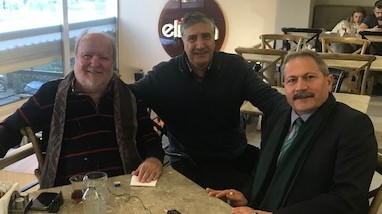
From left to right: Şafak Seyfettin Karakoç, Mücahit Özden Hun, Asım Keser
Şafak Seyfettin Karakoç was born in Bismil on January 28, 1949. Like me, he is a graduate of Kabataş Erkek Lisesi (Kabataş High School for Boys). Perhaps the magic that binds us is rooted in attending the same boarding school, sleeping in the same bunk beds, studying in the same classrooms, and perhaps even being taught by the same teachers. A difficult-to-understand, secret sense of solidarity and unity has always existed among Kabataş Erkek Lisesi graduates.
As soon as our conversation began, I realized that Brother Şafak Seyfettin Karakoç was a great and unique individual, far beyond the typical human archetype. I would like to share the "Ayşe Şan" anecdote from Brother Şafak, which deeply moved me. First, I present a brief introduction to Ayşe Şan:
WHO IS AYŞE ŞAN?
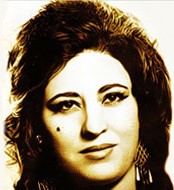
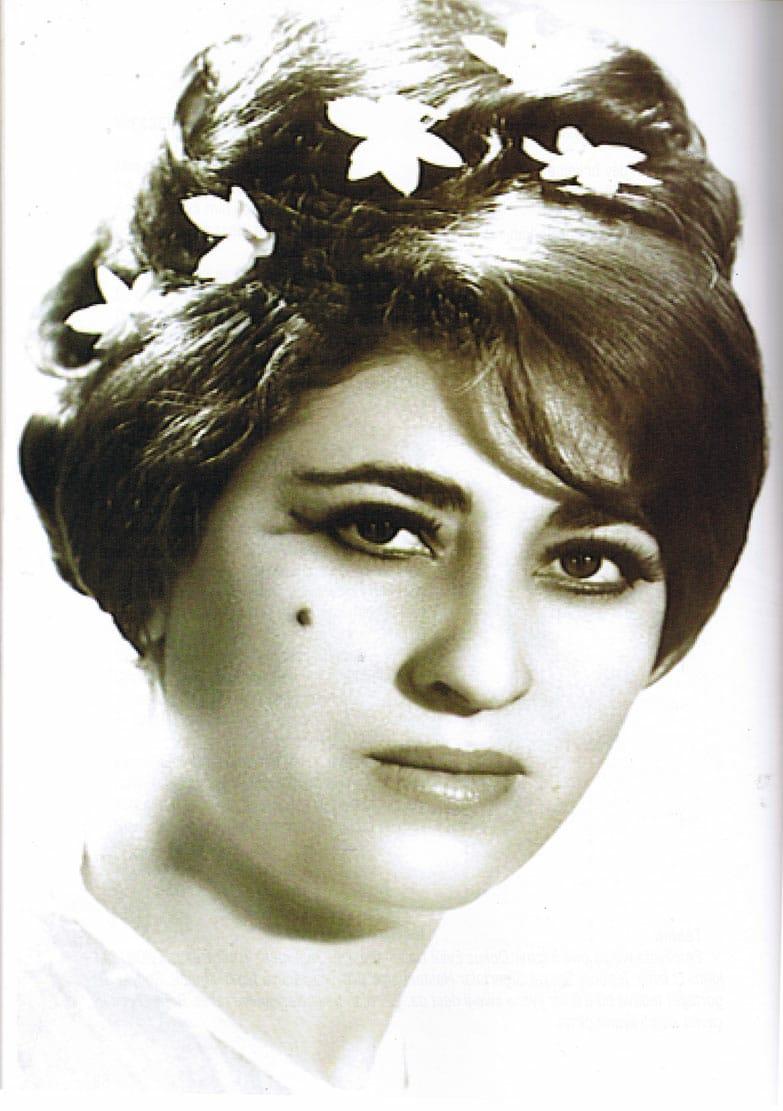
Ayşe Şan is a famous Kurdish female dengbêj (singer). She was born in Diyarbakır in 1938. She is known by the pseudonyms Eyşana Kurd, Eyşe Xan, Eyşana Elî. Her father was also a well-known dengbêj. Ayşe Şan worked at the radio, gave concerts, and recorded cassettes, singing in both Turkish and Kurdish.
Due to her family's opposition and pressure, she left Diyarbakır. Since Kurdish was forbidden, she only sang Turkish songs on the radio. In 1963, due to economic difficulties, she immigrated to Istanbul, where she gave concerts in Kurdish and Turkish. She went to Germany. As a mother of three, she returned to Istanbul. When she received threats, she went to Baghdad in 1979. She sang at the Voice of Baghdad Radio under the pseudonym Eyşana Elî.
Ayşe Şan died of cancer in İzmir on December 18, 1996. She lived alone. She wished to be buried in her hometown, but this wish was not fulfilled.
***
Now, I hand the floor to Brother Şafak Seyfettin Karakoç:
BISMIL
I was born in Bismil. I was 10 years old. My father, Şeyhmus Karakoç, was the Mayor of Bismil in those years.
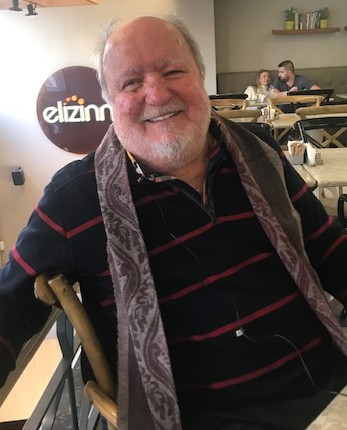
One summer day, a troupe (theater group) came to Bismil. The entertainment group included a belly dancer, a magician, 2-3 folk singers, and an artist named Ayşe Şan. I was already familiar with a folk song performed by Ayşe Şan. I had listened to this song countless times on Brother Ramazan's wind-up record player (since Kurdish was forbidden, we naturally had no chance to listen to Ayşe Şan on the radio).
The lyrics of the song were as follows:
Sallana, sallana neçe ser avê (Don't go to the water swaying, swaying)
Yıkamış esfabın raxe ber tavê (You've washed your clothes, spread them in the sun)
Sallana, sallana neçe ser avê (Don't go to the water swaying, swaying)
Yıkamış esfabın raxe ber tavê (You've washed your clothes, spread them in the sun)
Ayşe Şan's printed portrait was hung on poles in the town center. My friends and I, curious, went to the coffeehouse where the program was to be held. We hoped to catch a glimpse of Ayşe Şan, even if just for a moment.
The program was about to start, but there was a problem: the coffeehouse had no electricity! In those years, only the Soil Products Office (TMO) had a generator. After 7-8 PM, the Municipality and TMO would cooperatively supply electricity to the district. However, the entertainment program needed to start earlier.
There was only one solution: the Mayor would order it, and the Soil Products Office would activate the generator. I decided to go to my father and ask for a favor. Of course, I couldn't say, "Dad, I'm curious about Ayşe Şan. Can you get the electricity connected?" I had to resort to a lie. There were people in the district whom my father respected. I turned this into an opportunity. I went before my father and said, "Uncle Mirdat, Brother İzzetin, and Clerk Sabri asked, they want to watch the entertainment program, but there's no electricity at the coffeehouse!"
My father hesitated. His religious side prevailed: "I don't want to get involved in the affairs of drunkards!" But he also didn't want to upset his friends. He picked up the phone, and the TMO's generator was activated. The lights of the district came on.
I returned to the coffeehouse. Since I was a 10-year-old child, they couldn't let me into the program. However, because I had arranged for the electricity, they seated me in the front row of the coffeehouse. In those years, the Gendarmerie was responsible for public order in the district. They didn't come to check or anything.
At the end of the concert, I had the opportunity to chat with Ayşe Şan for 5-10 minutes on my feet.
That's how my first encounter with Ayşe Şan happened. And years passed...
KABATAŞ ERKEK LİSESİ YEARS
I was a student at Kabataş Erkek Lisesi. We had a radio room upstairs. I would occasionally hang out there and do the assigned tasks. We had a limited radio broadcast just for students. We played songs from famous artists of the time like Yıldız Tezcan, Zeki Müren, and Gönül Yazar. Whenever a boarding student had a visitor, we would interrupt the music and announce their names.
In those years, the class schedule was until 1 PM on Saturdays. I had two shirts. Normally, the shirts were nylon. Their collars could be cleaned with a sponge. However, they had sent me two cotton shirts from Bismil. Their collars were starched. It was impossible to clean their dirty collars with a sponge. I had to have them washed and ironed at a laundry outside the school.
One Saturday afternoon, I took my shirts and left the high school. After walking a little, the fourth or fifth shop on the left was a laundry. When I entered, I froze: Ayşe Şan was standing in front of me. She was working as a laborer in the laundry.
"Sister Ayşe, do you recognize me?"
She looked. She looked.
"No! I don't."
I reminded her of our meeting in Bismil. She suddenly hugged me:
"Oh, my dear! Now I remember."
She cried.
"I can't give concerts anymore. Venues are being shut down because of me, concerts are canceled. Nobody wants to give me work. I do whatever job comes my way. I'm working here now. I don't know what will happen tomorrow."
I handed her my shirts. Before leaving, I promised:
"Sister, I'll bring you a lot of work."
Our high school principal was Adnan Dinçer. Mr. Sırrı was the Vice Principal. I went to Mr. Sırrı:
"Teacher, a relative of mine has opened a laundry in Ortaköy. If I put a bag in the dormitory, collect the dirty shirts, and take them to this laundry, would that be okay? Anyway, each shirt has the name and surname embroidered on it. There won't be any mix-ups. I'll pick up the shirts one Saturday and bring them back a week later. My relative will also earn some money."
"No problem for me! How will you announce this to the students?"
"Don't worry! That's my job."
I informed the students by making an announcement. Every Saturday, I would take 40-50 dirty shirts I collected to Ayşe Şan, and a week later, I would bring them back washed, starched, and ironed.
One day, when I went to the laundry, I didn't see Ayşe Şan. She wasn't working there anymore. I was saddened.
INDOOR SPORTS HALL
Time passed. I was still a student at Kabataş Erkek Lisesi. One day, I went to Taksim. While walking around, I saw concert posters pasted on poles. A program was announced at the indoor sports hall for the birthday anniversary of the famous pianist (who Islamicized the piano) Feyzi Aslangil. Ayşe Şan's name was also on the list of artists.
I desperately wanted to attend this program. I was a successful student. I thought I might get permission if I asked. Vice Principal Sırrı Bey was stern: "You'll go and drink alcohol! You'll come back late. You'll get involved in incidents. I cannot accept that!"
When I insisted, Mr. Sırrı softened: "Alright! Go, but I didn't see you."
There were familiar boatmen in Ortaköy. I made a deal with one of them. I rented a motorized boat.
Kabataş Erkek Lisesi is by the sea. As agreed, the motorized boat approached the high school at 7:30 PM. My friends and I piled in, first to Kabataş Pier, and from there we walked to the indoor sports hall.
When we entered the hall, the program had just begun. My friends and I cheered, "Ayşe Şan! Ayşe Şan!" so loudly that everyone looked at us. Those who didn't know Ayşe Şan got to know her that way. Ayşe Şan was pleased with the attention and waved to us. This was the last time I saw Ayşe Şan. After the program, we returned to school following the same route.
And years passed...
RESERVE OFFICER SERVICE
I was doing my military service (1978). I drew Kahramanmaraş in the reserve officer lottery. There were many nightclubs in Kahramanmaraş named Tüzün, Paris, Köşk, Pehlivan. While touring the city, what did I see: Ayşe Şan was working in the casinos in Kahramanmaraş. I was serving as a Company Commander.
Most of the Narcotics and Morality police were from Diyarbakır. The morality police would tour the nightclubs and conduct inspections. A fellow townsman I liked was a morality police officer. He had fallen in love with Ayşe Şan. I would occasionally meet and chat with Ayşe Şan, who worked at Köşk Casino. Ayşe Şan complained about my townsman. She said he was in love with her and bothering her. On such days, I would console her:
"Sister Ayşe, don't worry! It's a temporary love."
I warned my townsman:
"Leave Sister Ayşe alone!"
The company was outside Kahramanmaraş. One day, the guard at the gate said a woman wanted to see me. An unfamiliar woman showed up. It turned out to be the wife of my townsman who was in love with Ayşe Şan! The woman spoke sorrowfully:
"My husband wants to divorce me. I'll be left with my two children. He's marrying Ayşe Şan."
I sent a message. My townsman came to me on the second day. I reproached him:
"I hear you're divorcing your wife and marrying Ayşe Şan!"
"What's wrong with that? Everyone remarries whenever they want. Why are you making an issue of this?"
I tried hard to dissuade my townsman from this decision. In vain, he divorced his wife. Ayşe Şan also went to Adana to work (late 1978). I had my townsman removed from his position as Morality Police and reassigned to another department. I later learned that Ayşe Şan went to Baghdad.
I hope I get a chance to meet my townsman soon. I would very much like to hear from him personally what happened between him and Ayşe Şan in the following years. (To be continued)
ASIM KESER NARRATES
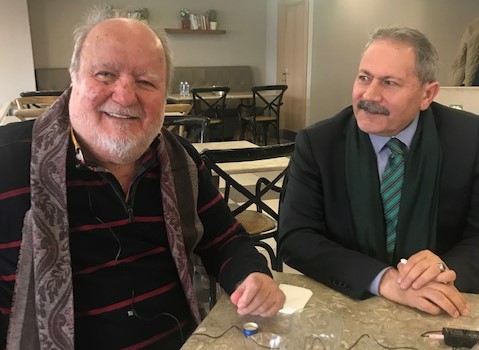
From left to right: Şafak Seyfettin Karakoç, Asım Keser
Şerafettin Elçi served as Minister of Public Works in the Ecevit government between 1978-79. After the September 12 Coup, he was tried and imprisoned for thirty months.
Minister of Public Works Şerafettin Elçi hired Ayşe Şan as a "temporary worker." The story goes like this: While Ayşe Şan was working in İzmir, a Kurdish notable asked Mr. Şerafettin to employ Ayşe Şan within the Ministry. Şerafettin Elçi responded positively. During the September 12, 1980 Military Coup, Şerafettin Elçi was arrested. In the indictment, his decision to employ Ayşe Şan was highlighted and he was prosecuted for it.
Ayşe Şan died in loneliness in İzmir. May God have mercy on her soul!
MY BROTHER SÜLEYMAN ATAY RELATES FROM PARIS
The late Ege Bağatur was elected Mayor of Adana as a CHP member on December 10, 1973. His stance against power and interest groups in the Municipality gradually began to disturb certain segments. I took on the role of Director General of Revenues for the Adana Municipality.
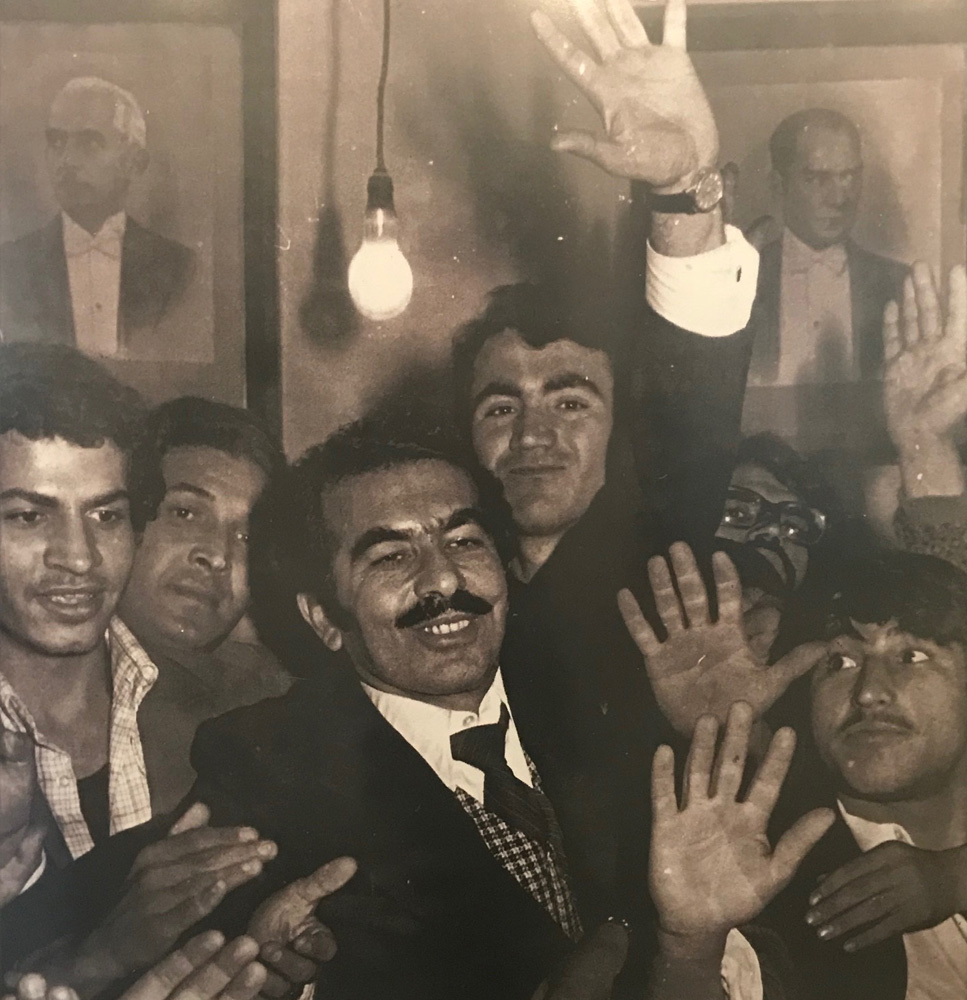
Ege Bağatur, elected Mayor of Adana
In those years, there was a tough guy of Albanian origin in Adana named Süleyman Sırrı Prodan. His brother Rıza Tekin Prodan was also a known and feared tough guy. Both were CHP members. They were honorable people but did not want to compromise on the code of tough guys.
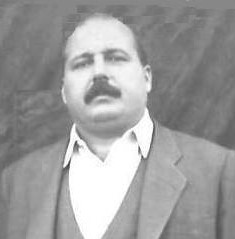
Süleyman Sırrı Prodan, the famous tough guy from Adana
The Sabancı Family had given an 8% share of MarSA, the company that produced the famous "Evin" brand oil, to Süleyman Sırrı Prodan. In those years, there was an oil shortage throughout Türkiye. Many times, thanks to Süleyman Sırrı Prodan, we would procure oil and send it to remote provinces like Ağrı.
When Ayşe Şan came to Adana, she came under the protection of Süleyman Sırrı Prodan. In those years, artists needed this kind of protection. Mayor Ege Bağatur, originally from Urfa, also extended a hand to Ayşe Şan. He gave Ayşe Şan the management of a municipal garden. Whenever I had the opportunity, I would send my assistants to find out if Ayşe Şan needed anything. I would exempt Ayşe Şan from the Municipality's "rüsum" tax and such.
Soon after, an unfortunate event saddened the people of Adana: Mayor Ege Bağatur and Süleyman Sırrı Prodan clashed over İnönü Park. On June 30, 1975, as they were leaving a Municipal Council meeting, Süleyman Sırrı attacked both the Mayor and Council President Ahmet Albay with a gun, severely wounding both. Ayşe Şan lost the protection of her guardian Süleyman Sırrı and the economic support of the Mayor, who was no longer able to perform his duties due to his severe injuries.
After this incident, I also left the Adana Municipality and started working at İller Bankası (Bank of Provinces).
IN CLOSING…
Please do not leave this page without listening to the entirety of "Sallana Sallana," a composition by the great artist Ayşe Şan, who carried the most passionate and profound loves, separations, and sorrows in her heart, traveled from country to country, opened the door to the stifled cries of a generation with her voice, and left us silently and tragically. With respect, Mücahit Özden Hun
SALLANA SALLANA (KURMANJI-TURKISH)
Sallana, sallana neçe ser avê
Yıkamış esfabın raxe ber tavê
Sallana, sallana neçe ser avê
Yıkamış esfabın raxe ber tavê
Bir öpücük isterem xêra dê û bavê
Yabancın degilem pismamê te me
Dibêjî, nebêjî heyranê te me
Yabancın degilem zalım pismamê te me
Dibêjî, nebêjî heyranê te me
Hasta degilem keçê nexweşê te me
Sallana, sallana tû ji wêde hatî
Aşkın ateşi zalım dilê min ketî
Sallana, sallana tû ji wêde hatî
Aşkın ateşi dotmam dilê min ketî
Söz vermiştin îro çima ne hatî
Yabancın degilem pismamê te me
Dibêjî, nebêjî heyranê te me
Yabancın degilem zalım pismamê te me
Dibêjî, nebêjî heyranê te me
Hasta degilem keçê nexweşê te me
Bir gün geleceğim malê bavê te
İsmini bilmem ki dibêm navê te
Bir gün geleceğim malê bavê te
İsmini bilmem ki dibêm navê te
Egil de öpeyim keçê helqê çavên te
Yabancın degilem pismamê te me
Dibêjî, nebêjî heyranê te me
Yabancın degilem keçê pismamê te me
Dibêjî, nebêjî mêvanê te me
Hasta degilem zalım nexweşê te me
SALLANA SALLANA (TURKISH)
Don't go to the water swaying, swaying
You've washed your clothes, spread them in the sun
Don't go to the water swaying, swaying
You've washed your clothes, spread them in the sun
I want a kiss for the sake of your mother and father
I am not a stranger, I am your cousin
Whether you say it or not, I adore you
I am not a stranger, cruel one, I am your cousin
Whether you say it or not, I adore you
I am not sick, girl, I am sick for you
Swaying, swaying, you came from there
The fire of love, cruel one, fell into my heart
Swaying, swaying, you came from there
The fire of love, cousin, fell into my heart
You promised, why didn't you come today
I am not a stranger, I am your cousin
Whether you say it or not, I adore you
I am not a stranger, cruel one, I am your cousin
Whether you say it or not, I adore you
I am not sick, girl, I am sick for you
One day I will come to your father's house
I don't know your name, I say your name
One day I will come to your father's house
I don't know your name, I say your name
Bend down and let me kiss, girl, the circles of your eyes
I am not a stranger, I am your cousin
Whether you say it or not, I adore you
I am not a stranger, girl, I am your cousin
Whether you say it or not, I am your guest
I am not sick, cruel one, I am sick for you