The Arafat-Habash and Apo-Bayık Split
This essay draws parallels between the splits in the PLO and the PKK, predicting a similar division in the latter if Abdullah Öcalan pursues peace.
(Note: This article was published on October 13.)
Dear Readers:
In a meeting with high-level friends in June (2024), I said something along these lines:
“History teaches us a bitter truth: when a ruthless organizational leader decides to lay down arms and prioritize diplomacy, one should not rejoice too quickly. A more ruthless leader might emerge within the organization, split it in two, and pursue a more aggressive policy. An example of this occurred in the PLO (Palestine Liberation Organization). When Yasser Arafat, considered a ruthless terrorist leader by the world and Israel, brought diplomacy and mutual negotiations to the forefront, someone named George Habash within the PLO opposed this approach, arguing that an uncompromising war against Israel must continue. The organization split. This also applies to the PKK. If Abdullah Öcalan sits down for talks with the state, it should not be assumed that the PKK as a whole will lay down arms and follow Abdullah Öcalan. A "George Habash"-like figure will come to the fore within the PKK, and the organization will split. For this reason, regardless of the path the PKK chooses, the state must implement Kurdish as a language of instruction. Mother-tongue education should be considered separately from the PKK, and the necessary steps in this direction should be taken immediately.”
Historical Determinism
Although the concept of "historical determinism" is open to debate, we often witness its success in practice. Before delving deeper into the subject, I would like to clarify the concept of "historical determinism."
Historical determinism emphasizes the idea that historical events and social developments are shaped by certain inevitable forces or laws, and therefore certain outcomes are unavoidable. According to this view, the historical process proceeds along a path determined by fundamental forces such as economics, class struggle, technological developments, or other structural factors, or similar outcomes emerge when similar conditions arise.
Historical determinism is currently proving that the pasts of the PLO and PKK organizations overlap or are progressing in a similar direction.
When the state takes steps to negotiate with Abdullah Öcalan and initiate a new era, a voice within the PKK will say "Stop" to this course of action. My prediction is that this person will be Cemil Bayık. That is, in the coming days, with Abdullah Öcalan's house arrest (or release) and the start of negotiations with the state, a "dove PKK" structure will emerge, while, just as happened previously in the PLO, a group of "hawks" advocating for the continuation of the war, led by Cemil Bayık, will break away from the main structure and resort to acts of terror that will rival previous years to prove themselves.
PALESTINE LIBERATION ORGANIZATION (PLO)
The foundations of the PLO, which aimed to establish an independent and free Palestinian State, were laid at the Arab League summit held in Cairo from January 13-16, 1964. The PLO was established on June 2, 1964, with the support of Egyptian President Gamal Abdel Nasser in particular.
The PLO had a structure that brought together numerous Palestinian organizations under one umbrella. The largest of these organizations was the Fatah group, led by Yasser Arafat. Yasser Arafat was appointed Chairman of the PLO Executive Committee in 1969.
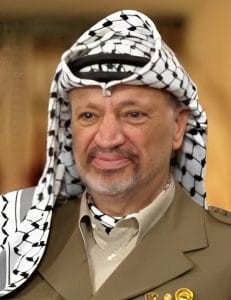
Yasser Arafat
PLO Chairman Arafat delivered a speech in December 1988, announcing that he condemned terrorism on behalf of the PLO. The US then believed that this statement also bound organizations such as Fatah, Force 17, the Hawari Group, the Popular Front for the Liberation of Palestine (PFLP), and the Democratic Front for the Liberation of Palestine (DFLP). It would soon realize its mistake. George Habash, leader of the PFLP, which had broken away from the PLO, attacked the Israeli coast on May 30, 1990, largely disrupting the Arafat-Israel dialogue process.
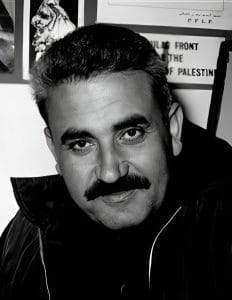
George Habash
CONCLUSION
Turkey appears poised to experience a similar process. Abdullah Öcalan, eager to receive a "Nobel Peace Prize" like Yasser Arafat, will prioritize talks and negotiations and call on the organization to lay down arms. However, Historical Determinism tells us that a "George Habash"-like figure will emerge within the PKK structure and try to sabotage this process. I believe this person will most likely be Cemil Bayık.
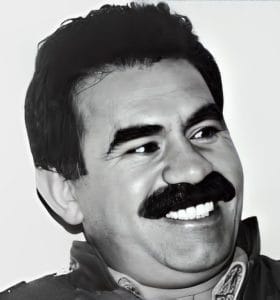
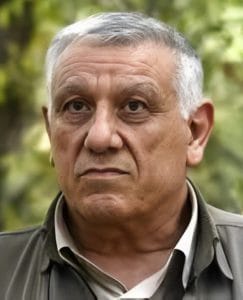
Abdullah Öcalan and Cemil Bayık