Alcatraz Prison and Iğdır
This article discusses the tragic suicide of a prisoner in Iğdır, drawing parallels with the notorious Alcatraz Prison and advocating for humane treatment and rehabilitation in Turkish correctional facilities.

Dear Readers:
A few days ago, the news broke: "A prisoner named E.Ç. committed suicide in Iğdır Prison."
The prisoner first called his family, saying he was constantly being beaten by guards, and then committed suicide a few days later. The forensic report confirmed the signs of beating.
Similar incidents have occurred before in Iğdır Type S Prison. I love Iğdır. It deeply saddens me when it makes headlines with such news. Regardless of their crime, every prisoner is a trust. Subjecting them to cruelty and torture with an understanding akin to "your flesh is mine, your bones are mine" is inhumane. I would like to make an appeal to the esteemed authorities: increase security, but put an end to violence, torture, and oppression. This is neither befitting of you nor of humanity.
Prisons are not places where citizens are "to be disciplined through oppression, tyranny, and torture, or forced to commit suicide if necessary." Let us not forget that our President, Mr. Recep Tayyip Erdoğan, was also sentenced to prison in 1999 for "inciting hatred and enmity among the public" due to a poem he recited, spending four months of his life in Pınarhisar Prison. Adnan Menderes, Bülent Ecevit, Necmettin Erbakan, Süleyman Demirel, Alparslan Türkeş, and many other figures who governed Turkey have been held in prisons, under surveillance, and under house arrest.
ALCATRAZ PRISON
I believe everyone is familiar with the name "Alcatraz Prison," built on an island off the coast of San Francisco, as it has been a recurring subject in cinema and television history. This legendary prison, now a museum, has been a central element in many films and series.
Before going to America, I had watched two films about Alcatraz:
"Escape from Alcatraz" (1979): Starring Clint Eastwood, this film tells the story of the famous Alcatraz escape that took place in 1962. It depicts the escape plans and execution by Frank Morris and two other prisoners.
"Birdman of Alcatraz" (1962): Starring Burt Lancaster, this film tells the true story of Robert Stroud, nicknamed "Birdman." Stroud was an Alcatraz inmate who gained fame for his studies on birds.
In 1992, after settling in Berkeley, California, I took the first opportunity to reach downtown San Francisco by BART, the metro-type public transportation system, in a 20-25 minute journey.
The most common and practical way to get to Alcatraz Prison from San Francisco is to use the ferry service organized by the Alcatraz Cruises company. Alcatraz Prison, located on Alcatraz Island in San Francisco Bay, is 2 km from the shore.
We reached Alcatraz Island after a 15-minute ferry ride. I joined a prison tour with a guide. As the guide excitedly recounted the history of the prison and the stories of its famous inmates, I remembered the films I had watched.
The name "Alcatraz" comes from the Spanish word "alcatraces," meaning "pelicans." In 1775, the Spanish explorer and navigator Juan Manuel de Ayala named the island "Isla de los Alcatraces" (Island of the Pelicans) because a large flock of pelicans lived around the island.

Alcatraz Island (prison) and San Francisco in the background
Over time, "Isla de los Alcatraces" was shortened to the name known today as "Alcatraz." Alcatraz Island was used as a military garrison and prison by the US Army until the 1850s. In 1934, in response to rising crime rates in America, it was converted into a maximum-security federal prison.
The most famous inmates of Alcatraz Prison were mafia leader Al Capone and famous gangsters George "Machine Gun" Kelly and Robert Stroud "Birdman of Alcatraz."

Mafia leader Al Capone, in Alcatraz Prison
Alcatraz Prison witnessed several escape attempts throughout its history. The most famous occurred in 1962. Three prisoners managed to escape from Alcatraz with their meticulously planned scheme, but their fate after the escape remains unknown.
Alcatraz Prison was closed in 1963 due to high operating costs and infrastructure problems. Today, Alcatraz Island is a national park area visited by tourists.
You might wonder why I brought up Alcatraz Prison.
Alcatraz Prison holds an iconic place in the history of the American penal system. This prison continues to attract interest as a rich resource for reflecting on crime and punishment.
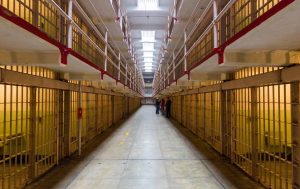
Interior view of Alcatraz Prison, now a museum
Alcatraz Federal Penitentiary is known as one of America's strictest and most disciplined prisons. Operating from 1934 to 1963, this prison is particularly famous for its impossible escapes and harsh living conditions. Crime and punishment practices at Alcatraz were characterized by strict disciplinary rules and tight control. Here are some features of the penal system at Alcatraz Prison, once America's most brutal:
Strict Security Measures: Alcatraz, by virtue of its location, served as a natural fortress. The cold waters and strong currents of the bay made escapes almost impossible. Additionally, the prison was surrounded by high walls, towers, and armed guards.
Strict Disciplinary Rules: Inmates had very limited communication rights and were often required to remain silent. In the early years, inmates were only allowed to speak when necessary. Although this rule was somewhat relaxed in later years, discipline was generally very strict.
Punishments and Isolation: Inmates who violated rules were subjected to severe punishments. These punishments included prolonged solitary confinement, detention in dark cells, and physical torture. Inmates were held in single cells to minimize interaction with other inmates.
Work Programs: Inmates at Alcatraz were required to participate in daily work programs. These included laundry, kitchen duties, or other maintenance tasks. Work aimed to maintain discipline and keep inmates occupied.
Lack of Rehabilitation: Alcatraz notably lacked programs aimed at rehabilitation or reintegrating inmates into society.
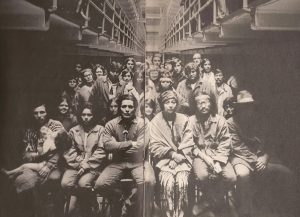
Alcatraz Prison and inmates, once upon a time
Crime and punishment practices at Alcatraz led to the prison earning the reputation of "America's toughest prison." These conditions negatively affected the mental health of some inmates, leading to feelings of helplessness and despair, and driving them to suicide.
I ASK, is Iğdır Type S Prison also competing to achieve such a reputation?
A PRISONER IN IĞDIR PRISON: MECİT DEVRAN ÇAKAR
One day I received a call from Iğdır. The voice on the other end said: "My brother Mecit is in Iğdır Prison. He only finished primary school but has developed himself and prepared a novel draft. Mecit is asking for your help to publish this work as a book."
"Please send me the manuscript as soon as possible!"
A few weeks later, I reviewed the novel draft I received, edited it, and corrected its deficiencies and errors. I had it printed by the publishing house that publishes my books and sent it to Iğdır.


The book of Mecit Devran Çakar, a prisoner in Iğdır Prison
As a citizen, my power to support prisoners is limited to publishing this book and regularly sending books to prisoners in Iğdır free of charge. As a state, our resources are greater. Let us demonstrate our power not by increasing bullying to the point of driving prisoners to suicide, but by implementing projects that will reintegrate them into society.
ANECDOTE… JOKE… ANECDOTE… JOKE
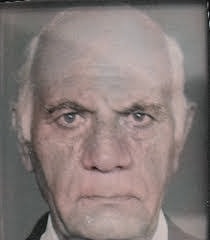
Hamit Hun
TAKING THE SQUARE ROOT
Hamit Hun began his high school education at Kars High School, but had problems with the principal and was banned from attending state high schools. It was no longer possible for him to go to Erzurum or Trabzon High School. His father, Ahmed Şemo, was forced to send his son to the private Pertevniyal High School in Istanbul. According to legend, Hamit Hun, who was not good at science subjects, struggled in high school and returned to Iğdır before finishing school.
***
A dispute arose between two neighbors, Kurdish Mustafa and Azerbaijani Cafer. In the middle of winter, Cafer had lent Mustafa seventeen tins of wheat. Summer came. Cafer asked for the wheat debt back. They disagreed on the amount and went to Hamit Hun in hopes of finding a solution.
Hamit Hun was not very good at mathematics. He listened carefully to the complaint. He took out a piece of paper he used for drawing caricatures from his pocket and took notes with his pen.
Cafer:
"Mr. Hamit, I gave seventeen tins of wheat. Mustafa, in return, gave me two sacks of wheat. This is unfair. Seventeen tins of wheat are more than two sacks."
Mustafa defended himself:
"Mr. Hamit, you know that the sacks we use are larger than sugar sacks."
Hamit Hun wrote an equation on the paper: "17 Tins of Wheat = 2 Sacks of Wheat." He said, "Don't worry, I'll calculate it now."

Sack
Hamit Hun drew strange shapes over the expressions on both sides of the equation, then looked at the paper and began to think. After some time, Cafer grew impatient:
"Mr. Hamit, how much longer will the calculation take?"
"I've written the equality, I'm taking the square root of both sides."
"Is it difficult?"
"If taking the square root were that easy, I wouldn't have had to drop out of that beautiful high school in Istanbul and return to Iğdır to deal with your tins and sacks."
BURMA BRACELET
The burma bracelet has a quality that captivates the souls of women in the Erzurum, Kars, and Iğdır regions. It is rumored that whenever a wife sees her husband give her a burma bracelet as a gift, she forgets all evils and forgives her husband.
These were the days when news broke that US President John Kennedy had cheated on his wife Jacqueline, mother of two children, with Marilyn Monroe, known as the blonde bombshell of the cinema world.


Kennedy, his wife Jacqueline, and "Blonde Bombshell" Marilyn Monroe
As Hamit Hun walked home, he thought to himself, "The great US President cheats on his wife, but this is forbidden for us! This is unacceptable!" he grumbled as he arrived home. When his wife saw Hamit Hun looking thoughtful, she asked:
"Hamit, why are you so thoughtful?"
"The US President cheated on his wife."
"Oh, Hamit! The President will give his wife an Erzurum burma bracelet a few days later, win her heart, and everything will be forgotten."

Erzurum's famous burma bracelet
***
A few days later, Hamit Hun was chatting with his friends in the coffeehouse. Someone asked Hamit Hun brazenly:
"Mr. Hamit, if you had the means, what would you do?"
"I would go on a long journey every month to flirt, and then return home with an Erzurum burma bracelet in my pocket."
THE CARRIAGE DRIVER'S TROUBLE
In Iğdır of the 1950s, the name "Kör Hacı" (Blind Hacı) instilled a mystical and incomprehensible fear in everyone. Mothers would scare their naughty children who didn't want to sleep in the evenings by saying, "Go to bed early, or Blind Hacı will come." Even the mother who scared her child was afraid of this name and, in those years, dared not go alone to the outdoor toilet in the evening.

Carriages, once upon a time
Again, in Iğdır of a certain era, carriages held a special place. Not everyone could afford the privilege of riding in a carriage. The biggest problem for carriage drivers was that while the carriage moved slowly, neighborhood children would cling to the back and ride for free. The carriage driver would crack his long whip backward but couldn't get rid of these rascals.
One such day, a carriage driver friend visited Hamit Hun's table. Conversation began. Finally, the carriage driver poured out his heart:
"Mr. Hamit, I can't get rid of these neighborhood brats. They ride for free. It bothers me."
"I know your problem and I'm watching it closely. First, you got down and chased the children, it didn't help. You complained to their parents, it didn't help. You replaced short whips with long whips. It didn't help. You tied barbed wire to the back of the carriage, it didn't help. Only one solution remains."
The carriage driver asked with curiosity and excitement:
"What is that solution, Mr. Hamit?"
"If you hang a picture of Blind Hacı on the back of the carriage, there will be no problem."
The carriage driver was both happy and scared:
"Mr. Hamit, if I hang a picture of Blind Hacı, no one will ride in my carriage out of fear, will they?"
Hamit Hun replied:
"I understand. It's not possible to solve two problems at once. In this case, you either hang a picture of Blind Hacı and drive around with an empty carriage that children don't cling to, or you drive around with a carriage full of customers but also with children riding for free. The choice is yours!"