From September 12th to Nepal: Forcibly Imposed Change
This essay contrasts the top-down military coup of September 12, 1980, in Turkey with bottom-up youth protests in Nepal, exploring how societies change and the destructive versus constructive paths of transformation.

Dear Readers,
A few days ago, we passed the anniversary of the September 12, 1980, military coup, a deep wound etched into Turkey's modern history. That morning, millions awoke to the sound of tanks, and overnight, the country's entire balance shifted. The will of the people was suspended, political parties were closed, unions were silenced, and tens of thousands were detained. For some, order had been established; for others, life would never be the same again.
On the anniversary of September 12th, thousands of kilometers away, in Nepal, nestled in the shadow of the Himalayas, a very different scene is unfolding. Gen Z youth have taken to the streets with the speed and courage afforded by social media. They are rebelling against the injustice of the caste system, corruption, unemployment, and a feeling of hopelessness about the future. With phones in hand and slogans on their lips, they fill the squares, declaring, "It's time for change."
On one side, a top-down coup; on the other, a bottom-up youth rebellion... These two seemingly opposing social movements actually prompt the same question: How do societies change? And through which path does this change cease to be destructive and become constructive?
SEPTEMBER 12, 1980: THE COST OF A TOP-DOWN COUP
On the morning of September 12th, the following announcement was heard on radios across Turkey: "The Turkish Armed Forces have seized control of the administration." From that moment on, nothing in society was the same. The generals seized power claiming to "save the country," but in reality, they wanted to reshape society according to their own designs.
Politics silenced: All political parties were closed, and leaders were either detained or banned. The will of the people could no longer be represented.
Organizations dismantled: Unions were closed, and the activities of associations were halted. Workers, students, civil servants; everyone was forced into silence.
Repression increased: 650,000 people were detained, torture chambers overflowed, and dozens of young people were executed. People taken from their homes could not know if they would ever return.
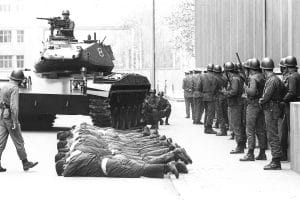
The September 12, 1980 coup
A teacher looking at her students' faces with fear as she went to school in the morning, a worker not daring to demand his rights in the factory, a mother waiting for her son to be detained in the middle of the night... This is how September 12th shattered ordinary lives.
In the short term, street violence seemed to end. But in reality, society's energy was suppressed, trust in politics was damaged, and a society of fear was created. This was the cost of change forcibly imposed from above: society was silenced but not healed.
ARAB SPRING: ANGER ERUPTING FROM BELOW
The events that began in 2010 with the self-immolation of street vendor Mohamed Bouazizi in Tunisia shook not just one country, but an entire region. People rose up against years of oppressive regimes, and squares filled with slogans of freedom, bread, and justice. This movement went down in history as the Arab Spring.
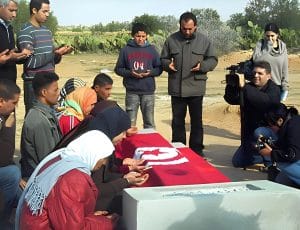
His death sparked the rebellion in Tunisia and the Arab Spring in the region. Mohamed Bouazizi, a 26-year-old Tunisian who set himself on fire after arguing with police for selling unlicensed vegetables, is buried...
In Tunisia, dictator Zine El Abidine Ben Ali was overthrown. For a short time, the hope for democracy blossomed.
In Egypt, millions filled Tahrir Square, and Hosni Mubarak was forced to resign. But soon after, military tutelage and an oppressive order returned.
In Libya and Syria, the people's demand for freedom turned into civil war. Cities were destroyed, and millions of people became refugees.
Initially, there was a revolutionary fervor. Young people, women, the unemployed hoped that "change has finally arrived." But this change, because it was not placed within an institutional framework, devolved into chaos.
The Arab Spring reminded us of this: anger from below, however justified, if not supported by a plan and institutions, leads not to lasting improvement but to destruction.
NEPAL: THE HOPE AND DANGER OF GEN Z
These days, Gen Z is in the streets of Nepal. University students, unemployed youth, groups organized on social media... All say, "this system must change." They oppose the injustice of the caste system, the corruption of politicians, and the theft of their future.
A young girl says in front of the cameras:
"We will not be silent like our parents. They bowed to the caste system, we will not."
Another young person shares these words in a TikTok video:
"We have no jobs, no education, no hope. If we don't rise up, no one will rise up for us."
These days, there are not only slogans but also scenes of violence on the streets of Nepal. A minister being stripped naked and thrown off a wall, female bureaucrats being dragged on the ground, have been reflected on social media. Gen Z youth are expressing their anger at years of corruption, the caste system, and political decay in this way.
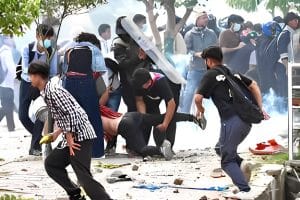
Gen Z's rebellion in Nepal
These scenes, at first glance, evoke a feeling of "holding to account." Young people believe that through these scenes of revenge, they will establish a more just, more equal, and freer society. They rebel against their roots by saying, "Our fathers were silent, we will not be."
But this is where the real danger begins. Because change shaped by a desire for revenge does not establish a healthy social order; on the contrary, it opens new wounds. When people try to build a new order based on fear and humiliation, the foundation of this order is not solid.
We saw the same delusion earlier in the Arab Spring. Dictators were overthrown, and celebrations were held in the squares. But soon after, this joy turned into chaos. An oppressive regime was re-established in Egypt, and Libya and Syria were plunged into civil wars. The freedom and justice that people dreamed of were replaced by fear, destruction, and migration.
The delusion experienced by Gen Z in Nepal today is a mirror of the Arab Spring. Revenge and anger do not bring lasting democracy. They only give rise to a new spiral of violence.
The situation in Nepal closely resembles the initial enthusiasm of the Arab Spring. Young people are hopeful, the streets are excited. But the danger is also the same: if this movement is not placed within an institutional framework, it can disrupt stability and trigger chaos.
Nepal shows us this: even if change coming from below is energetic and hopeful, it can be destructive if not structured.
THE MOST CORRECT PATH: PARTICIPATORY AND PEACEFUL CHANGE
September 12th showed the traumas of top-down change. The Arab Spring and Nepal reminded us of the risks of change erupting from below. Both paths alone can produce destructive results.
Therefore, the real need is this:
Participatory change: Different segments of society must be included in the process; neither only the decisions of generals nor only street anger should be decisive.
Peaceful change: Dialogue should take precedence over violence, and consensus over oppression.
Institutional change: Law, justice, and transparency must be guaranteed so that neither anger nor oppression destroys society.
True social transformation becomes lasting when it occurs not with tanks or angry crowds, but with common sense and common hope.
Mücahit Özden Hun
September 13, 2025